How to Choose the Right Chinese Diaphragm Valve Manufacturer

In industrial fluid control systems, diaphragm valves are widely regarded as essential equipment, particularly in industries such as pharmaceuticals, food and beverage, water treatment, and chemicals. Their excellent sealing performance and corrosion resistance make them indispensable components in many process applications. As a major manufacturing hub, China hosts a vast number of diaphragm valve manufacturers, offering a diverse range of products across a wide price spectrum. However, the abundance of suppliers does not automatically make selection easy. For procurement decision-makers, engineers, or business managers, identifying truly reliable partners from among numerous manufacturers is crucial to ensuring system stability, project timelines, and long-term operational costs. This article systematically examines the key factors to consider when selecting a Chinese diaphragm valve manufacturer, covering qualifications, production capacity, quality control, technical support, pricing, and delivery, providing a comprehensive guide for informed and prudent procurement decisions.
Product quality directly affects system stability. A reputable manufacturer can deliver products that meet high standards, reducing equipment downtime. Long-term costs and safety are also significant considerations, as high-quality valves typically have longer service lives and lower maintenance requirements. Moreover, the ability to meet customized requirements and provide robust after-sales support directly impacts the sustained stability of equipment operations. The following sections elaborate on these three aspects.
Diaphragm valves are extensively applied in pharmaceuticals, food and beverage, water treatment, and chemical industries. These sectors demand precise fluid control, requiring valves capable of handling corrosive media while maintaining excellent sealing performance. If a manufacturer's product quality is inconsistent, system failures may occur, affecting production efficiency. A reliable manufacturer can consistently provide high-standard products, minimizing downtime and enhancing overall operational efficiency.
Selecting a high-quality diaphragm valve manufacturer affects not only initial procurement costs but also long-term operational expenses. Durable valves require less frequent maintenance, reducing costs over time. In high-risk environments such as chemical or pharmaceutical facilities, valve safety is paramount. A trustworthy manufacturer provides products compliant with safety standards, ensuring stable operation under high pressure, high temperature, or corrosive conditions, thereby mitigating operational risks.
Different projects may require valves with specific dimensions, materials, or pressure ratings. Outstanding manufacturers offer tailored solutions to meet these requirements. Equally important is after-sales service, including technical support, spare parts supply, and maintenance assistance. These factors influence the long-term reliability of equipment and determine whether a manufacturer can establish enduring trust with its clients.
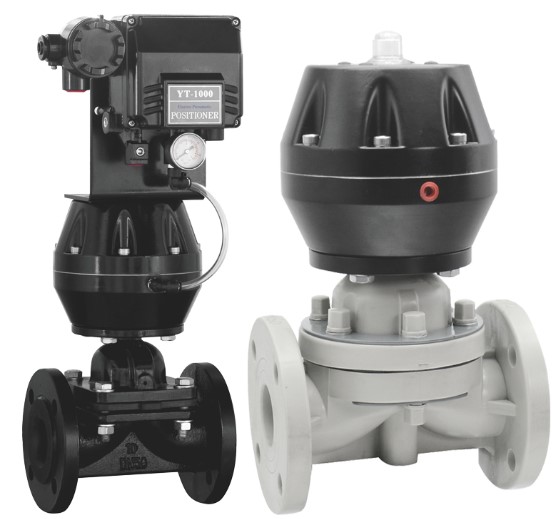
Qualifications and certifications serve as the first filter to assess whether a manufacturer possesses the basic production capabilities and compliance credentials. Key considerations include quality management certifications, industry-specific standards, and international trade experience.
When selecting a diaphragm valve manufacturer, it is essential to verify whether the company holds internationally recognized quality management certifications. ISO 9001 is the fundamental standard, indicating that the manufacturer maintains structured processes for production, quality control, and customer management. Some manufacturers may also hold specialized certifications, such as ISO 14001 for environmental management, demonstrating adherence to environmentally responsible practices.
Different industries impose varying requirements on diaphragm valves. For example, pharmaceutical applications often require FDA-compliant products, ensuring non-toxic and contamination-free materials. The food and beverage industry demands compliance with relevant hygiene standards, while chemical applications often prioritize ASME or API standards. For projects involving explosive environments, ATEX or other explosion-proof certifications may be necessary. These certifications indicate that the products meet recognized international standards for quality, safety, and industry-specific regulations.
For international clients, a manufacturer's export experience is critical. Companies with a strong history of exports are generally familiar with international trade procedures, customs regulations, transportation requirements, and the regulatory standards of different countries. Such manufacturers can provide reliable international delivery, reducing logistical and compliance issues. Assessing the manufacturer's primary export markets and previous international projects can help gauge their capability in global operations.
Certifications alone do not guarantee that a manufacturer can meet specific project requirements. Evaluating production capacity and technical expertise is equally important, including factory scale, equipment quality, material selection, process control, R&D capabilities, and adoption of intelligent technologies.
A manufacturer's production capacity determines its ability to meet delivery schedules. Evaluating factory size, number of production lines, equipment sophistication, and annual output is essential. Manufacturers with adequate capacity can handle large orders while maintaining product consistency. Advanced equipment often indicates higher machining precision and more stable process control.
The performance of diaphragm valves heavily depends on material selection. Common diaphragm materials include PTFE, EPDM, and NBR, while valve bodies may be made from plastics, metals, or alloys. Different materials suit various media and operating conditions. A competent manufacturer can recommend appropriate materials, clearly detailing chemical resistance, temperature ranges, and pressure tolerance. Process maturity also influences sealing performance and service life.
Manufacturers with R&D capabilities can continuously improve product designs and introduce higher-performance valves. With the rise of industrial digitalization, some companies offer smart valve solutions, including integrated sensors and remote control features. These technologies support digital system upgrades, enhancing monitoring efficiency and preventive maintenance. Choosing an innovative manufacturer ensures products remain compatible with evolving industrial requirements.
Once a manufacturer's production and technical capabilities are confirmed, it is important to evaluate whether their product range can meet project requirements and whether they can provide customized solutions. This includes valve types, specifications, non-standard customization, and adaptation to special operating conditions.
A qualified manufacturer should offer various types of diaphragm valves, including weir-type, straight-through, and multi-port valves. Different types suit different installation conditions and media characteristics. The specification range should cover small to large diameters to accommodate diverse project requirements.
Practical applications often require non-standard solutions, such as unique port connections, specific structures, or extreme operating conditions. A manufacturer's customization capability is reflected in their ability to design and produce valves based on client drawings or technical requirements. Suppliers capable of handling non-standard conditions usually demonstrate stronger engineering adaptability, suitable for complex projects.
During customization, it is essential to confirm whether the manufacturer can provide material certification documents proving compliance with relevant standards. Performance parameters, including rated pressure, temperature range, and flow coefficient, must meet operational demands. These metrics directly influence valve stability and safety, and should be based on testing rather than estimation.
Even with strong production capacity and diverse product lines, quality cannot be assured without rigorous control systems. Quality control spans raw material inspection, production monitoring, and final product testing.
Quality begins with raw materials. Reputable manufacturers conduct stringent checks, including chemical composition analysis, mechanical property tests, and visual inspections. Only materials meeting standards enter production, forming the foundation of high-quality end products. Substandard materials cannot yield compliant products regardless of downstream processes.
During production, manufacturers should implement comprehensive monitoring systems for all critical operations, including dimensional inspections, welding quality checks, and surface treatment evaluations. Process control helps detect and correct issues early, preventing defective products from advancing. Some manufacturers employ automated inspection equipment to enhance efficiency and accuracy.
Before shipment, valves undergo extensive testing. Pressure tests verify sealing integrity under rated pressure, and functional tests ensure smooth operation and normal diaphragm deformation. Certain projects may require additional tests, such as vacuum testing, life-cycle assessment, or corrosion evaluation. Manufacturers should provide complete test reports to substantiate product quality.
Beyond technical assessment, supplier credibility and experience are essential for selecting a partner. Business history and market reputation reflect stability and reliability, while client cases and site visits validate actual capabilities. Online information and communication help in preliminary screening.
Business longevity is an important reference point. Manufacturers with more than five years of operation typically have stable production systems and market presence. Those with over three years of export experience are generally familiar with international markets. Industry forums, client reviews, and third-party platforms can provide insight into market reputation, reliability, and product consistency.
Experienced manufacturers can provide previous client cases, including collaborations with well-known enterprises or large-scale projects. Site visits allow direct assessment of production facilities, testing equipment, and warehouse management, offering a realistic view of operational capability beyond promotional materials.
During initial screening, company websites can provide key information. A professional site should clearly display product specifications, technical data, contact details, and physical addresses. Red flags include flashy or misleading content, lack of landline contacts, or addresses limited to Hong Kong or Taiwan without a mainland facility, which may indicate that the supplier is not a direct manufacturer.
After verifying technical capability and credibility, evaluating commercial performance is necessary. Key factors include price analysis, delivery timelines, and after-sales service.
While price is an important factor in procurement decisions, it should never be the only consideration. The price differences among manufacturers can be significant, but a lower price often implies compromises in materials, manufacturing processes, or service quality. When evaluating value for money, it is necessary to consider product quality, service life, maintenance costs, and after-sales support in combination. High-quality manufacturers may offer higher initial prices, but due to lower failure rates and longer service life, they are often more economical in the long run.
The stability of delivery schedules has a significant impact on project progress. It is important to understand the manufacturer's average lead time, production capacity utilization, and supply chain management capability. Some manufacturers may experience delays due to insufficient capacity or unstable raw material supply. Before signing a contract, delivery timelines and penalties for delays should be clearly defined to ensure the project proceeds according to plan.
Comprehensive after-sales service includes installation guidance, operational training, troubleshooting, and spare parts supply. In diaphragm valves, the diaphragm is a wear component that requires periodic replacement, making the availability of original spare parts particularly important. In addition, the responsiveness of technical support directly affects equipment downtime. Manufacturers capable of providing fast response and on-site assistance can significantly reduce production losses.
Selecting a suitable Chinese diaphragm valve manufacturer requires a comprehensive evaluation across multiple dimensions. First, it is essential to clearly define your own requirements, including operating conditions, industry standards, and budget constraints. Then, systematically assess manufacturers in terms of certifications, production capacity, technical capability, quality control systems, reputation, and after-sales service.
During the evaluation process, it is recommended to contact multiple suppliers for comparison and start with small trial orders to verify product quality and service performance. Through thorough investigation and careful selection, it is possible to identify a reliable partner that not only provides high-quality products but also ensures stable delivery and comprehensive after-sales support. This ultimately guarantees the long-term efficient and reliable operation of fluid control systems.
