How to Choose Reliable Slab Gate Valve Suppliers in China

In modern high-pressure pipeline systems, slab gate valves are widely recognized as one of the most reliable isolation valve types used in critical flow control applications. They are extensively deployed in industries such as oil and gas transmission, petrochemical refining, LNG transportation, power generation, and large-scale industrial processing systems.
As global infrastructure projects continue to expand, China has become a major manufacturing hub for slab gate valves due to its complete industrial supply chain, advanced machining capability, and competitive production costs. Chinese manufacturers now supply a large share of the global market, offering products that meet API, ISO, and ASME standards for both domestic and international projects.
However, the market is highly fragmented. Alongside high-quality manufacturers, there are also suppliers with limited engineering capability or insufficient quality control systems. This makes supplier selection a critical step in ensuring pipeline safety, operational reliability, and long-term cost efficiency.
A slab gate valve, also known as a through conduit gate valve, is specifically engineered for full-bore pipeline systems where unobstructed flow is essential. It is designed to allow pipeline inspection tools such as pigs and scrapers to pass through without restriction, making it indispensable in long-distance transmission pipelines.
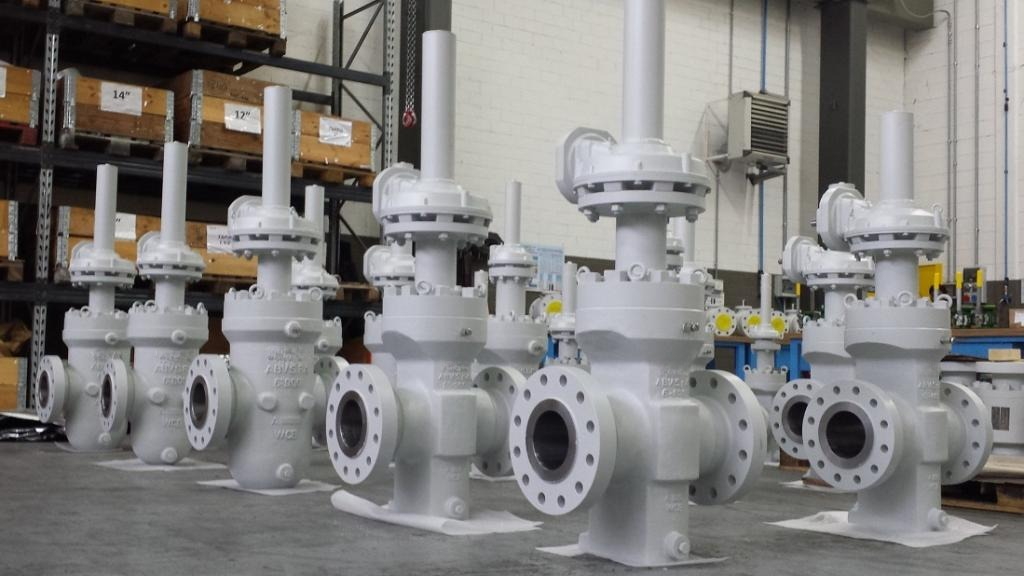
A slab gate valve is a linear-motion isolation valve that uses a single solid gate plate (the "slab") with a full-diameter bore. When the valve is fully open, the bore aligns precisely with the pipeline, creating a straight, uninterrupted flow path.
This full-bore design provides several key engineering advantages:
- Minimal pressure drop across the valve
- Reduced turbulence and flow resistance
- Compatibility with pipeline pigging operations
- High sealing performance under pressure fluctuations
- Suitable for abrasive and high-viscosity media
The valve body is typically manufactured using high-strength carbon steel (such as ASTM A216 WCB), stainless steel (such as CF8M), or alloy steel for high-temperature and high-pressure applications. Internal components such as seats and sealing surfaces are often hardened, coated, or surfaced with wear-resistant alloys to extend service life.
Slab gate valves are especially important in upstream oil fields, long-distance crude oil pipelines, natural gas transmission networks, and refinery isolation systems where reliability and safety are critical.
The operation of a slab gate valve is based on vertical linear motion controlled by a stem connected to an actuator or manual operator. The gate (slab) moves up and down between fully open and fully closed positions.
When the valve is in service, pipeline pressure fills the internal cavity around the slab. This pressure is not only contained but also actively contributes to the sealing performance and mechanical behavior of the valve.
In advanced designs, the internal pressure system is engineered to assist valve operation by generating axial force on the stem. This improves actuator efficiency and enhances safety during emergency shutdown or pressure loss conditions.
In the standard operating configuration, the valve is designed so that closure occurs when the stem moves downward.
This configuration is commonly used in fail-open systems, where maintaining flow continuity is essential in emergency situations. The internal pipeline pressure creates an upward force on the stem, known as "stem ejection force."
This force can assist the actuator spring mechanism in returning the valve to the open position when system conditions require it.
Key characteristics of standard operating design:
- Stem down = valve closed
- Pressure-assisted opening support
- Common in gas transmission and distribution networks
- Suitable for emergency bypass and pressure relief systems
- Optimized for maintaining flow continuity
This configuration is widely used in natural gas pipelines where uninterrupted flow is critical for system stability and supply reliability.
In the reverse operating configuration, the valve closes when the stem moves upward.
This design is commonly used in fail-close safety systems, where automatic isolation of the pipeline is required during abnormal operating conditions such as leakage, overpressure, or emergency shutdown.
In this arrangement, the same pressure-induced stem force works in the opposite direction, assisting the actuator in achieving a secure closed position.
Key characteristics of reverse operating design:
- Stem up = valve closed
- Pressure-assisted closing support
- High safety isolation performance
- Suitable for hazardous or toxic media
- Common in refinery and chemical processing systems
This configuration is widely used in systems where rapid isolation is essential to prevent environmental damage, equipment failure, or safety hazards.
One of the most important features of slab gate valves is their advanced dual-seat sealing system. These valves typically use spring-loaded floating seats installed on both upstream and downstream sides.
This design ensures that the valve maintains tight sealing regardless of pressure direction.
Sealing performance mechanism:
At low pressure:
- Spring force maintains constant contact between seat and slab
- Ensures tight sealing even under low differential pressure conditions
At medium to high pressure:
- Pipeline pressure enhances seat loading
- Contact stress increases automatically
- Sealing performance improves proportionally with pressure
At extreme pressure conditions:
- Dual-seat design maintains bidirectional sealing integrity
- Prevents leakage from either direction
- Stabilizes internal cavity pressure
Engineering advantages:
- Bidirectional sealing capability
- Self-adjusting sealing force
- Reduced wear and extended service life
- Reliable performance under fluctuating pressure conditions
- Safe cavity venting capability during maintenance
This makes slab gate valves highly suitable for high-integrity pipeline systems where zero leakage is required.
Selecting a supplier requires a structured technical and commercial evaluation. The following criteria are essential for identifying a trustworthy manufacturer.
A supplier's experience directly reflects its technical maturity and production stability. Established manufacturers are more likely to maintain consistent product quality and provide engineering support for complex applications.
Important evaluation factors include:
- Years of valve manufacturing experience
- Participation in international EPC projects
- Long-term cooperation with oil and gas companies
- Export experience to North America, Europe, and the Middle East
Verified customer references and project case studies
Experienced suppliers typically have deeper engineering knowledge of pressure dynamics, sealing systems, and material selection, which is critical for slab gate valve applications.
International certifications are essential indicators of quality assurance and manufacturing discipline.
Key certifications include:
- ISO 9001 – Quality management system
- API 6D / API 6A – Pipeline and oilfield valve standards
- ASME B16.34 – Pressure-temperature ratings
- ANSI standards – Dimensional and structural compliance
- CE certification – European market compliance
- NACE MR0175 – Sour service corrosion resistance
A reliable supplier should also provide:
- Material Test Certificates (MTCs)
- Third-party inspection reports (SGS, BV, TUV, etc.)
- Hydrostatic test records
- Non-destructive testing (NDT) documentation
Without these documents, product traceability and safety compliance cannot be guaranteed.
High-quality slab gate valve suppliers must offer both standardized products and customized engineering solutions.
Key aspects include:
- Wide range of pressure classes (Class 150 to Class 2500+)
- Large size coverage (typically NPS 2" to 48" or larger)
- Flexible material selection (WCB, WC6, WC9, CF8M, duplex steel, etc.)
- Special coating options (anti-corrosion, anti-erosion, hard-facing)
- Custom stem design and actuator integration
Customization is especially important for:
- Offshore oil platforms
- High-temperature steam systems
- Sour gas environments
- Subsea pipeline systems
- Cryogenic LNG applications
A strong engineering team ensures that valves are designed specifically for the operating conditions of each project.
A reliable manufacturer must operate a comprehensive quality management system covering every stage of production.
Raw material control:
- Chemical composition analysis
- Mechanical property testing
- Supplier qualification audits
- Manufacturing process control:
- CNC machining precision checks
- Dimensional tolerance inspection
- Heat treatment verification
Non-destructive testing (NDT):
- Ultrasonic testing (UT)
- Radiographic testing (RT)
- Magnetic particle inspection (MT)
- Dye penetrant inspection (PT)
Final product testing:
- Hydrostatic shell test
- Seat leakage test
- High-pressure sealing test
- Operational torque test
- Cycle life endurance testing
These procedures ensure that each valve meets strict performance and safety requirements before shipment.
In today's global valve industry, technological capability is a key competitive advantage. Leading Chinese manufacturers are investing heavily in automation and engineering innovation.
Advanced capabilities include:
- CNC precision machining centers
- Automated assembly production lines
- Digital simulation and flow analysis
- CAD/CAE-based design optimization
- Intelligent testing and monitoring systems
R&D-driven manufacturers continuously improve:
- Seat sealing performance
- Anti-wear and anti-corrosion technology
- Low-torque operation design
- Extended service life engineering
- Energy-efficient actuation systems
This innovation ensures valves remain reliable under increasingly complex industrial conditions.
A reliable supplier must also demonstrate strong production capacity and supply chain control.
Key factors include:
- Stable raw material procurement channels
- Large-scale manufacturing workshops
- Inventory management systems
- On-time delivery performance
- Capability for urgent project supply
For large EPC projects, delivery delays can cause significant financial losses, making production reliability a critical selection factor.
After-sales support is often overlooked but extremely important in industrial valve applications.
A strong supplier should provide:
- Installation guidance and technical documentation
- On-site commissioning support (if required)
- Spare parts supply system
- Maintenance recommendations
- Long-term technical consultation
Good after-sales service ensures long-term operational stability and reduces maintenance costs over the valve lifecycle.
Choosing a reliable slab gate valve supplier in China is a complex engineering and commercial decision that directly impacts pipeline safety, operational efficiency, and project profitability.
A qualified supplier should demonstrate:
- Proven manufacturing experience
- International certifications and compliance
- Strong engineering and customization capability
- Strict quality control and testing systems
- Advanced manufacturing technology
- Reliable delivery and after-sales service
By carefully evaluating these factors, buyers can significantly reduce operational risks and ensure long-term reliability in demanding industrial environments such as oil and gas transmission, petrochemical refining, and high-pressure pipeline systems.
In today's competitive global market, partnering with a technically strong and certified slab gate valve manufacturer in China is not only a procurement decision—it is a strategic investment in safety, performance, and long-term operational success.