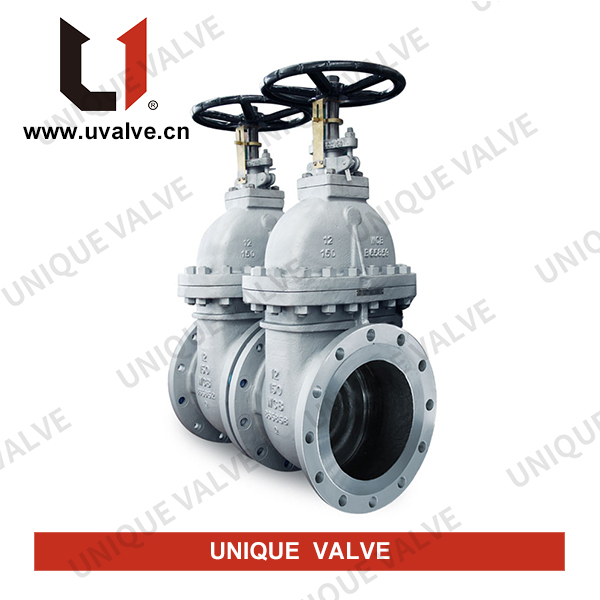
Non-rising Stem Gate Valve, 12 Inch, API 600, 150 LB, RF
Key Specifications / Features
Non-rising Stem Gate Valve Factory: API 600 Gate Valve, Non-rising Stem, Class 150 LB, 12 Inch, ASTM A216 WCB, RF Flange Ends, ASME B16.10, API 598.
Detail Information
Design standard: API 600.
Body material: ASTM A216 WCB.
Nominal diameter: 12 Inch.
Pressure: Class 150 LB.
End connection: RF Flange.
Face to face: ASME B16.10.
Working temperature: -29℃ - +300℃.
Test and inspection: API 598.
Design & Manufacture: API 598, DIN 3356, BS 7350.
Face to Face: ASME B16.10.
Flange Dimensions: ASME B16.5.
Pressure & Temperature: ASME B16.34.
Test & Inspection: API 6D, API 598.
Visual Inspection: MSS SP-55.
Marking: MSS SP-25.
Media: Crude Oil, Natural Gas, etc.
Material Option:
Carbon steel: ASTM A216 Gr. WCB, ASTM A216 WCC, ASTM A216 WCA, etc.
Low temperature steel: ASTM A352 Gr. LCB, ASTM A352 LCC, ASTM A352 LC1, etc.
Cr-Mo steel: ASTM A217 Gr. WC6, ASTM A217 WC9, ASTM A217 C5, ASTM A217 C12, ASTM A217 C12A, etc.
Stainless Steel: ASTM A351 Gr. CF8, ASTM A351 CF8M, ASTM A351 CF3, ASTM A351 CF3M, ASTM A351 CF8C, etc.
Alloy steel: CN7M alloy 20, CN3M alloy 20 modified, CT15C, etc.
Super duplex: ASTM A995 Gr. 4A, ASTM A995 5A, ASTM A995 CE8MN, ASTM A995 CD6MN, ASTM A995 CD3MN, etc.
Aluminum bronze: ASTM B148 C95500, ASTM B148 C95600, ASTM B148 C95800, etc.
Monel: M30C, M35-1, CZ100, etc.
Inconel: CY40 inconel 600, etc.
Hastelloy: CW2M Hastelloy C4, N12MV Hastelloy B, CW12MW Hastelloy C276, etc.
Incoloy: CU5MCuC Incoloy 825, CW6MC Incoloy 625, etc.
Body material: ASTM A216 WCB.
Nominal diameter: 12 Inch.
Pressure: Class 150 LB.
End connection: RF Flange.
Face to face: ASME B16.10.
Working temperature: -29℃ - +300℃.
Test and inspection: API 598.
Design & Manufacture: API 598, DIN 3356, BS 7350.
Face to Face: ASME B16.10.
Flange Dimensions: ASME B16.5.
Pressure & Temperature: ASME B16.34.
Test & Inspection: API 6D, API 598.
Visual Inspection: MSS SP-55.
Marking: MSS SP-25.
Media: Crude Oil, Natural Gas, etc.
Material Option:
Carbon steel: ASTM A216 Gr. WCB, ASTM A216 WCC, ASTM A216 WCA, etc.
Low temperature steel: ASTM A352 Gr. LCB, ASTM A352 LCC, ASTM A352 LC1, etc.
Cr-Mo steel: ASTM A217 Gr. WC6, ASTM A217 WC9, ASTM A217 C5, ASTM A217 C12, ASTM A217 C12A, etc.
Stainless Steel: ASTM A351 Gr. CF8, ASTM A351 CF8M, ASTM A351 CF3, ASTM A351 CF3M, ASTM A351 CF8C, etc.
Alloy steel: CN7M alloy 20, CN3M alloy 20 modified, CT15C, etc.
Super duplex: ASTM A995 Gr. 4A, ASTM A995 5A, ASTM A995 CE8MN, ASTM A995 CD6MN, ASTM A995 CD3MN, etc.
Aluminum bronze: ASTM B148 C95500, ASTM B148 C95600, ASTM B148 C95800, etc.
Monel: M30C, M35-1, CZ100, etc.
Inconel: CY40 inconel 600, etc.
Hastelloy: CW2M Hastelloy C4, N12MV Hastelloy B, CW12MW Hastelloy C276, etc.
Incoloy: CU5MCuC Incoloy 825, CW6MC Incoloy 625, etc.
Supplier Information
Wenzhou Unique Valve Co., Ltd.
Verified Supplier
温州永嘉瓯北三桥工业区
Est. 2017
Certifications:

uv*******01
900 article(s)
Comments
Leave a Comment