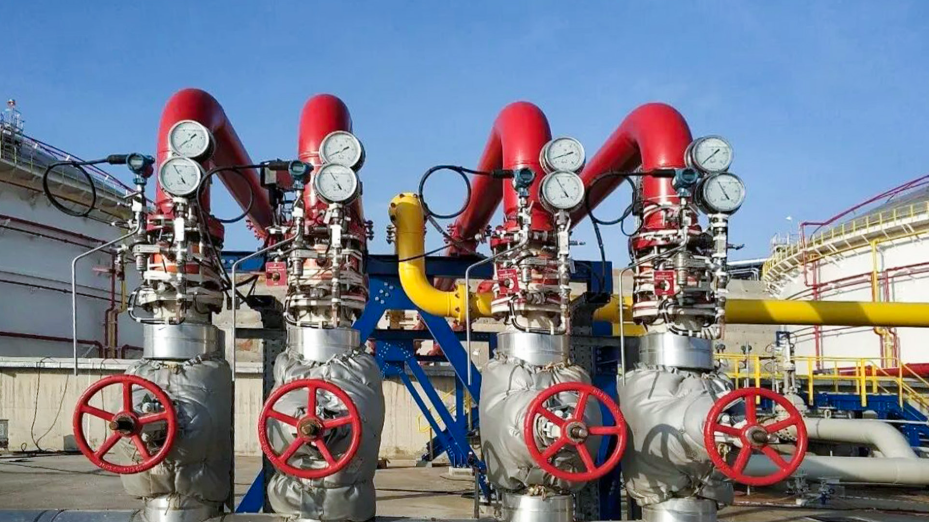
Selecting the right high-temperature valve is essential for ensuring pipeline safety, operational reliability, and long-term performance in industrial facilities. The correct selection must consider operating temperature, pressure, medium characteristics, material compatibility, sealing technology, valve structure, and installation conditions. Simply upgrading a standard-temperature valve without addressing thermal expansion, oxidation, creep, and sealing limitations can lead to premature failure, leakage, and serious safety hazards.
High-temperature valves are widely used in power generation, petrochemical processing, metallurgy, oil refining, chemical manufacturing, and other industries where pipelines transport steam, thermal oil, hot gases, molten salts, and other high-temperature media. As industrial processes become more demanding, valve manufacturers must provide products capable of maintaining mechanical strength, sealing integrity, and operational stability under increasingly severe conditions.
However, high-temperature valve selection is not simply a matter of choosing a material with a sufficiently high melting point. Engineers must evaluate the combined effects of temperature, pressure, corrosion, erosion, thermal cycling, operating frequency, and installation stress. A valve that performs reliably in a high-temperature steam pipeline may not be suitable for a high-temperature corrosive chemical pipeline, even if both systems operate at the same nominal temperature.
This article explains the essential factors involved in selecting high-temperature industrial valves and provides practical guidance for engineers, procurement specialists, pipeline designers, and industrial equipment buyers.
There is no single universal temperature threshold that defines every high-temperature valve application. Different industries use different classifications depending on the operating medium, pressure level, material specifications, and equipment design requirements. For practical industrial selection, however, engineers often divide high-temperature service into several approximate ranges.
The following classification provides a useful preliminary reference:
|
Temperature range |
Service classification |
Typical applications |
|---|---|---|
|
Below 200°C |
Standard to elevated temperature |
Hot water, low-temperature steam, thermal fluids |
|
200–450°C |
Medium-to-high temperature |
Industrial steam, hot oil, process heating |
|
450–600°C |
High temperature |
High-pressure steam, refinery processes, hot flue gas |
|
Above 600°C |
Ultra-high temperature |
Advanced power generation, metallurgy, specialized chemical processes |
These ranges are engineering guidelines rather than universal material or regulatory limits. The actual suitability of a valve depends on its pressure-temperature rating, material specification, construction, and operating conditions.
For example, a carbon steel valve may be suitable for certain moderate-temperature applications but become unsuitable for prolonged service at higher temperatures because its allowable stress decreases as temperature rises. Similarly, a stainless steel valve may offer excellent corrosion resistance but may not provide the creep strength required for long-term exposure to high-pressure steam.
Therefore, temperature classification should be treated as the starting point of valve selection rather than the final material selection criterion.
High temperature changes the mechanical and physical properties of valve materials. It also affects the dimensional stability of internal components, the performance of sealing materials, and the reliability of connections between the valve and pipeline.
Several mechanisms deserve particular attention.
1. Thermal Expansion
When a valve heats up, its body, bonnet, stem, disc, seat, and other components expand. However, different materials have different coefficients of thermal expansion. Even components made from the same material may experience different temperature distributions because of variations in wall thickness, fluid contact, and external insulation.
Uneven expansion can cause changes in clearances, excessive contact stress, seat deformation, or stem misalignment. In severe cases, the valve may become difficult to operate or may experience internal leakage.
2. Creep Deformation
Creep is the gradual, time-dependent deformation of a material under sustained mechanical stress at elevated temperatures. Unlike ordinary elastic deformation, creep continues over time and can eventually compromise the dimensional stability and structural integrity of pressure-containing components.
This is particularly important in steam pipelines, thermal power plants, and petrochemical facilities where valves may remain under high temperature and pressure for thousands of operating hours.
3. High-Temperature Oxidation and Corrosion
At elevated temperatures, metals can react more rapidly with oxygen, sulfur compounds, water vapor, and other substances in the process medium. Oxide scales may form on exposed surfaces, and corrosion can gradually reduce component thickness or damage sealing surfaces.
The corrosion mechanism depends heavily on the medium. High-temperature steam, sulfur-containing refinery gases, molten salts, and combustion gases can require very different material solutions.
4. Thermal Fatigue
Industrial valves rarely operate under perfectly constant temperatures. Startup, shutdown, load adjustment, and emergency isolation can produce repeated heating and cooling cycles.
These temperature fluctuations create alternating thermal stresses. Over time, repeated thermal cycling may cause cracks, distortion, fatigue damage, or deterioration of sealing interfaces.
5. Sealing Material Degradation
Conventional elastomers and many polymer-based sealing materials have limited temperature resistance. Excessive heat may cause softening, oxidation, loss of elasticity, extrusion, or chemical degradation.
Metal-to-metal sealing and appropriately selected high-temperature packing and gasket materials are therefore common solutions in severe-temperature services.
One of the most common mistakes in high-temperature valve procurement is selecting a valve based only on its maximum temperature specification.
A valve's pressure-bearing capacity generally decreases as operating temperature increases. Consequently, a Class 600 valve rated for a particular pressure at room temperature cannot automatically maintain that pressure rating at 500°C.
Engineers must check the pressure-temperature ratings of the selected valve material and pressure class. ASME B16.34 is a key reference for flanged, threaded, and welding-end steel and alloy valves, covering pressure-temperature ratings, materials, dimensions, examination, testing, and marking requirements.
For example, consider a steam pipeline operating at 520°C and 10 MPa. The selected valve must satisfy all of the following requirements:
-
The body material must retain sufficient allowable stress at 520°C.
-
The pressure class must be adequate at the actual operating temperature.
-
The bonnet, bolting, stem, and internal components must withstand the same thermal environment.
-
The packing and gasket system must maintain sealing performance under operating pressure and temperature.
-
The valve must tolerate startup, shutdown, and pressure fluctuations.
The design pressure and design temperature should also account for foreseeable operating excursions rather than relying exclusively on normal operating values.
Material selection is the first major technical decision in high-temperature valve engineering. The body, bonnet, trim, stem, packing, gaskets, and bolting all perform different functions and may require different material specifications.
A suitable valve material must provide an appropriate combination of high-temperature strength, creep resistance, oxidation resistance, corrosion resistance, thermal fatigue resistance, and manufacturability.
Carbon steel remains a widely used material for industrial valves because of its mechanical properties, availability, manufacturing maturity, and relatively economical cost.
Common specifications include ASTM A216 WCB for cast valve bodies and ASTM A105 for forged components.
WCB valves are frequently used in steam, oil, gas, and water systems. However, conventional carbon steel should not be treated as a universal solution for prolonged high-temperature service. Its allowable stress and long-term performance must be evaluated against the applicable pressure-temperature tables and material requirements.
In particular, prolonged exposure to temperatures above approximately 425°C requires careful evaluation of carbon steel suitability and potential metallurgical degradation.
Typical applications include:
-
Industrial steam pipelines operating within approved material limits.
-
Hot water and thermal oil systems.
-
General-purpose industrial process pipelines.
-
Medium-temperature power and chemical plant services.
Where higher pressure or more demanding mechanical performance is required, forged carbon steel valves may be preferable for smaller nominal diameters because forging can provide favorable material integrity and mechanical properties when properly manufactured and heat-treated.
Chromium-molybdenum steel is one of the most important material families for high-temperature and high-pressure industrial valves.
Chromium improves oxidation resistance and contributes to high-temperature strength, while molybdenum improves hardenability and creep resistance. These properties make Cr-Mo alloy steels particularly useful in steam pipelines, refinery equipment, boilers, and power generation facilities.
Common material families include:
|
Material |
Approximate alloy characteristics |
Typical applications |
|---|---|---|
|
ASTM A217 WC6 |
Approximately 1.25% Cr, 0.5% Mo |
High-temperature steam and process service |
|
ASTM A217 WC9 |
Approximately 2.25% Cr, 1% Mo |
High-temperature, higher-strength applications |
|
ASTM A217 C5 |
Approximately 5% Cr, 0.5% Mo |
Selected high-temperature refinery services |
|
ASTM A217 C12 |
Chromium-molybdenum alloy steel |
Specialized elevated-temperature applications |
The corresponding forged material families include ASTM A182 F11, F22, and other specified grades.
These materials are commonly considered for applications involving elevated temperatures, pressure, and demanding mechanical loads. However, their suitability depends on the exact grade, heat treatment, chemical composition, pressure rating, and service environment.
Why is Cr-Mo steel widely used in steam pipelines?
Its main advantages include:
-
Better resistance to high-temperature deformation than conventional carbon steel.
-
Improved resistance to oxidation under appropriate operating conditions.
-
Favorable creep strength for prolonged elevated-temperature service.
-
Established manufacturing and welding practices in power and petrochemical industries.
For high-temperature steam isolation, engineers often select Cr-Mo steel gate valves with pressure-seal or bolted-bonnet designs, depending on the pressure, size, temperature, and applicable design standard.
Stainless steel is another important material option for high-temperature valves. Its chromium content helps form a protective oxide layer, while nickel and other alloying elements improve its structural stability and corrosion resistance.
Common grades include 304, 316, 310S, and selected heat-resistant stainless steel alloys.
However, stainless steel grades should not be considered interchangeable.
-
304 stainless steel: Suitable for many general corrosion-resistant applications and selected elevated-temperature services.
-
316 stainless steel: Contains molybdenum, which improves resistance to certain forms of corrosion, particularly chloride-related pitting and crevice corrosion.
-
310S stainless steel: A high-chromium, high-nickel heat-resistant grade frequently considered for elevated-temperature oxidation environments.
-
Specialized heat-resistant stainless steels: May be required where thermal cycling, high-temperature strength, or specific chemical environments impose additional requirements.
An important distinction is that corrosion resistance and creep resistance are not the same property. A stainless steel valve may resist oxidation effectively but still require additional evaluation for sustained mechanical loading at high temperatures.
For example, 310S may be suitable for certain hot gas applications, but it should not automatically be specified for every high-pressure steam valve.
When temperatures exceed the practical limits of conventional carbon steel, Cr-Mo steel, or stainless steel, nickel-based alloys may become necessary.
Common examples include:
-
Inconel 600.
-
Inconel 625.
-
Inconel 718.
-
Selected Hastelloy alloys.
-
Other specialized nickel-chromium and nickel-molybdenum alloys.
These alloys can offer excellent combinations of oxidation resistance, corrosion resistance, and high-temperature mechanical properties.
For instance, Inconel 625 is widely recognized for its corrosion resistance and strength in demanding environments. Certain Hastelloy grades are particularly useful in aggressive chemical applications where ordinary stainless steel cannot provide sufficient corrosion protection.
Nevertheless, nickel-based alloys are not automatically suitable for every service above 600°C. Their suitability must be established using the actual operating temperature, stress, medium composition, exposure duration, and relevant material design data.
Material costs, welding requirements, machining difficulty, and supply availability must also be considered.
An important engineering principle is that valve material selection must be performed component by component rather than by specifying only the body material.
|
Valve component |
Main function |
Key material requirements |
|---|---|---|
|
Body |
Pressure containment |
High-temperature strength, creep resistance |
|
Bonnet |
Pressure containment and stem enclosure |
Thermal stability, pressure resistance |
|
Disc or gate |
Flow isolation |
Strength, wear resistance, dimensional stability |
|
Seat |
Sealing interface |
Hardness, oxidation resistance, corrosion resistance |
|
Stem |
Transfers operating force |
High-temperature strength, anti-galling properties |
|
Packing |
Prevents stem leakage |
Thermal stability, sealing performance |
|
Gasket |
Prevents body-bonnet leakage |
Compression stability, temperature resistance |
|
Bolting |
Maintains joint integrity |
High-temperature tensile and creep strength |
In some applications, the trim materials and sealing surfaces may need greater hardness or better corrosion resistance than the body material.
However, specifying a trim material with a higher nominal temperature limit does not automatically guarantee better valve performance. Compatibility between mating materials, thermal expansion, hardness, galling resistance, and manufacturing quality must also be considered.
Material selection determines whether a valve can withstand the thermal environment, while structural design determines whether it can operate reliably under actual pipeline conditions.
In high-temperature applications, engineers generally favor valve structures with proven pressure-bearing capability, stable sealing arrangements, suitable thermal clearances, and manageable maintenance requirements.
Different valve types have distinct advantages and limitations.
Gate valves are widely used in high-temperature industrial pipelines, particularly where the primary requirement is fully opening or fully closing the flow.
A gate valve operates by moving a wedge or parallel gate perpendicular to the direction of fluid flow. When fully open, many gate valves provide a relatively unobstructed flow passage, resulting in comparatively low pressure loss.
Main advantages:
-
Suitable for high-pressure and high-temperature isolation applications.
-
Available in a wide range of nominal diameters and pressure classes.
-
Metal-to-metal seating can provide reliable shutoff when properly designed.
-
Suitable for steam, oil, gas, and other industrial media.
-
Can be manufactured with forged or cast bodies according to application requirements.
For high-temperature and high-pressure pipelines, Cr-Mo alloy steel gate valves are frequently selected.
Forged steel gate valves are particularly common in smaller nominal sizes, while cast steel gate valves are widely used in larger pipeline systems.
Typical design considerations include:
-
Flexible wedge or other thermally suitable gate configurations.
-
Hardfaced sealing surfaces, where required.
-
Appropriate stem and packing arrangements.
-
Pressure-seal bonnet construction for selected high-pressure applications.
-
Bolted-bonnet construction where appropriate for the pressure and temperature range.
Important limitation: Gate valves are generally not recommended for continuous throttling. Operating them partially open may produce vibration, erosion, and localized damage to the seating surfaces.
Metal-seated ball valves are suitable for certain high-temperature applications requiring rapid operation, tight shutoff, and frequent switching.
Unlike conventional soft-seated ball valves, metal-seated designs use metallic sealing interfaces, often incorporating hardfacing materials such as cobalt-based alloys.
The ball rotates approximately 90 degrees between the fully open and fully closed positions, allowing relatively fast operation and convenient integration with pneumatic or electric actuators.
Main advantages include:
-
Fast quarter-turn operation.
-
Compact operating mechanism compared with many multi-turn valve designs.
-
Good shutoff performance when the seating system is correctly engineered.
-
Suitability for selected high-pressure and high-temperature services.
-
Full-bore designs can reduce flow resistance and minimize areas where deposits accumulate.
Metal-seated trunnion-mounted ball valves are frequently considered for demanding oil and gas applications.
However, high-temperature ball valve selection requires careful consideration of thermal expansion, seat loading, body cavity pressure, stem sealing, and anti-galling performance.
For example, a ball and seat assembly that operates reliably at room temperature may experience excessive friction or altered sealing contact after heating. Therefore, thermal clearances and seat-spring arrangements must be designed for the specified operating range.
Ball valves should also not automatically be regarded as ideal for every high-temperature service involving solid particles. Hard particles can damage seating surfaces, and some media may accumulate in body cavities.
Butterfly valves are particularly attractive for large-diameter, relatively low-pressure pipeline systems.
They regulate or isolate flow through a disc that rotates around a central or offset shaft. Their compact structure, relatively low weight, and reduced installation space make them suitable for industrial ventilation, exhaust gas, and hot air systems.
High-temperature metal-seated butterfly valves may use:
-
Stainless steel discs.
-
Alloy steel or stainless steel bodies.
-
Metal-to-metal sealing arrangements.
-
High-temperature shaft packing.
-
Double-offset or triple-offset configurations.
Triple-offset butterfly valves are especially useful in demanding isolation applications because their geometry reduces sliding contact between the sealing surfaces during operation.
This can reduce seat wear and improve sealing performance when the valve is correctly manufactured and installed.
Typical applications:
-
Industrial furnaces.
-
Hot air pipelines.
-
Flue gas systems.
-
Metallurgical production lines.
-
Large-diameter thermal processing equipment.
Nevertheless, butterfly valves are generally more sensitive to flow-induced forces, disc deformation, and installation alignment than some other valve designs. Their suitability must be evaluated according to differential pressure, temperature distribution, and required leakage performance.
Globe valves are commonly used where flow regulation and precise control are more important than minimizing pressure loss.
The disc moves toward or away from a stationary seat, changing the effective flow area. This design provides relatively good throttling characteristics compared with gate valves.
High-temperature globe valves are widely used in:
-
Steam systems.
-
Boiler feedwater systems.
-
Thermal power plants.
-
Industrial process heating.
-
High-temperature pressure regulation systems.
For elevated-temperature applications, engineers should consider pressure drop, fluid velocity, cavitation or flashing where applicable, and the thermal behavior of the stem and packing.
Globe valves may require higher operating torque or thrust than some alternative designs. They also generally create greater flow resistance than full-bore gate valves.
For high-temperature service, extended bonnet or appropriately designed stem arrangements may be used to manage heat transfer toward the packing and actuator.
Check valves prevent reverse flow and protect pumps, compressors, boilers, and other equipment.
Common high-temperature designs include swing check valves and lift check valves.
|
Check valve type |
Main characteristics |
Typical applications |
|---|---|---|
|
Swing check valve |
Disc swings away from the seat |
Larger pipelines, steam and water systems |
|
Lift check valve |
Disc moves vertically |
Smaller high-pressure pipelines |
|
Tilting-disc check valve |
Disc rotates around an offset pivot |
Applications requiring improved dynamic response |
Swing check valves are often selected for larger pipelines where flow conditions permit their use. Lift check valves may be preferable for certain smaller, higher-pressure applications.
When selecting high-temperature check valves, engineers should evaluate closing speed, reverse-flow characteristics, water hammer risk, disc stability, and the effects of thermal expansion on moving components.
A valve that closes too slowly may allow damaging reverse flow, while one that closes too abruptly may generate severe pressure transients.
The following table summarizes their general application characteristics.
|
Valve type |
Pressure capability |
Flow resistance |
Typical function |
Common applications |
|---|---|---|---|---|
|
Gate valve |
Medium to very high |
Low when fully open |
Isolation |
Steam and high-pressure pipelines |
|
Metal-seated ball valve |
Medium to very high |
Low in full-bore designs |
Fast isolation |
Oil, gas, chemical processing |
|
Metal-seated butterfly valve |
Low to medium in many designs |
Relatively low |
Isolation and regulation |
Flue gas and large ducts |
|
Globe valve |
Medium to very high |
Relatively high |
Flow regulation |
Steam and process control |
|
Check valve |
Depends on design |
Design-dependent |
Reverse-flow prevention |
Boiler and pump systems |
These are general comparisons, not fixed pressure or temperature limits. Actual ratings depend on the valve design, materials, dimensions, and applicable standards.
Temperature and pressure determine the basic mechanical requirements of a valve, but the properties of the process medium often determine the final material and structural configuration.
Two pipelines operating at 500°C may require completely different valve designs if one transports clean steam and the other carries corrosive gas containing solid particles.
Clean steam, hot water, and certain thermal oils are relatively straightforward applications compared with abrasive or highly corrosive media.
For these services, engineers generally focus on:
-
Operating and design pressure.
-
Temperature-dependent material strength.
-
Thermal expansion and deformation.
-
Stem and bonnet sealing.
-
Pressure loss and flow capacity.
-
Startup and shutdown conditions.
Cr-Mo steel gate valves and globe valves are commonly considered for high-temperature steam systems, depending on their operating parameters.
For thermal oil pipelines, material compatibility with the specific oil formulation is also important, especially where oxidation products or decomposition products may accumulate during prolonged operation.
Pipelines transporting hot gas containing dust, ash, catalyst particles, or other solids present additional challenges.
Solid particles can cause erosion, abrasion, seat damage, and jamming. These problems become more serious when the medium also operates at high velocity.
Recommended selection considerations include:
1. Avoid unnecessary internal cavities.
Valve structures with areas where particles can accumulate may become difficult to operate. Engineers should evaluate the potential for deposits in body cavities, around discs, and near sealing interfaces.
2. Select wear-resistant materials.
Hardfacing alloys, suitable stainless steels, and specialized wear-resistant coatings can improve the service life of exposed surfaces.
3. Consider flow direction and installation orientation.
The direction of particle movement and the valve's operating position can significantly influence erosion and accumulation.
4. Evaluate maintenance accessibility.
In systems containing abrasive media, inspection and replacement of vulnerable components should be considered during the initial design stage.
For example, a high-temperature metal-seated butterfly valve may be suitable for certain large flue gas pipelines, while a different isolation design may be required for a dense solids-laden process stream.
Corrosive media impose strict requirements on both pressure-containing components and internal sealing surfaces.
Examples include:
-
Sulfur-containing refinery gases.
-
High-temperature acidic process streams.
-
Corrosive chemical vapors.
-
Molten salts.
-
Specialized chemical reaction products.
Material selection must consider not only the temperature but also the chemical composition, concentration, pressure, and exposure duration.
For example, 316 stainless steel may provide better resistance to certain chloride-related corrosion mechanisms than 304 stainless steel, but neither grade is universally suitable for every high-temperature chloride environment.
Nickel-based alloys, specialized stainless steels, and other corrosion-resistant alloys may be necessary for particularly aggressive conditions.
Where corrosion is highly localized, engineers should also evaluate crevice corrosion, stress corrosion cracking, sulfidation, and erosion-corrosion rather than relying solely on general corrosion resistance data.
High-temperature pipelines transporting flammable gases, combustible liquids, or other hazardous substances require additional safety considerations.
The selected valve should be evaluated for:
-
External leakage prevention.
-
Fire-safe design requirements.
-
Antistatic provisions where applicable.
-
Reliable emergency isolation.
-
Suitable actuator and fail-safe behavior.
-
Appropriate stem and body sealing arrangements.
Fire-safe valve designs are especially important in oil, gas, and petrochemical facilities.
Relevant testing standards include API 607 and ISO 10497 for applicable valve types and fire-test requirements. These standards should be selected according to the valve design and project specification rather than assumed to apply identically to every valve category.
For emergency shutdown applications, the valve must also be evaluated as part of the complete shutdown system. The actuator, power source, control logic, closing time, and failure position are all important.
Steam pipelines deserve particular attention because high-temperature steam systems often combine elevated pressure, thermal cycling, and prolonged operating periods.
In power generation and industrial boiler systems, common applications include:
-
Main steam isolation.
-
Superheated steam pipelines.
-
Reheated steam systems.
-
Boiler outlet pipelines.
-
Steam distribution headers.
These services may require Cr-Mo or higher-alloy steels, depending on the design temperature and pressure.
In addition to material selection, engineers should pay particular attention to thermal fatigue, steam oxidation, startup procedures, and drainage arrangements.
Condensate accumulation during startup can create severe water hammer risks. Appropriate drain valves, warm-up procedures, and pipeline slopes are therefore essential parts of a reliable steam system.
A high-temperature valve is only as reliable as its sealing system. Even if the valve body retains sufficient mechanical strength, leakage can occur when packing, gaskets, or seating surfaces cannot withstand the operating environment.
Many conventional valve seals use rubber, elastomers, PTFE, or other polymer-based materials.
These materials can provide excellent sealing performance under suitable conditions, but their temperature limitations vary considerably.
For example, ordinary rubber seals may rapidly lose their mechanical properties at temperatures far below those tolerated by specialized high-temperature polymers. PTFE also has a defined continuous service temperature and cannot be treated as a universal high-temperature sealing material.
Therefore, it is incorrect to assume that every polymer seal automatically fails at 200°C. The actual limit depends on the material grade, pressure, chemical environment, and manufacturer specifications.
Nevertheless, for demanding high-temperature metal valves, metal-to-metal sealing is often preferred because it avoids dependence on conventional elastomeric seats.
Metal-to-metal sealing uses carefully machined metallic surfaces to achieve shutoff.
The sealing surfaces may be manufactured from stainless steel, alloy steel, or other suitable materials, with hardfacing applied where additional wear resistance is required.
Cobalt-based Stellite alloys, including Stellite 6, are widely used in selected demanding valve applications.
Their advantages include:
-
Good resistance to wear and surface damage.
-
High-temperature hardness retention.
-
Improved resistance to galling in suitable material combinations.
-
Better resistance to erosion than many untreated surfaces.
However, metal-to-metal sealing does not automatically guarantee zero leakage. Surface finish, geometry, contact pressure, hardness, alignment, and thermal deformation all influence the final sealing performance.
For critical isolation services, the required leakage class and applicable test procedures should be explicitly specified.
Flexible graphite packing is widely used in high-temperature valve stem sealing systems.
Compared with conventional elastomeric packing, flexible graphite generally offers much better thermal stability and can maintain sealing performance under demanding temperature conditions when properly designed and installed.
Its main advantages include:
-
Good high-temperature resistance.
-
Suitable compressibility and recovery characteristics.
-
Compatibility with many industrial steam and hydrocarbon services.
-
Availability in rings, braided packing, and reinforced configurations.
However, graphite packing must be selected according to the medium, oxidation conditions, pressure, stem finish, and manufacturer temperature limits.
In strongly oxidizing environments, graphite may require additional protection or a different sealing solution.
The body-bonnet connection is another critical potential leakage point.
Common high-temperature gasket options include:
-
Flexible graphite gaskets.
-
Graphite-filled spiral wound gaskets.
-
Metal-jacketed graphite gaskets.
-
Solid metallic gaskets.
-
Ring-type joint gaskets.
For higher-pressure and higher-temperature applications, engineers may select spiral wound or metallic gasket designs according to the flange geometry and service requirements.
The gasket must be compatible with the flange facing, bolt load, operating pressure, temperature, and thermal cycling conditions.
A suitable gasket alone cannot compensate for insufficient flange stiffness, incorrect bolt tightening, poor surface finish, or improper installation.
In certain high-temperature applications, extended bonnet designs are used to reduce heat transfer from the process fluid toward the packing and actuator.
The extended stem arrangement can help maintain the packing region at a more favorable temperature, depending on the valve design and installation.
This is particularly important when the packing material, actuator, or accessories have lower temperature limits than the valve body.
The extension length should be determined according to the process temperature, ambient conditions, insulation arrangement, and manufacturer design calculations. It should not be selected using a universal fixed dimension.
A high-temperature valve must satisfy both the mechanical design requirements and the relevant industrial standards. Compliance is particularly important in power generation, oil refining, petrochemical processing, and other industries where valve failure can lead to equipment damage, production interruptions, or safety incidents.
Several international standards are frequently referenced when specifying industrial high-temperature valves.
|
Standard |
Main scope |
Relevance to high-temperature valves |
|---|---|---|
|
ASME B16.34 |
Valve pressure-temperature ratings, materials, dimensions and testing |
Pressure-bearing design and material selection |
|
API 600 |
Steel gate valves |
Gate valve design and construction |
|
API 602 |
Compact steel gate, globe and check valves |
Smaller forged steel valves |
|
API 594 |
Check valves |
Check valve design requirements |
|
API 608 |
Metal ball valves |
Metal ball valve construction |
|
API 609 |
Butterfly valves |
Butterfly valve design |
|
API 607 |
Fire testing of applicable quarter-turn valves and valves with nonmetallic seats |
Fire-safe performance |
|
ISO 10497 |
Fire type-testing of valves |
Fire resistance verification |
|
ISO 15848-1 |
Fugitive emissions testing and classification |
External leakage performance |
The applicable edition and project-specific requirements should always be checked before purchasing or manufacturing a valve.
ASME B16.34 is particularly important because it covers pressure-temperature ratings, materials, dimensions, examination, testing, and marking for specified steel and alloy valves.
API valve standards should be selected according to valve type. For example, API 600 is associated with steel gate valves, whereas API 608 addresses metal ball valves and API 609 addresses butterfly valves.
The nominal pressure class is not the same as the actual allowable operating pressure at every temperature.
For example, a valve marked Class 300 or Class 600 must be evaluated using the pressure-temperature rating associated with its material group and applicable standard.
The selection process should include:
-
Identify the valve body material specification.
-
Confirm the applicable material group.
-
Determine the design temperature.
-
Obtain the corresponding allowable pressure from the applicable rating table.
-
Compare the allowable pressure with the system design pressure.
-
Check the ratings of connected flanges, piping, gaskets, and bolting.
The lowest-rated component in the assembled pressure boundary may govern the permissible operating conditions.
It is also important to distinguish between maximum operating pressure, design pressure, hydrostatic test pressure, and maximum allowable working pressure. These values serve different engineering purposes and should not be used interchangeably.
The manufacturing process significantly influences the reliability of high-temperature valves.
Cast steel valves are widely used in larger sizes and complex body configurations. Forged steel valves are frequently selected for smaller high-pressure applications where material integrity and mechanical properties are especially important.
Neither manufacturing method is automatically superior in every application.
A qualified manufacturer should control:
-
Chemical composition.
-
Heat treatment.
-
Mechanical properties.
-
Casting or forging quality.
-
Dimensional accuracy.
-
Machining tolerances.
-
Welding and hardfacing procedures.
-
Nondestructive examination.
-
Pressure testing and final inspection.
For critical high-temperature services, the purchaser may require additional examinations such as ultrasonic testing, radiographic testing, magnetic particle testing, or liquid penetrant testing, depending on the material, manufacturing route, and project specification.
High-temperature valves are often installed in systems where long-term reliability is essential. Consequently, material traceability is an important part of quality assurance.
Purchasers should request appropriate documentation, including:
-
Material Test Certificates.
-
Chemical composition reports.
-
Mechanical property test results.
-
Heat treatment records.
-
Nondestructive examination reports.
-
Pressure test certificates.
-
Final inspection records.
Where required by the project, material certificates should comply with the applicable inspection and documentation requirements, such as EN 10204 Type 3.1.
Traceability helps confirm that the installed valve corresponds to the specified material grade and manufacturing requirements.
Even a well-designed valve can fail prematurely if the pipeline layout, support arrangement, or installation procedure is inappropriate.
High-temperature pipelines undergo dimensional changes during heating and cooling. These changes can generate additional mechanical loads on valves, flanges, supports, and connected equipment.
Pipeline expansion must be considered during the design stage.
When a pipeline heats up, it expands along its length. If this expansion is excessively restricted, additional forces and bending moments may be transferred to the valve body and connected flanges.
These loads can cause:
-
Valve body distortion.
-
Flange leakage.
-
Stem misalignment.
-
Increased operating torque.
-
Damage to internal seating surfaces.
-
Fatigue damage to connected piping.
Engineers should evaluate the pipeline's thermal expansion and provide suitable flexibility through expansion loops, expansion joints, or other engineered arrangements where appropriate.
Valve supports and guides must also be designed to accommodate the expected movement without imposing excessive loads on the valve.
The installation orientation should comply with the valve manufacturer's instructions and the specific valve design.
For example:
-
Gate valves are commonly installed with the stem vertical where the design and maintenance arrangement permit.
-
Check valve orientation must match the flow direction and the manufacturer's permitted installation positions.
-
Globe valves should be installed according to their flow-direction requirements.
-
Large actuated valves may require additional support to prevent excessive loads on the pipeline.
Incorrect installation may affect internal component movement, actuator performance, drainage, and maintenance accessibility.
High-temperature flange connections must withstand changes in temperature, pressure, and bolt loading.
Common flange facing arrangements include:
-
Raised Face (RF).
-
Ring Type Joint (RTJ).
-
Male and Female (M&F).
-
Tongue and Groove (T&G).
The selection depends on the pressure class, temperature, gasket type, applicable flange standard, and project requirements.
For high-pressure and high-temperature applications, RTJ connections may be specified where the relevant flange and gasket standards permit them.
Bolting material is equally important. Conventional bolts may lose strength or experience excessive creep under prolonged elevated-temperature exposure. Therefore, bolts and nuts must be selected according to the specified temperature and mechanical loading.
Thermal insulation helps reduce heat loss, improve energy efficiency, and protect personnel from hot surfaces.
However, insulation should not be applied without considering valve maintenance and operating requirements.
The following points should be evaluated:
-
Whether the valve bonnet and packing area require insulation.
-
Whether the actuator has an independent temperature limitation.
-
Whether the stem requires sufficient clearance for thermal movement.
-
Whether inspection and packing replacement can be performed safely.
-
Whether insulation could trap moisture and promote external corrosion.
For certain high-temperature valves, removable insulation covers are preferable because they allow maintenance personnel to access the bonnet, packing gland, and other components.
Before a high-temperature valve is put into service, the installation should be inspected and tested according to the project requirements and applicable standards.
A practical pre-commissioning checklist includes:
-
Verify valve material and pressure class.
-
Confirm flow direction and installation orientation.
-
Inspect flange alignment and bolting.
-
Check actuator mounting and operating clearances.
-
Verify stem and packing installation.
-
Confirm that the pipeline has been cleaned and flushed where required.
-
Perform the specified pressure and leakage tests.
-
Check the valve's operation and travel limits.
-
Confirm that insulation and supports do not interfere with operation.
For particularly demanding services, thermal cycling or other application-specific qualification tests may be required. Such testing should follow an approved procedure rather than relying on an informal heating test.
Incorrect valve selection often results from overlooking interactions between material properties, pipeline conditions, and operating requirements.
The following mistakes are particularly common.
A valve advertised as suitable for 600°C is not necessarily suitable for a pipeline operating at 600°C and 15 MPa.
The pressure-temperature rating, material grade, component dimensions, and design conditions must all be verified.
Better approach: Evaluate the complete operating envelope, including pressure, temperature, startup conditions, and foreseeable excursions.
Conventional elastomeric seats and many polymer-based sealing systems cannot withstand the temperatures associated with demanding high-temperature applications.
However, the actual limitations vary by material grade and construction.
Better approach: Select a properly engineered metal-seated design or a specifically qualified high-temperature sealing system.
The valve body may be suitable for the operating temperature, but the stem, disc, seat, packing, or bolting may have lower temperature limits.
This can result in leakage, deformation, or mechanical failure.
Better approach: Review the complete bill of materials and verify the suitability of every pressure-containing and functional component.
A valve installed between rigidly supported pipelines may experience excessive loads when the system heats up.
Better approach: Include thermal stress analysis, pipeline flexibility, support design, and flange load evaluation in the engineering process.
A gate valve may be appropriate for isolation but unsuitable for continuous throttling. A butterfly valve may be economical for a large low-pressure duct but inappropriate for a high-pressure steam application.
Better approach: Match the valve's primary function to the process requirements, including isolation, regulation, reverse-flow prevention, and emergency shutdown.
High-temperature valves made from alloy steel, stainless steel, or nickel-based alloys may have significantly higher initial costs than conventional carbon steel products.
However, the total cost of ownership also includes installation, energy losses, maintenance, replacement, and potential production downtime.
Better approach: Compare the expected lifecycle cost rather than selecting a valve based exclusively on its initial purchase price.
Selecting the right valve manufacturer is just as important as selecting the right valve model.
Industrial purchasers should evaluate the supplier's technical capabilities, manufacturing experience, quality management, and ability to provide customized solutions.
A professional high-temperature valve manufacturer should be able to recommend suitable body, trim, stem, packing, gasket, and bolting materials according to the actual operating conditions.
The supplier should understand the differences between carbon steel, Cr-Mo alloy steel, stainless steel, and nickel-based alloys.
It should also be able to explain the applicable pressure-temperature ratings and provide supporting technical documentation.
A qualified manufacturer should have established procedures for casting or forging, machining, assembly, heat treatment, testing, and inspection.
Important capabilities include:
-
Precision machining equipment.
-
Qualified welding and hardfacing processes.
-
Controlled heat treatment.
-
Pressure testing facilities.
-
Nondestructive examination arrangements.
-
Material identification and traceability.
-
Documented quality management procedures.
ISO 9001-based quality management is a useful indicator of an established quality system, although certification alone does not guarantee product suitability.
Different industrial applications require different valve configurations.
A capable supplier should offer appropriate solutions across multiple valve types, sizes, pressure classes, and connection configurations.
For example, a project may require:
-
ASTM A217 WC6 or WC9 high-temperature gate valves.
-
ASTM A182 F11 or F22 forged steel valves.
-
Stainless steel metal-seated ball valves.
-
High-temperature butterfly valves.
-
Alloy steel globe valves.
-
Specialized check valves.
The supplier should also be able to accommodate specific requirements involving extended bonnets, special hardfacing, customized actuators, and alternative flange or welding-end connections.
Before placing an order, industrial buyers should confirm that the manufacturer can provide the necessary technical documents.
These may include:
-
General arrangement drawings.
-
Material specifications.
-
Pressure-temperature rating information.
-
Product data sheets.
-
Inspection and test plans.
-
Pressure test reports.
-
Installation and maintenance manuals.
-
Spare parts recommendations.
After-sales support is particularly important for critical high-temperature systems because unexpected failures can result in expensive shutdowns.
A reliable supplier should be capable of helping customers identify the cause of valve problems and recommend appropriate corrective measures.
Before purchasing a high-temperature industrial valve, engineers and procurement teams should collect sufficient operating information and confirm that the selected product meets the technical requirements.
The following checklist can help reduce selection errors.
Essential engineering information
|
Parameter |
Information to confirm |
|---|---|
|
Medium |
Steam, thermal oil, hot gas, molten salt, chemicals, etc. |
|
Normal temperature |
Continuous operating temperature |
|
Design temperature |
Maximum specified design temperature |
|
Normal pressure |
Actual operating pressure |
|
Design pressure |
Maximum specified design pressure |
|
Nominal size |
DN or NPS |
|
Pressure class |
PN or ASME Class |
|
Body material |
WCB, WC6, WC9, F11, F22, stainless steel, etc. |
|
Trim material |
Disc, gate, seat, and stem materials |
|
Sealing type |
Metal-to-metal, graphite, or qualified special sealing |
|
Valve function |
Isolation, regulation, or non-return |
|
Connection |
Flanged, butt-weld, or other specified connection |
|
Operating method |
Manual, gearbox, pneumatic, or electric |
|
Environmental conditions |
Outdoor, corrosive, dusty, or humid |
|
Applicable standards |
ASME, API, ISO, and project specifications |
A practical selection workflow:
-
Identify the process medium and its chemical characteristics.
-
Determine the normal and maximum design temperatures.
-
Confirm operating and design pressures.
-
Select suitable body and trim materials.
-
Determine the appropriate valve structure.
-
Select the packing, gasket, and sealing configuration.
-
Verify pressure-temperature ratings and applicable standards.
-
Evaluate thermal expansion, installation loads, and actuator requirements.
-
Confirm manufacturer qualifications and inspection documentation.
-
Complete installation inspection and commissioning tests.
This process helps ensure that the selected valve is suitable not only for its initial operating conditions but also for long-term industrial service.
Selecting high-temperature pipeline valves requires a systematic evaluation of material properties, pressure-temperature ratings, valve structures, sealing technologies, process media, and installation conditions. There is no universal valve design or material suitable for every high-temperature application.
For moderate high-temperature services, appropriately rated carbon steel and stainless steel valves may provide economical and reliable solutions. As temperature and pressure increase, Cr-Mo alloy steel valves become increasingly important. For particularly demanding environments, specialized stainless steels and nickel-based alloys may be necessary.
Valve structure must also match the intended function. Gate valves are widely used for high-temperature isolation, metal-seated ball valves provide convenient quarter-turn operation, butterfly valves are attractive for large-diameter low-pressure systems, and globe valves offer better flow regulation capabilities.
More importantly, engineers must consider the entire valve assembly rather than focusing exclusively on the body material. Packing, gaskets, stems, seats, bolting, and actuator arrangements all influence operational reliability.
For industrial valve manufacturers and suppliers, providing high-temperature solutions is not simply about offering products with higher temperature specifications. It requires comprehensive engineering capabilities, material control, manufacturing quality, and application-specific technical support.
Ultimately, the best high-temperature valve is the one that matches the actual operating conditions, maintains reliable sealing performance, and delivers a safe and economical service life throughout the pipeline system.