Why Choose Cast Steel Suppliers From China for Industrial Valves
Global industries continue to demand dependable valves for oil and gas, petrochemical processing, power generation, marine service, water treatment, mining, and general industrial pipelines. Among the many valve materials available, cast steel remains one of the most widely selected options because it combines strength, pressure resistance, temperature tolerance, machinability, and cost efficiency. As infrastructure projects expand worldwide, buyers increasingly source cast steel valves from China due to the country's advanced manufacturing capacity, strong supply chains, and competitive pricing.
China has become one of the world's most important industrial manufacturing centers. Many Chinese factories now produce cast steel globe valves, gate valves, check valves, ball valves, and custom-engineered products that meet international standards such as API, ASME, BS, DIN, EN, JIS, and ISO. Modern production lines, CNC machining centers, quality laboratories, and export experience have helped Chinese suppliers earn the trust of customers across North America, Europe, the Middle East, Southeast Asia, Africa, and South America.
This article explains what cast steel globe valves are, their key benefits, how to choose the right valve, and why selecting cast steel suppliers from China can be a smart business decision.

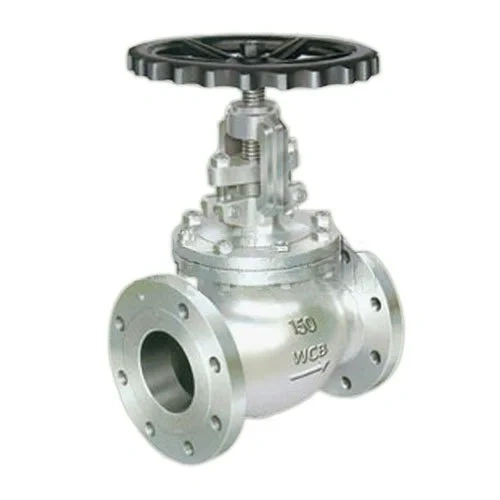
A cast steel globe valve is a linear motion valve designed to start, stop, and regulate fluid flow. It uses a movable disc or plug that travels perpendicular to the seat ring. When the disc lifts away from the seat, flow begins. When the disc returns to the seat, the flow path is restricted or shut off completely.
The valve body is manufactured through steel casting, where molten steel is poured into molds to create the required shape. After cooling, the body undergoes machining, inspection, assembly, and pressure testing. Cast steel construction provides strong mechanical properties and excellent structural integrity.
Globe valves are particularly valued for throttling service because they allow operators to adjust flow rates accurately. Unlike some valves designed mainly for full open or full close service, globe valves are ideal when precise control is required.
Typical components include:
- Body
- Bonnet
- Disc or plug
- Seat ring
- Stem
- Gasket
- Packing
- Handwheel or actuator
- Yoke and fasteners
Depending on service conditions, cast steel globe valves may use:
- ASTM A216 WCB for general carbon steel service
- ASTM A217 WC6 / WC9 for elevated temperature service
- ASTM A351 CF8 / CF8M for stainless steel corrosion resistance
- Duplex stainless steel for aggressive media
- Low-temperature grades for cryogenic use
Cast steel globe valves are widely used in:
- Steam systems
- Boiler feed lines
- Condensate systems
- Cooling water networks
- Chemical plants
- Fuel oil systems
- Gas pipelines
- Marine piping systems
- Power stations
Cast steel offers high tensile strength and good impact resistance. This allows the valve to perform under demanding operating conditions involving pressure fluctuations, vibration, and repeated operation.
The disc-to-seat design creates effective sealing. When manufactured with precision machining and quality seating surfaces, cast steel globe valves provide dependable shutoff performance.
One of the biggest advantages of globe valves is throttling capability. Operators can gradually open or close the valve to regulate flow with better precision than many quarter-turn valves.
Depending on the alloy selected, cast steel valves can operate in both moderate and elevated temperatures. Alloy grades such as WC6 and WC9 are popular in thermal power and refinery systems.
When correctly selected and maintained, cast steel globe valves can deliver years of service. Replaceable trim components further extend usable life.
Many globe valves feature bolted bonnet designs that allow easier maintenance, internal inspection, and trim replacement without replacing the full valve.
Cast steel globe valves are available from small utility sizes to large industrial diameters, with pressure classes such as 150, 300, 600, 900, 1500, and higher depending on standards.
Over the last two decades, China has invested heavily in industrial manufacturing. This has transformed the valve sector into a globally competitive industry.
Chinese suppliers can produce high volumes efficiently. This is especially important for EPC contractors, distributors, and plant projects that require bulk quantities on tight schedules.
China's manufacturing ecosystem includes:
- Steel foundries
- Forging facilities
- Machining centers
- Fastener suppliers
- Coating providers
- Testing laboratories
- Logistics networks
This integrated supply chain reduces lead times and supports consistent production.
Due to scale efficiencies, automation, and supply chain advantages, many Chinese suppliers offer attractive pricing while maintaining required quality standards.
Modern factories now use:
- CNC machining
- Spectrometers for material verification
- NDT inspection systems
- Hydrostatic and pneumatic testing rigs
- CAD/CAM engineering systems
- ERP production management
These technologies improve consistency and traceability.
Many Chinese valve manufacturers regularly ship to international markets and understand export documentation, packaging, marking, inspection procedures, and project requirements.
Selecting the right valve requires evaluating operating conditions carefully.
Know whether the medium is:
- Water
- Steam
- Oil
- Gas
- Slurry
- Chemical fluid
- Corrosive liquid
The medium determines material compatibility and trim selection.
Choose a valve pressure class suitable for normal and maximum operating pressure. Safety margin is important.
High temperature service may require alloy steel rather than standard carbon steel.
Valve size should match pipeline design and required flow capacity. Oversized or undersized valves can reduce efficiency.
If throttling is frequent, globe valves are an excellent choice. If only on/off service is needed, other valve types may also be considered.
Common end connections include:
- RF flanged
- RTJ flanged
- Butt weld
- Socket weld
- Threaded
Choose based on piping code and maintenance preference.
Available actuation options:
- Manual handwheel
- Gear operation
- Pneumatic actuator
- Electric actuator
- Hydraulic actuator
Verify requirements such as:
- ASME B16.34
- BS 1873
- API 598
- MSS SP standards
- NACE compliance if sour service is required
Many global buyers find Chinese suppliers offer strong value. Competitive manufacturing costs help reduce project budgets.
For standard valve models, lead times can be significantly shorter than some alternative sourcing regions.
Chinese manufacturers often provide:
- Private labeling
- Custom marking
- Modified trim materials
- Extended stems
- Special coatings
- Locking devices
- Project documentation packs
Whether customers need sample orders, distributor stock quantities, or container-scale project orders, many factories can accommodate demand.
Leading factories invest in R&D for:
- Low-emission packing systems
- Fire-safe designs
- Anti-static devices
- Cryogenic valves
- Severe service trim
- Smart automation compatibility
Not all suppliers are equal. Proper supplier selection is essential.
Look for quality systems such as:
- ISO 9001
- CE where applicable
- API licenses if required
- PED for Europe if needed
Confirm in-house or third-party testing for:
- Shell pressure test
- Seat leakage test
- PMI
- UT / RT / MT / PT
- Torque testing
- Functional testing
Reliable factories provide heat numbers, MTCs, and traceable production records.
Good export packaging prevents corrosion and transit damage. Wooden crates, internal protection, flange covers, and waterproof wrapping are common.
Professional communication saves time. Clear quotations, drawings, and prompt technical responses matter greatly.
Suppliers with experience in refinery, marine, waterworks, or EPC projects often understand technical expectations better.
- Globe valve: best for throttling and frequent regulation
- Gate valve: better for full open/full close isolation
- Globe valve: more precise control
- Ball valve: faster quarter-turn operation and low pressure drop
- Globe valve: stronger throttling precision
- Butterfly valve: lighter weight and economical in larger sizes
Chinese cast steel suppliers serve many industries:
Oil and Gas
Used in pipelines, terminals, processing units, and tank farms.
Power Generation
Steam lines, feedwater systems, condensate lines, and auxiliary systems.
Petrochemical
Process isolation and controlled flow handling.
Marine and Offshore
Fuel systems, ballast lines, cooling systems, and cargo support systems.
Water Treatment
Municipal plants, industrial water, desalination, and wastewater facilities.
Mining and Metals
Slurry handling support systems, utilities, and plant piping.
The Chinese valve industry continues to evolve.
Automation
Robotic machining and automated production lines improve consistency.
Smart Quality Control
Digital inspection records and production data increase traceability.
Green Manufacturing
Energy-saving foundries and emission reduction initiatives are growing.
Premium Export Focus
Many factories are moving from low-cost volume supply toward higher-value engineered products.
- Send clear specifications and data sheets.
- State quantity and delivery destination.
- Request drawings before production.
- Ask for testing requirements in advance.
- Confirm packaging standards.
- Use pre-shipment inspection for large orders.
- Build long-term relationships with reliable suppliers.
Choosing cast steel suppliers from China can provide a powerful combination of quality, production capacity, technical capability, and cost efficiency. Today's leading Chinese manufacturers produce cast steel globe valves and other industrial valves that meet demanding international standards for pressure, temperature, durability, and reliability.
A cast steel globe valve remains one of the best solutions for precise flow regulation and dependable shutoff across many industries. When sourced from a qualified Chinese supplier with strong quality systems, modern equipment, and export experience, buyers can secure high-performance products with competitive pricing and dependable delivery.
As global demand for infrastructure and industrial equipment continues to rise, China is expected to remain one of the most important sources for cast steel valves worldwide. Selecting the right supplier is the key to turning that manufacturing strength into long-term operational value.