How to Source Excellent China Needle Valve Manufacturers
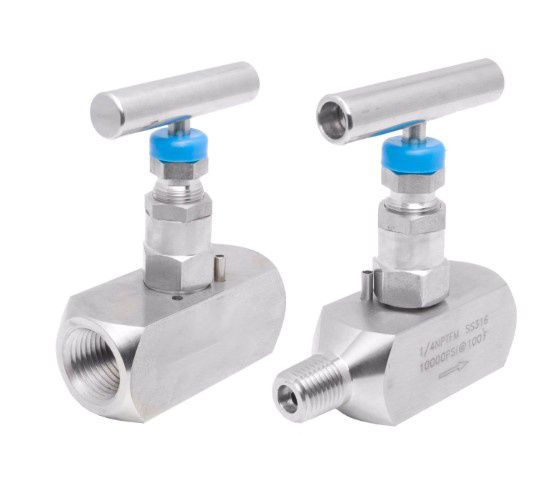
A needle valve is a precision flow control valve designed for very accurate regulation of fluid flow. It uses a finely threaded stem and a needle-shaped plunger to gradually open or close the flow passage. Because of this structure, the valve can achieve extremely small flow adjustments, which is difficult for many other valve types.
In industrial systems, especially where pressure, flow stability, and measurement accuracy are critical, needle valves play an important role. They are commonly installed in instrumentation pipelines, sampling systems, calibration equipment, and high-pressure control lines. Even a small adjustment of the valve can significantly affect system performance, which shows how sensitive and precise it is.
Unlike simple on/off valves, needle valves are not designed for fast switching. Instead, they are designed for controlled throttling. This makes them essential in industries such as oil and gas, chemical processing, power generation, laboratories, pharmaceuticals, and water treatment.
Because of the precision requirements, selecting a reliable manufacturer is not just a purchasing decision but also a safety and performance decision. China has become one of the most important global manufacturing bases for needle valves. However, supplier quality varies significantly, so buyers need a systematic sourcing approach to avoid risk and ensure long-term reliability.
Before evaluating manufacturers, buyers need to understand how needle valves work and what technical characteristics define a good product.

A needle valve works through a threaded stem that moves a tapered needle up and down inside a precision-machined seat. When the operator rotates the handwheel, the stem advances slowly, and the needle gradually reduces the flow opening.
This structure allows extremely fine control. Even a small rotation of the handle results in a very small change in flow rate. This is why needle valves are widely used in systems requiring stability and accuracy rather than speed.
Because of this slow and controlled movement, needle valves are also suitable for systems where sudden pressure changes must be avoided. The design ensures smooth flow transition instead of abrupt opening or closing.
A standard needle valve consists of several key parts:
- Valve body: The main pressure-containing structure
- Stem: A threaded rod that controls movement
- Needle (plunger): The tapered sealing element
- Seat: The precision-machined sealing surface
- Handwheel or knob: Used for manual adjustment
- Packing system: Prevents external leakage along the stem
Each component must be manufactured with tight tolerances. Even minor machining errors can affect sealing performance or flow accuracy, especially in high-pressure applications.
Needle valves have several important characteristics:
- High precision flow adjustment capability
- Stable and repeatable control performance
- Excellent sealing performance under pressure
- Suitable for micro-flow applications
- Strong resistance to vibration and pressure fluctuation
These features make them particularly suitable for instrumentation and control systems where reliability is critical.
Different valves serve different purposes:
- Ball valves: Designed for fast on/off control, not precision
- Globe valves: Suitable for general flow regulation, moderate precision
- Check valves: Only prevent backflow, no control function
- Needle valves: Designed specifically for fine and gradual flow adjustment
This comparison helps buyers understand why needle valves are preferred in sensitive systems.
Needle valves are widely used across industries because of their precision and reliability.
In oil and gas systems, needle valves are often installed in high-pressure and high-risk environments. They are used in:
- Wellhead control systems
- Chemical injection lines
- Pressure monitoring instruments
- Sampling and test lines
These applications require valves that can withstand high pressure and corrosive fluids while maintaining tight sealing. Stainless steel or special alloys are commonly required.
In chemical plants, needle valves are used for precise control of reactive or corrosive fluids. Typical applications include:
- Accurate chemical dosing systems
- Process control loops
- Laboratory sampling systems
- Flow regulation for catalysts or additives
Because chemicals can be highly corrosive, material selection becomes very important in these applications.
In power plants, needle valves are used in auxiliary systems such as:
- Steam sampling lines
- Cooling water circuits
- Boiler drainage systems
- Instrument protection lines
These systems often operate under high temperature and pressure conditions, requiring stable and durable valve performance.
In laboratories and pharmaceutical production, needle valves are used for:
- Gas flow regulation in analytical instruments
- Liquid sampling in testing systems
- High-purity process control
- Calibration of sensitive equipment
In these environments, precision and contamination control are more important than pressure capacity.
In water treatment facilities, needle valves are used in:
- Chemical dosing systems (chlorine, acid, etc.)
- Monitoring and sampling systems
- Flow adjustment for treatment processes
They help maintain accurate chemical concentration and system balance.
China has developed a strong industrial valve manufacturing ecosystem over the past decades.
One of the main reasons global buyers source from China is cost efficiency. Lower labor costs and large-scale raw material supply chains allow Chinese manufacturers to offer competitive pricing.
In addition, many factories operate at high production volumes, which reduces per-unit cost while maintaining stable supply capability for large projects.
Modern Chinese valve manufacturers often use:
- CNC precision machining centers
- Automated production lines
- Digital quality inspection systems
- Pressure and leakage testing equipment
These technologies improve consistency and reduce human error in production.
Most manufacturers do not only produce needle valves. They also produce:
- Ball valves
- Gate valves
- Globe valves
- Check valves
- Control valves
This wide product range makes China a convenient sourcing hub for complete valve packages.
Many Chinese suppliers are experienced in global trade. They are familiar with:
- International standards (API, ASME, CE, ISO)
- Export documentation requirements
- Packaging and logistics for overseas shipping
This reduces communication barriers for international buyers.
A structured sourcing process helps reduce risk and improve procurement quality.
Buyers must clearly define:
Working pressure and maximum pressure
Temperature range
Fluid type (gas, liquid, corrosive media)
Required flow precision level
Connection type (threaded, flanged, compression)
Material requirements (SS304, SS316, brass, etc.)
Clear specifications help manufacturers provide accurate quotations and avoid misunderstandings.
Common sourcing channels include:
Alibaba, Made-in-China, Global Sources
Google search with technical keywords
Industry directories and valve associations
Trade fairs such as Canton Fair
Recommendations from engineering companies
It is important to identify real manufacturers instead of pure trading companies.
Key factors to check:
Years of production experience
Export markets and history
Industry focus (instrument valves or general valves)
Production capacity and factory size
Long-term manufacturers usually have more stable quality systems.
Important certifications include:
ISO 9001 quality system
CE marking for European markets
API standards for oil and gas
ASME compliance
NACE standards for corrosion resistance
These certifications ensure that products meet international safety and quality requirements.
A strong manufacturer should have:
In-house CNC machining capability
Pressure testing systems
Leak testing equipment
Quality control inspection team
Manufacturers with full in-house control generally provide more consistent quality.
When requesting quotes, ensure they include:
Material specifications
Pressure and temperature ratings
Delivery time
MOQ (minimum order quantity)
Warranty and after-sales terms
Avoid choosing suppliers only based on price differences.
Sampling is an essential step:
Test flow adjustment smoothness
Check sealing performance
Verify material quality
Evaluate machining accuracy
This step reduces risk before bulk ordering.
If possible, conduct:
On-site factory visit
Video inspection
Third-party quality audit
This helps verify real production capability and quality control systems.
Check:
Customer feedback
Case studies
Export destinations
Long-term partnerships
Reliable manufacturers usually have repeat international customers.
When selecting a needle valve, the decision should not be based only on price or appearance. Because needle valves are used in precision flow control and often in high-pressure or sensitive systems, small differences in design, material, or machining quality can significantly affect performance and safety. Below are the most important technical factors that buyers should carefully evaluate.
Needle valves are often used in:
Medium pressure systems (1,000–3,000 psi)
High-pressure systems (6,000–10,000 psi)
Always ensure pressure rating matches real working conditions.
Different packing materials affect temperature performance:
PTFE: moderate temperature
Graphite: high temperature
Metal sealing: extreme conditions
Common materials:
SS 304: general industrial use
SS 316: corrosion resistance
Brass: low-pressure systems
Monel / Hastelloy: chemical and offshore use
Metal-to-metal sealing: high durability
Soft sealing: better tightness at lower pressure
High-quality valves should provide:
Smooth adjustment
No sudden flow jumps
Stable performance over time
Common Sourcing Mistakes
Choosing only based on lowest price
Ignoring certification requirements
Not testing samples
Working with trading companies unknowingly
No formal contract or unclear specifications
Cost-effective production
Custom design capability
Fast manufacturing cycle
Wide material selection
OEM and private labeling support
Export experience worldwide
Sourcing needle valves from China can be highly efficient and cost-effective when done correctly. The key is not only finding a supplier but selecting a qualified manufacturer with strong technical capability, proper certifications, and stable production systems.
By following a structured sourcing process—defining requirements, evaluating suppliers, verifying certifications, testing samples, and checking production capability—buyers can significantly reduce risks and ensure long-term supply reliability.
A careful and systematic approach allows companies to obtain high-quality needle valves that meet international standards while maintaining competitive pricing and stable performance in demanding industrial applications.
