How to Select Trunnion Ball Valve Suppliers in China
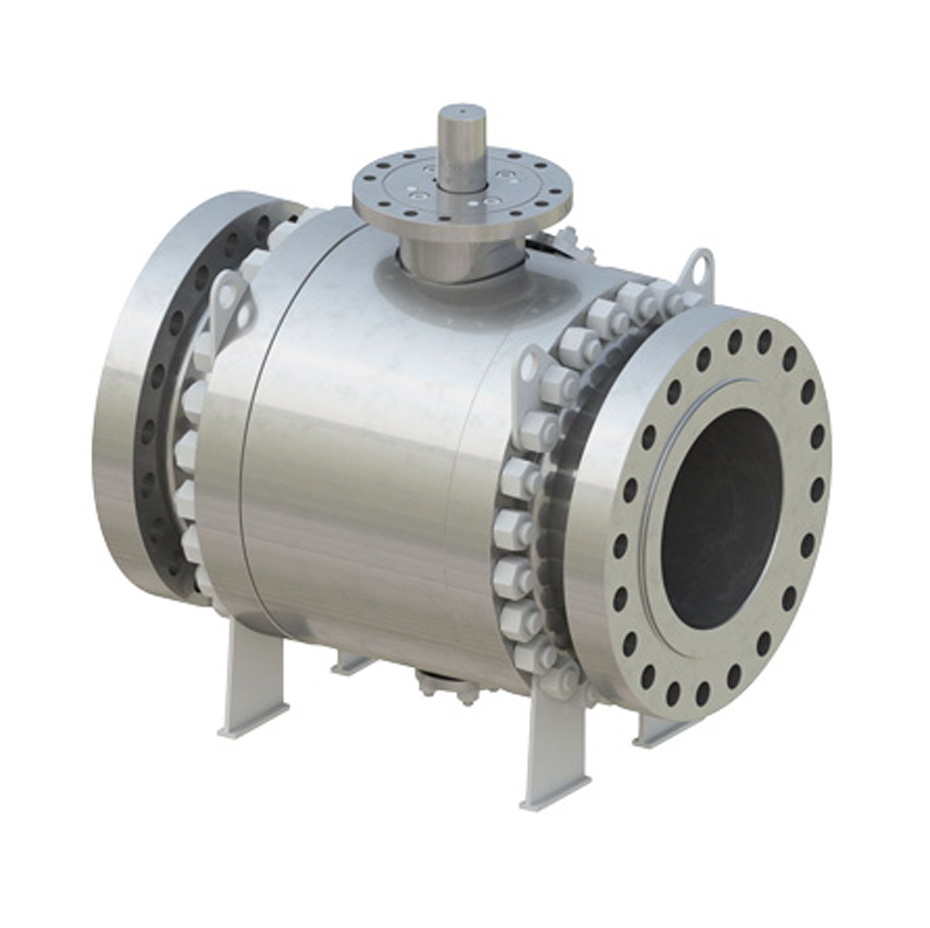
Selecting the right trunnion ball valve supplier in China is a critical decision for buyers in the oil and gas, petrochemical, chemical, power generation, mining, marine, and general industrial sectors. A trunnion ball valve is often used in demanding services where high pressure, large diameters, tight shut-off, and reliable long-term operation are essential. Because these valves are frequently installed in critical pipeline systems, the quality of the supplier can directly affect safety, efficiency, maintenance costs, and project schedules.
China has become one of the world's most important manufacturing centers for industrial valves. Many Chinese manufacturers offer a wide range of trunnion ball valves in different materials, pressure classes, end connections, and actuation options. However, not all suppliers provide the same level of engineering capability, quality assurance, documentation, or after-sales support. For this reason, buyers should evaluate potential suppliers carefully instead of choosing only on price.
This article explains what trunnion ball valves are, how they work, their main advantages, and the most important factors to consider when selecting trunnion ball valve suppliers in China. It also introduces several well-known Chinese valve manufacturers that serve international markets.

A trunnion ball valve is a quarter-turn valve designed to start, stop, or isolate the flow of fluid in a pipeline. It uses a perforated ball with a central bore. When the bore aligns with the pipeline, the valve is open. When the ball rotates 90 degrees and the bore becomes perpendicular to the flow direction, the valve is closed.
What makes a trunnion ball valve different from a floating ball valve is the way the ball is supported. In a floating ball valve, the ball is held mainly by the stem and is allowed a limited amount of movement under pressure. In a trunnion ball valve, the ball is mechanically anchored at both the top and bottom. The lower shaft, called the trunnion, supports the ball and keeps it stable during operation.
This design is especially useful for larger sizes and higher-pressure applications. Because the ball is fixed in position, the fluid pressure load is absorbed by the trunnion and bearings instead of being transferred entirely to the seats. As a result, trunnion ball valves typically offer lower operating torque, improved seat performance, and greater durability in severe service conditions.
Trunnion ball valves are widely used in transmission pipelines, terminal facilities, refineries, petrochemical plants, offshore platforms, LNG systems, and many other applications where dependable shut-off is required.
The working principle of a trunnion ball valve is simple, but its performance is highly effective. The valve operates through a quarter-turn motion of the stem, which rotates the ball inside the body.
In the closed position, the ball's bore is turned perpendicular to the flow passage. This blocks the fluid and stops flow through the valve. In the open position, the bore aligns with the pipeline, allowing media to pass through with minimal resistance.
The sealing function is achieved by valve seats positioned around the ball. In many trunnion-mounted designs, the seats are spring-loaded or pressure-assisted, ensuring close contact with the ball surface. This creates a tight seal and helps prevent leakage. Because the ball is supported by the trunnion, the seats do not bear the full force of line pressure. This reduces seat wear and allows smooth operation even in high-pressure conditions.
The trunnion itself plays a vital role. It stabilizes the ball, minimizes deflection, and reduces friction during opening and closing. This design leads to lower torque requirements, which is especially important for large-diameter valves and automated systems using electric, pneumatic, or hydraulic actuators.
Many trunnion ball valves also incorporate advanced features such as fire-safe design, anti-static devices, double block and bleed capability, emergency sealant injection, cavity pressure relief, and blowout-proof stems. These features enhance safety and performance in demanding industrial environments.
Trunnion ball valves are often chosen over floating ball valves for high-performance services because they provide several important advantages.
The anchored ball design makes trunnion ball valves ideal for high-pressure applications. The structure can withstand substantial pressure loads without excessive seat deformation or difficult operation.
Because the trunnion absorbs much of the pressure load, the seats are subjected to less friction during operation. This reduces the torque required to open and close the valve, making it easier to operate manually and more efficient for motorized or automated systems.
Trunnion ball valves are known for excellent sealing performance. Properly designed seats provide tight shut-off, which is crucial in applications involving hazardous, flammable, or valuable media.
With robust construction, carefully selected materials, and reduced seat wear, trunnion ball valves generally offer long-term durability. This makes them suitable for severe service conditions and continuous industrial use.
The simple quarter-turn design and sturdy internal support structure contribute to relatively low maintenance requirements. When manufactured to a high standard, these valves deliver dependable performance over extended service intervals.
The 90-degree operation allows quick opening and closing, which is valuable in emergency shut-off situations and automated process systems.
Trunnion ball valves are available in a broad range of sizes, materials, and pressure ratings. They can be used for gas, liquid, steam, corrosive fluids, and cryogenic or high-temperature services, depending on the valve design.
China has developed a strong global reputation in industrial valve manufacturing. Many Chinese suppliers now offer advanced machining, precision casting, forging capabilities, automated production lines, and international export experience. Buyers from around the world source trunnion ball valves from China because of several key advantages.
First, China offers strong manufacturing capacity. Many factories can produce valves in large volumes and across a wide range of specifications. This is particularly helpful for EPC contractors, distributors, and industrial end users working on projects with strict delivery schedules.
Second, Chinese suppliers often provide competitive pricing. Lower manufacturing costs, mature supply chains, and efficient production systems make Chinese valves attractive in global markets.
Third, many leading Chinese valve manufacturers now comply with international standards such as API 6D, API 6FA, ASME B16.34, ISO 9001, CE/PED, and others. This has improved buyer confidence and made Chinese suppliers more competitive in demanding international projects.
Finally, many Chinese companies are no longer just low-cost producers. They now offer custom engineering, material traceability, testing services, OEM and ODM support, and technical communication in international markets.
Still, supplier quality varies significantly. That is why careful evaluation remains essential.
One of the first things to examine is how long the supplier has been manufacturing industrial valves and whether trunnion ball valves are one of its core products. Some companies mainly focus on general valves and only occasionally produce ball valves, while others specialize in ball valve engineering and have extensive experience with trunnion-mounted designs.
A supplier with many years of experience is more likely to understand material selection, machining tolerances, seat design, pressure testing, sealing performance, and application-specific requirements. Experience is particularly important for severe service applications, large sizes, low-temperature service, and high-pressure classes.
Buyers should ask how many trunnion ball valves the supplier has produced, which markets they serve, and what industries commonly use their products.
A strong supplier should offer a broad product range. This includes different sizes, pressure classes, body materials, trim materials, seat materials, end connections, and actuation options. In many real-world applications, standard valves are not enough. Buyers may need special materials, anti-corrosion coatings, fire-safe design, cryogenic extension bonnets, metal seats, or double block and bleed configurations.
A good Chinese trunnion ball valve supplier should be able to provide both standard and customized solutions. Customization capability shows engineering strength and flexibility. It also helps buyers reduce sourcing complexity by working with one reliable partner for multiple project needs.
For industrial valves, compliance with recognized standards is extremely important. Buyers should confirm whether the supplier manufactures valves according to standards such as API 6D, ASME B16.34, API 607 or API 6FA for fire-safe testing, NACE requirements for sour service if needed, and applicable DIN, BS, or JIS standards when required.
Certifications alone are not enough, but they are a good starting point. A qualified supplier should be able to provide documentation, drawings, test procedures, inspection reports, and material certificates to prove compliance.
If a project has special requirements, such as CE/PED for Europe or additional third-party inspection, the supplier should be familiar with those expectations and able to support them.
Material quality is one of the most important factors in valve performance. A trunnion ball valve may be manufactured from carbon steel, stainless steel, duplex stainless steel, alloy steel, or special materials depending on service conditions. The seats, seals, stem, ball, and trunnion must also be properly matched to the media and temperature.
Reliable suppliers maintain strict control over raw material sourcing and traceability. They should be able to provide mill test certificates, heat numbers, chemical composition data, and mechanical property reports. Material traceability is especially important for critical applications in oil and gas, LNG, petrochemical, and offshore industries.
A supplier's quality control system reveals a lot about its reliability. Buyers should look for a factory that performs quality inspections throughout the production process, not only at the final stage. This includes incoming raw material inspection, in-process machining inspection, assembly checks, pressure testing, seat leakage testing, and final visual inspection.
Some leading Chinese suppliers perform 100% inspection before shipment. They may also offer hydraulic testing, pneumatic testing, torque testing, PMI, NDT, coating thickness inspection, and dimensional verification. A comprehensive quality management system reduces the risk of failure, rework, claims, and project delays.
Even a technically strong supplier can become a poor choice if it cannot deliver on time. Project buyers should assess the supplier's production capacity, workshop size, machining resources, staffing, and order management system. If a factory has limited capacity, long lead times may become a serious issue.
Chinese manufacturers with integrated capabilities such as forging, machining, assembly, and testing often have better schedule control. Buyers should ask about average lead times, urgent production arrangements, and export packaging readiness. Consistent delivery is often just as important as valve quality.
For critical industrial projects, valve testing is not optional. Buyers should confirm which tests the supplier performs in-house and whether third-party inspection is accepted. Common inspection and testing services may include hydrostatic shell tests, seat leakage tests, air tests, fire-safe testing, fugitive emission testing, low-temperature testing, high-pressure gas testing, and functional actuation tests.
A trustworthy supplier should welcome customer inspection, third-party inspection agencies, and detailed QA documentation. Openness in testing often reflects confidence in product quality.
A supplier may produce good valves but still cause problems if it lacks export experience or has weak communication. International buyers need clear quotations, accurate drawings, complete documentation, proper marking, compliant packaging, and timely responses.
Chinese suppliers with strong export backgrounds usually understand Incoterms, shipping arrangements, customs documents, and the technical expectations of overseas customers. They are also more likely to communicate efficiently in English and respond quickly to technical questions.
Valve procurement does not end at shipment. Buyers often need support with installation guidance, operation manuals, spare parts, troubleshooting, and warranty claims. Good suppliers stand behind their products and provide practical after-sales assistance.
Technical support is especially valuable for large trunnion ball valves, actuated valves, and project packages. A responsive after-sales team can reduce downtime and strengthen long-term business relationships.
Finally, buyers should consider the supplier's reputation in the market. A company that exports to multiple regions, serves major industries, and maintains long-term customer relationships is generally more reliable than an unknown trading source with limited manufacturing transparency.
A supplier's reputation can often be judged by its certifications, customer base, production facilities, response quality, consistency of documentation, and willingness to provide technical details. Buyers should look for partners, not just vendors.
China has many industrial valve manufacturers, but some companies are better known for their capabilities, export experience, and broad product lines. Below are several suppliers mentioned frequently in the valve industry.
As a division of Landee Industries Co., Ltd, Landee Valve is a modern industrial valve manufacturer integrating research, production, distribution, and service. Its product range covers ball valves, butterfly valves, check valves, gate valves, globe valves, plug valves, safety valves, air valves, control valves, and strainers in a variety of materials, sizes, and pressure classes.
Landee Valve serves industries such as oil and gas, petrochemical, chemical, mining, power generation, construction, and water control. Headquartered in Xiamen, China, the company has expanded its international market and developed a worldwide distribution network. For buyers seeking a broad product portfolio and export-oriented service, Landee Valve is one of the notable names in the Chinese valve market.
Bosseal Valve is a recognized Chinese manufacturer of industrial valves and wellhead equipment. Headquartered in Suzhou, the company combines engineering, precision manufacturing, and quality control to support customers in global markets. Founded in 2013, Bosseal Valve operates with a complete production setup, including forging, machining, and dedicated valve workshops.
Its product range includes gate valves, globe valves, check valves, ball valves, butterfly valves, and wellhead equipment. In the ball valve segment, the company offers full bore and trunnion-mounted solutions designed for reliable service. Bosseal Valve has built a strong market reputation for quality, technical expertise, and dependable products in demanding applications.
Vervo is one of the larger industrial valve manufacturers in China and is known for a wide range of valve products, including floating ball valves, trunnion ball valves, gate valves, globe valves, check valves, butterfly valves, plug valves, and strainers. The company serves global markets across North America, South America, Europe, Asia, the Middle East, Africa, and Oceania.
Vervo has expanded its facilities and equipped its workshops with advanced machinery to meet changing market demands. The company also highlights numerous certifications and compliance with international standards, including API, ASME, DIN, ISO, CE/PED, and others. Buyers looking for a supplier with broad certification coverage and global market experience may find Vervo to be a strong option.
Baltic Valve has more than 15 years of experience in the valve industry and focuses on providing technical support and quality products to customers worldwide. The company has established a structured system covering technical teams, inspectors, workshop management, and an experienced sales department. Its business has expanded to South America, Europe, South Africa, and the Middle East.
Baltic Valve emphasizes quality control, including raw material monitoring, in-process supervision, and 100% inspection before shipment. Its inspection scope includes dimensions, material chemistry, hydraulic testing, air testing, torque values, painting, and packaging. The company supplies ball valves, plug valves, gate valves, globe valves, check valves, strainers, DBB ball valves, and monoflange valves. This focus on inspection and technical support makes Baltic Valve attractive to buyers who prioritize dependable quality management.
Weldon Valves specializes in manufacturing and developing industrial valves for different pipeline working conditions. Its product range includes ball valves, gate valves, check valves, globe valves, safety valves, power plant valves, butterfly valves, plug valves, and strainers. The company offers valves from 1/2 inch to 60 inches and pressure classes from 150 LB to 2500 LB.
Materials include cast steel, forged steel, and stainless steel, with products manufactured to ANSI, API, BS, DIN, and JIS standards. Weldon emphasizes professional staff training, technical knowledge, customer-oriented product selection, and strict 100% inspection before delivery. For buyers seeking flexible valve solutions across multiple standards, Weldon is another notable Chinese supplier.
When evaluating Chinese trunnion ball valve suppliers, buyers should take a systematic approach. Start by defining the exact project requirements, including size, pressure class, material, seat type, connection type, operating temperature, media, testing requirements, and actuation needs. Then compare suppliers not only by price, but by their technical response and supporting documentation.
Request drawings, datasheets, certifications, inspection plans, material certificates, and sample testing procedures when necessary. It is also wise to check how quickly and professionally the supplier responds to technical questions. A fast and accurate reply often indicates strong internal coordination.
For high-value or critical projects, factory audits and third-party inspections can provide additional confidence. Even when working remotely, buyers can learn a great deal from the supplier's documentation quality, manufacturing photos, test videos, and willingness to be transparent.
Choosing the right trunnion ball valve supplier in China requires more than comparing quotations. Trunnion ball valves are critical components used in demanding industrial systems, so buyers must pay close attention to manufacturing experience, technical capability, standards compliance, material traceability, inspection systems, delivery performance, export experience, and after-sales support.
China is home to many capable valve manufacturers, and the best suppliers now combine competitive pricing with international standards, advanced production facilities, and strong global service. Companies such as Landee Valve, Bosseal Valve, Vervo Valve, Baltic Valve, and Weldon Valves demonstrate the range of expertise available in the Chinese market.
For buyers, the smartest approach is to treat supplier selection as a long-term strategic decision. A reliable supplier not only delivers quality trunnion ball valves, but also helps reduce risk, improve project success, and support stable operations over the life of the system. In today's competitive industrial environment, choosing the right Chinese trunnion ball valve partner can create lasting value far beyond the initial purchase price.
