How to Find Reliable OCTG Steel Pipe Manufacturers in China
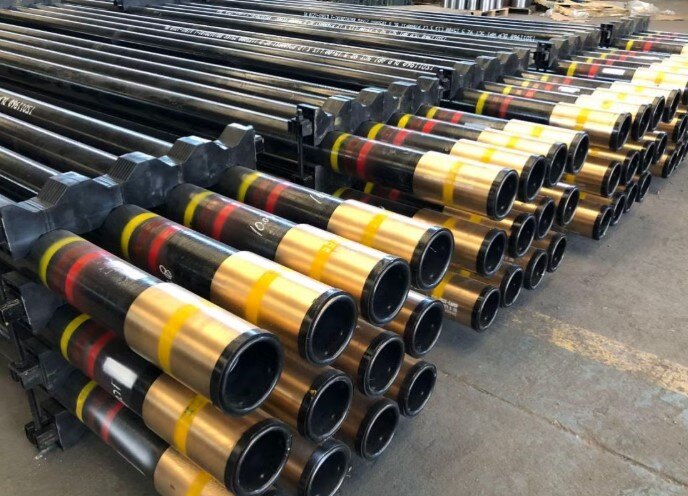
OCTG, or Oil Country Tubular Goods, is a critical category of steel pipes widely used in the oil and gas industry. These OCTG steel pipes are engineered to withstand the challenging conditions encountered during exploration, drilling, production, and transportation of hydrocarbons. OCTG steel pipes mainly consist of casing pipes, tubing pipes, and drill pipes. Each type plays a specific role in ensuring safe and efficient operations:
Casing pipes are used to line the wellbore, providing structural support and preventing the collapse of the well.
Tubing pipes transport oil and gas from the reservoir to the surface efficiently.
Drill pipes transmit torque and drilling fluid to the drill bit during the drilling process, enabling the borehole to be extended to the desired depth.
The quality and performance of OCTG steel pipes are crucial. Substandard pipes can compromise safety, reduce efficiency, and lead to costly operational failures. This is why selecting a reliable OCTG steel pipe manufacturer in China is a vital step for any oilfield project.
China is a global leader in steel pipe production, offering a broad range of OCTG steel pipes in different grades, diameters, and wall thicknesses. However, sourcing from China requires a systematic approach to balance cost, quality, and compliance. The following sections provide a detailed guide for international buyers.
The first step in sourcing OCTG steel pipes is identifying potential manufacturers. The quality of the initial supplier pool will significantly influence procurement success. Buyers should begin by searching authoritative directories and certified sources. The API Monogram Program is a reliable starting point. Manufacturers listed here have undergone third-party audits and meet strict API 5CT or API 5L requirements for OCTG steel pipes.
For broader searches, use targeted online queries with long-tail keywords, such as:
- “China OCTG steel pipe manufacturers”
- “China API 5CT casing pipe suppliers”
- “China API 5L casing tubing supplier”
- “Drill pipe manufacturer China API”
While B2B marketplaces such as Alibaba, Made-in-China, and Global Sources provide large supplier lists, caution is advised. Badges like “gold supplier” or “verified” do not guarantee production capabilities or API compliance. Use these platforms to identify potential manufacturers, but rely on vetting and verification for serious consideration.

The vetting process is where claims about quality and capability are verified. This involves analyzing certifications, production processes, quality control measures, and total cost considerations.
A trustworthy OCTG steel pipe manufacturer must provide:
- API 5CT or API 5L Monogram license: Verify the certificate on the official API website. Ensure it covers the specific pipe grades, diameters, and specifications required.
- ISO 9001 certification: Validates the manufacturer’s quality management system. Verification should be conducted through official channels rather than relying on emailed PDFs.
- Certifications are the first critical filter; a manufacturer without them should not be considered for high-risk oilfield projects.
OCTG steel pipes are manufactured through various forming methods, which impact flexibility, cost, and lead time. The two dominant methods are:
UOE (U-ing, O-ing, Expanding)
Best suited for large, standardized orders
Highly efficient and consistent
High tooling costs and limited flexibility
JCOE (J-ing, C-ing, O-ing, Expanding)
Ideal for non-standard diameters, mixed batch orders, or custom wall thicknesses
Lower tooling costs and greater flexibility
Slower production speed
Choosing the correct forming process depends on project requirements. For large-volume, standard diameter OCTG pipes, UOE is ideal. For smaller or customized projects, JCOE offers cost efficiency without sacrificing quality.
Quality control is vital for safe and reliable OCTG steel pipe operations. Key checks include:
100% Non-Destructive Testing (NDT): All longitudinal weld seams must undergo ultrasonic testing (UT) and X-ray radiography. Partial testing is insufficient.
Mill Test Certificates (MTCs): Must comply with EN 10204 3.1 and include detailed information such as chemical composition, mechanical properties (yield and tensile strength), heat numbers traceable to the steel plate, and results of NDT or hydrostatic testing.
Additionally, buyers must evaluate the total cost, which goes beyond the per-ton price. Key considerations include:
Sourcing from reputable steel mills such as Baosteel, Ansteel, JFE, or POSCO
Realistic lead times to avoid project delays
INCOTERMS (FOB vs CIF) and payment conditions
Third-party inspection (TPI) for independent verification
Red flags indicate high-risk suppliers and should be carefully monitored. These include:
Vague, expired, or unverifiable certificates
Refusal of third-party inspection (TPI)
Pricing significantly below the market average
MTCs that appear “too perfect” or inconsistent
The goal is not just the lowest purchase price, but achieving the best total cost while ensuring quality, compliance, and reliable supply.
Comprehensive background checks are essential. Steps include:
Verifying company registration and official website authenticity
Checking media coverage, reviews, and customer testimonials
Using industry platforms for registration and risk assessments
For larger orders, consider on-site factory inspections. Evaluating production workshops, equipment, inventory, and operational capacity provides insight into a supplier’s true capabilities.
Once a list of potential manufacturers is narrowed down:
Request detailed quotes: Include pipe grade, diameter, wall thickness, and special requirements. Ask for lead time, delivery terms, and payment conditions.
Request samples: Ensures product quality meets standards before committing to larger orders.
Verify documentation: MTCs, NDT reports, and compliance certificates should accompany quotes.
Professional suppliers often provide flexible payment options, such as partial down payments, with the balance payable after TPI approval or via Letter of Credit.
China offers several compelling advantages for international buyers:
Competitive Pricing: OCTG steel pipes from China often cost significantly less than similar products from other countries. In 2024, China exported over 110 million tons of steel, demonstrating both domestic overcapacity and global competitiveness.
Comprehensive Product Range: Buyers can source pipes, fittings, flanges, and valves in multiple materials—including carbon steel, stainless steel, and alloys—from a single supplier. This reduces supply chain complexity.
Stable Production and Delivery: China’s large inventory, consistent production, efficient logistics, and geopolitical stability ensure reliable supply.
Quality and Customer Support: Chinese suppliers frequently offer superior product quality and after-sales service, reinforcing their global market position.
Even with these advantages, careful selection is essential to avoid low-quality products:
Verify all certificates via official sources
Conduct on-site inspections whenever feasible
Compare multiple quotes to determine a reasonable market price
Avoid suppliers offering drastically lower rates than competitors
Combining price analysis, production assessment, quality verification, and risk evaluation allows buyers to maximize benefits while minimizing procurement risks.
Professional suppliers, such as Allland Steel, exemplify best practices:
Transparent technical and commercial proposals
Full compliance with API 5CT/5L and ISO 9001 standards
Total-cost-focused solutions tailored to project requirements
Full traceability and third-party inspection support
Choosing the right partner ensures that OCTG steel pipes meet project specifications, arrive on time, and comply with international safety standards.
Sourcing OCTG steel pipes from China requires a structured approach: identify suppliers, vet certifications and production capabilities, conduct quality control checks, request samples, and verify total costs. China’s combination of competitive pricing, diverse product range, stable production, and reliable quality makes it an attractive sourcing destination. However, buyers must remain vigilant in evaluating suppliers, verifying documentation, and performing risk assessments to ensure successful procurement.
By following these best practices, international buyers can secure high-quality, compliant OCTG steel pipes, ensuring operational safety, cost-effectiveness, and timely project delivery. The key is balancing cost, quality, and supply reliability while working with professional, transparent manufacturers.
Sourcing high-quality OCTG steel pipes from China requires partnering with experienced, reliable manufacturers. The following companies are recognized for their certified processes, extensive OCTG portfolios, and global export experience:
Landee Pipe, the OCTG division of Xiamen Landee Industries Co., Ltd., has been producing and exporting steel pipes since 1994. The company offers a wide range of API, ANSI, EN, and ISO-compliant products, including API 5CT tubing, casing, and drill pipes in grades J55, K55, N80, C90, C95, and P110, along with sucker rods. Landee also supplies welded and seamless steel pipes, heat exchanger tubes, and surface-finished pipes. All products are backed by ISO 9001 quality systems and extensive international experience, serving energy, mining, water treatment, and infrastructure sectors.
Chengdu Derbo Steel is a China-based manufacturer with decades of experience in global industrial markets, especially oil and gas. Its OCTG line includes casing, tubing, drill pipe, pup joints, and couplings compliant with API SPEC 5CT, covering grades J55, K55, N80, L80, P110, and S135. Products feature seamless construction, multiple thread options (EUE, BTC), hot-rolled surfaces, and a range of diameters and wall thicknesses. Derbo emphasizes quality, pre- and post-sale support, and global logistics, earning its reputation as a “Golden Supplier” for international oilfield projects.
Vigor Drilling, established in 2008, manufactures and supplies oilfield equipment and OCTG steel pipes including casing, tubing, drill pipe, pup joints, couplings, and premium connections. Its portfolio spans grades H40, J55, N80, L80 (including 13Cr corrosion-resistant), C90, T95, P110, and Q125, with sizes and connections for diverse wellbore applications. All products are produced under API/ISO quality systems, inspected in-house, and ready for rapid global delivery. With over 15 years of experience and projects in more than 60 countries, Vigor combines innovation, quality, and cost-efficiency for upstream drilling and production operations.
These suppliers are among the most reliable choices for international buyers seeking API-compliant, high-quality OCTG steel pipes from China, ensuring safe, efficient, and cost-effective solutions for oilfield projects.