How to Choose China Triple-Eccentric Butterfly Valve Manufacturer
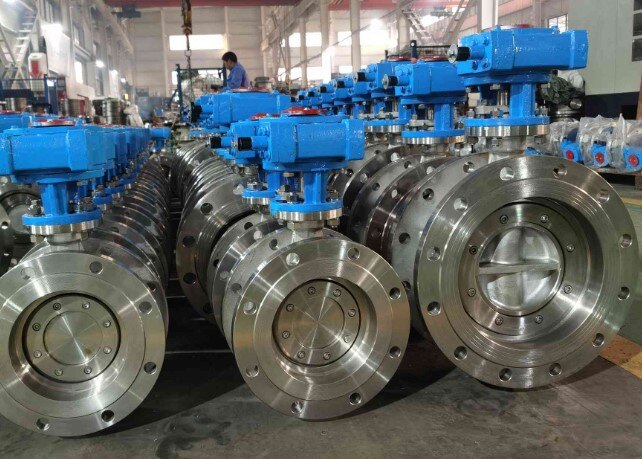
Triple-eccentric butterfly valves are essential components in modern industrial fluid control systems, widely used in industries such as petrochemicals, power generation, metallurgy, and water treatment. Thanks to their excellent zero-leakage performance under high-temperature and high-pressure conditions, more international buyers are turning to Chinese manufacturers. However, with so many suppliers of triple-eccentric butterfly valves available, identifying a truly reliable partner remains a key challenge for procurement professionals.
Before selecting a manufacturer, it is crucial to understand the working principle and technical characteristics of triple-eccentric butterfly valves. These valves feature a triple-eccentric design: the first eccentric shifts the stem off the seal centerline, the second eccentric offsets the stem from the pipe centerline, and the third eccentric gives the sealing surface a conical angle. This unique geometry ensures that the valve disc makes almost no frictional contact with the seat during operation, achieving tight metal-to-metal sealing only at the final closing moment.
Compared with conventional butterfly valves, triple-eccentric valves offer significant advantages:
- Zero-leakage sealing up to ANSI Class VI standards
- High-temperature suitability up to 600°C
- Durable metal hard-sealing structure for extended service life
- Lower operating torque, allowing smaller actuators
- Strong bi-directional sealing with flexible installation orientation
Understanding these features helps buyers define professional technical requirements when evaluating manufacturers.

Industry experience and specialization are critical when selecting a manufacturer. Established manufacturers with a long market history usually accumulate extensive production expertise and process know-how, enabling them to meet complex operational requirements.
Key considerations include:
Prefer manufacturers with at least five years of operation, as they demonstrate stable business performance.
Determine if the manufacturer specializes in triple-eccentric butterfly valves or treats them as a minor product line. Specialized manufacturers typically invest more in R&D, process optimization, and quality control.
Information can be gathered through:
- Supplier websites showcasing history and flagship projects
- Participation in industry exhibitions to gauge market activity
- Customer reviews and case studies to verify delivery capability
- Requests for supply records and client references to validate claimed experience
International certifications are objective indicators of a manufacturer’s quality level. A reliable triple-eccentric butterfly valve manufacturer should hold and maintain certifications such as:
- ISO 9001 – Quality management system certification
- API 6D / API 609 – Valve-specific certifications meeting American Petroleum Institute standards
- CE – Compliance with EU safety, health, and environmental requirements
- ATEX – Explosion-proof certification for valves in flammable or explosive environments
- SIL – Safety Integrity Level certification for high-risk industries
Check the validity and scope of certifications, request originals or verifiable electronic copies, and confirm that the certification covers triple-eccentric valves.
Manufacturers should also follow recognized standards:
- Design: ASME B16.34, EN 12516, API 609
- Testing: API 598, EN 12266
- Materials: ASTM, EN 10028
- Flange dimensions: ASME B16.5, EN 1092-1
Production capability should be assessed from multiple angles:
- Facility completeness: Ideal manufacturers control the full process from raw materials to finished products, including casting/forging, machining, heat treatment, assembly, and testing.
- Factory scale: A plant with over 2,000 m² and at least 30 employees can typically support consistent production; for large-diameter valves, over 30,000 m² is recommended.
- Quality control: Reliable manufacturers implement full-process quality checks, including material traceability (MTR certificates), in-process inspections, non-destructive testing, and final shell strength and seal testing at ≥1.5× rated pressure.
Prefer suppliers that test every valve rather than relying solely on batch sampling. For critical projects, third-party inspection or client supervision can ensure compliance.
Distinguishing between actual manufacturers and trading companies in China is crucial, as it affects pricing, technical support, and after-sales service.
Many small or mid-sized factories have limited resources, focusing on a few valve types due to the high investment required for a full production line.
Trading companies can provide procurement efficiency when multiple valve types are needed or when order volumes are small.
Practical methods to identify true manufacturers include:
- Requesting factory photos and videos highlighting equipment brands and models
- Verifying business licenses and production capability documents
- Conducting video calls to inspect workshops
- Checking environmental approvals and safety certifications
Triple-eccentric valves are technology-intensive; manufacturer expertise directly impacts product quality.
- Engineering team: Should offer design drawings, sizing calculations, and on-site support.
- Manufacturing process: Advanced CNC machines, precision instruments, and automation ensure consistency.
- R&D innovation: Ongoing development of new designs, materials, and seals—such as cryogenic valves for LNG or high-pressure custom designs—is a key indicator of long-term collaboration potential.
Different applications demand different valve specifications. Leading manufacturers provide diverse options:
- Connection types: Wafer, lug, double-flanged, etc.
- Pressure classes: ANSI 150–2500 lbs or PN10–PN160
- Size range: DN50 to DN3000+
- Materials: Carbon steel, stainless steel, duplex steel, alloy steel, titanium alloys
Sealing options should accommodate different media: metal-laminated seals, graphite-composite for high-temperature, and PTFE-composite for hygienic applications.
Custom capabilities include non-standard sizes, special material combinations, and coatings, supported by in-house design teams and flexible production management.
Valves' value extends throughout their lifecycle. Effective support includes:
- Pre-sales: Technical guidance and selection support
- During production: Updates on progress and quality
- Post-sales: Installation, operation training, and troubleshooting
Spare parts supply and maintenance services are critical. For international buyers, expertise in export packaging, documentation, and logistics reduces trade risks.
Price is important but should not be the sole criterion. Costs vary based on size, pressure rating, material (e.g., duplex steel or Hastelloy), and customization.
Request detailed quotations covering valves, actuators, testing, coating, packaging, insurance, and shipping.
Consider overall lifecycle cost rather than only initial price.
Delivery capability includes:
- Standard lead time: 30–45 days; larger or custom valves may take longer
- Ability to handle urgent orders
- Inventory availability for standard sizes (7–15 days delivery)
- Stable supply chains and historical on-time delivery rate (ideally ≥95%)
Whenever possible, visit the factory to verify production conditions, quality control, R&D, and storage management. Engage with engineers and QC staff to understand actual process implementation.
If in-person visits are not feasible, use third-party audits, video inspections, or sample testing. After initial screening, shortlist 2–3 suppliers for final comparison and ensure awareness of target market price ranges to strengthen negotiation leverage.
Selecting a reliable Chinese triple-eccentric butterfly valve manufacturer requires a systematic approach, evaluating technical capability, quality systems, production scale, service levels, and business reputation. By establishing a structured assessment process and performing thorough due diligence, buyers can identify suppliers capable of delivering high-quality valves with long-term cooperation potential.
China's valve manufacturing industry has matured, producing specialized manufacturers that meet international standards in R&D, quality, and export service. Following the methods outlined in this guide, international buyers can procure high-performance, cost-effective triple-eccentric butterfly valves suitable for demanding applications, ensuring project success and long-term operational reliability.
KOSEN Valve Co., Ltd. is a specialized industrial valve manufacturer headquartered in Oubei, Zhejiang, China, offering a full range of engineered valve products with a strong emphasis on triple-eccentric butterfly valves. These valves feature three key offsets and metal sealing for friction-free operation, extended service life, and reliable bi-directional shut-off in demanding applications such as petrochemical, power, water, and industrial fluid systems. KOSEN’s portfolio spans ball, gate, globe, check, plug, and butterfly valves—including an extensive line of triple-eccentric butterfly valves in various materials (carbon steel, stainless steel, and alloys), sizes, pressure classes, end connections, and actuation options designed to meet international standards like API 609. The company combines advanced production equipment and rigorous quality control with customizable solutions to serve global markets with durable, high-performance valves suited for critical process requirements.
Bosseal Valve (Suzhou) Co., Ltd., founded in 2013 and based in Suzhou, China, is an industrial valve engineering and manufacturing company delivering premium valve products to international standards (API, ASME, ISO, DIN, BS, EN). Its portfolio includes ball, gate, globe, check, plug valves, strainers, and a comprehensive line of triple-eccentric (triple-offset) butterfly valves known for their three-offset metal seat design, bi-directional sealing, low torque operation, long service life, and versatility across a broad size (2″–72″) and pressure (Class 150–2500 LB) range. Multiple material and connection options make these valves suitable for demanding petrochemical, power, water treatment, and industrial fluid control applications.
Baltic Valve Co., Ltd., headquartered in Xiamen, Fujian, with over 15 years of experience, designs and supplies a wide range of engineered valves—including ball, gate, globe, plug, check, and double and triple-eccentric metal-seated butterfly valves—to markets across Europe, South America, South Africa, and the Middle East. Baltic’s triple-eccentric valves feature offset sealing geometry for tight shut-off and extended service life across various media and operating conditions. With ISO 9001 and ISO 14001-certified quality management, strict production inspections, 100 % pre-shipment testing, and responsive after-sales support, Baltic emphasizes reliability, technical solutions, and global service capability.
