How to Choose a Reliable China Storage Tank Manufacturer
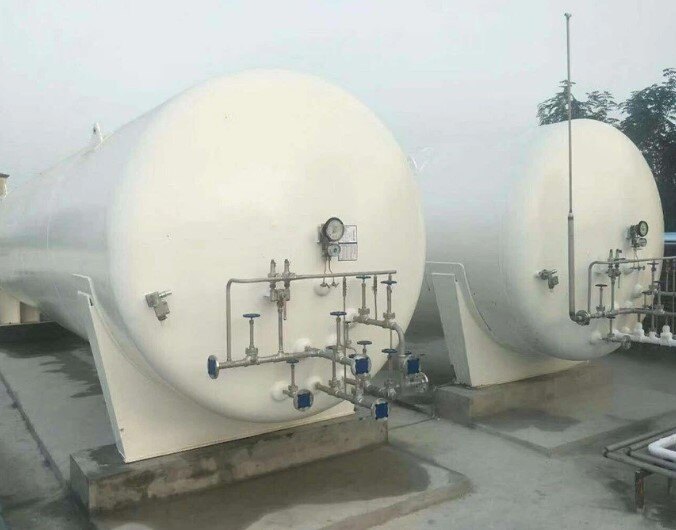
Storage tanks are indispensable industrial equipment used for safely storing liquids and gases such as water, petroleum products, chemicals, and liquefied natural gas. They are widely applied across industries including petroleum refining, chemical manufacturing, food processing, pharmaceutical production, and water treatment systems. Because storage tanks directly influence operational safety and production continuity, selecting a reliable manufacturer is a strategic procurement decision rather than a simple purchasing task.
China has become one of the world's largest storage tank manufacturing hubs, offering competitive pricing and diverse product customization options. However, the vast supplier landscape also brings quality risks. Some manufacturers focus on low-cost production while compromising structural integrity or material standards. Therefore, international buyers must adopt a systematic evaluation approach when sourcing storage tanks from China.
Storage tanks are long-term infrastructure investments. Poorly manufactured tanks may develop structural fatigue, corrosion leakage, or welding defects after prolonged operation. Such failures can result in production downtime, environmental contamination, and financial losses.
High-quality storage tanks must maintain structural stability under different environmental pressures, temperature fluctuations, and chemical exposure conditions. Industries such as petrochemical processing and water treatment require particularly strict safety performance standards.
Material selection plays a central role in determining tank durability. Many buyers prefer tanks made from cold-rolled stainless steel sheets due to their superior corrosion resistance and mechanical strength. Nevertheless, buyers should verify steel grade composition and surface treatment processes before procurement.

Material selection is critical to storage tank performance because it affects corrosion resistance, strength, and service life.
Stainless steel tanks are widely used because of their durability and hygienic properties. They are especially suitable for drinking water storage, food processing, and chemical handling.
When purchasing stainless steel tanks, it is important to confirm material grades. For example, industrial-grade stainless steel may differ significantly from medical or food-grade stainless steel in terms of chromium and nickel composition.
Manufacturers should provide material testing certificates and welding inspection reports. Surface polishing quality is also important because rough surfaces may promote bacterial growth or accelerate corrosion.
Polyethylene storage tanks are lightweight and cost-efficient. They are commonly used for agricultural irrigation, municipal water storage, and low-corrosion liquid containment.
However, plastic tanks have limitations in high-temperature environments and may deform under extreme mechanical pressure. Buyers should confirm temperature tolerance specifications before ordering.
Concrete storage systems are often used for underground water storage infrastructure. Concrete provides excellent thermal insulation and structural rigidity.
Nevertheless, installation costs are relatively high because construction work is required. Waterproofing treatment is also necessary to prevent groundwater infiltration.
Some modern manufacturers adopt hybrid structures combining steel frames and plastic inner layers. This design enhances strength while maintaining corrosion protection.
When evaluating composite tanks, compatibility between materials must be tested to avoid chemical reactions or leakage risks.
Capacity planning is a critical step in tank selection.
First, buyers should analyze daily consumption patterns. Understanding peak usage periods helps prevent supply interruptions. For example, industrial production lines may experience sudden demand spikes during certain operational stages.
Second, future expansion should be considered. Purchasing a tank with slightly larger capacity than current demand may reduce future replacement costs.
Third, installation space must be measured carefully. Large tanks may appear attractive in capacity but may create accessibility problems during maintenance. Maintenance access points are often overlooked but are essential for long-term usability.
When sourcing storage tanks from China, certification verification is extremely important.
Reliable manufacturers usually hold international quality management certifications such as ISO standards. These certifications indicate that the factory follows standardized production and inspection procedures.
Buyers should request detailed documentation regarding:
- Raw material origin and composition
- Welding process technology
- Pressure testing records
- Structural strength verification
For stainless steel water storage tanks, advanced welding technology is necessary to ensure leak-proof joints. During product inspection, pay attention to welding seam uniformity and polishing smoothness.
To find reliable Chinese storage tank manufacturers, buyers can explore major sourcing channels that provide access to verified suppliers and product information.
Online sourcing platforms provide convenient access to numerous suppliers. One of the largest Chinese industrial marketplaces is Made-in-China.com, which hosts thousands of industrial equipment suppliers.
However, not all listed companies are actual manufacturers. Some are trading intermediaries. Buyers should check supplier profiles carefully, including response rate, business registration information, and certification badges.
Payment security is another important consideration. Using escrow-style payment protection systems can reduce procurement risks. Large advance wire transfers should be avoided unless the supplier has established long-term trust.
Starting with small sample orders is a practical risk control strategy. Sample evaluation allows buyers to verify product consistency and workmanship before placing large-scale orders.
Trade exhibitions provide excellent opportunities for supplier verification.
Major international sourcing events include the Canton Fair and the Global Sources Expo.
Another important regional sourcing event is the Yiwu Fair, which focuses more on small commodity manufacturing suppliers.
Face-to-face communication at trade fairs helps buyers directly evaluate product quality, negotiation flexibility, and supplier professionalism.
Preparation before attending trade fairs is essential. Buyers should prepare technical drawings, product specifications, and sample references.
Factory auditing is one of the most reliable methods for verifying supplier credibility.
During factory visits, buyers should inspect production equipment conditions, quality control departments, and manufacturing workflow management.
Important inspection points include:
- Production line modernization level
- Dedicated quality testing laboratories
- Employee training and workplace stability
- Documentation management systems
Factories that refuse inspection visits should be treated with caution because lack of transparency may indicate hidden risks.
If traveling to China is not possible, third-party inspection organizations such as SGS and TÜV Rheinland can conduct professional audits.
These organizations provide detailed reports covering manufacturing capacity, product quality, and compliance verification.
Successful procurement requires more than price comparison.
Clear communication is essential. Because language barriers may exist, buyers should use simple technical language when describing product requirements.
Product drawings, dimensional specifications, and performance parameters should be documented in written agreements.
Large volume orders often receive better pricing, but buyers should avoid placing huge orders immediately. Gradual order scaling helps verify production consistency and factory capacity.
Chinese suppliers generally prefer long-term partnerships. Building trust through professional communication and consistent cooperation can lead to better pricing and priority manufacturing arrangements.
The price of large industrial storage tanks depends on material quality, structural design, and production complexity.
Market analysis shows that large water storage tanks are typically priced between approximately $500 and $3000 per unit depending on specifications.
Bulk purchasing can reduce procurement cost by up to 30%. However, extremely low-priced products may indicate inferior material quality or inadequate welding processes.
Although high-quality storage tanks require larger initial investment, they often provide better long-term value due to reduced maintenance and longer operational life. Industry studies suggest that low-cost tanks may fail prematurely, resulting in replacement expenses exceeding initial savings.
Procurement is a continuous process rather than a single transaction.
Buyers should periodically evaluate supplier performance using measurable indicators such as delivery punctuality, defect rate, and after-sales responsiveness.
When disputes occur, solution-oriented communication is recommended. All agreements should be properly documented to avoid future conflicts.
Long-term customers may receive preferential pricing, early production scheduling, or customized design services.
For companies unfamiliar with Chinese procurement practices, third-party sourcing agencies can significantly reduce operational risks.
Local sourcing agents can assist in supplier identification, factory verification, and production monitoring. They also help manage shipping documentation and customs clearance procedures.
Pre-shipment inspection services are particularly valuable because they ensure that finished products meet contractual quality requirements before transportation.
Transporting large storage tanks requires professional logistics coordination.
Working with experienced freight forwarding companies helps reduce delivery delays and customs compliance issues. Some large tanks require special packaging solutions to prevent structural damage during transportation.
Many buyers make procurement mistakes by focusing solely on price. Other common errors include:
- Ignoring material testing documentation
- Failing to verify factory production capability
- Ordering large quantities without sample evaluation
- Neglecting after-sales service agreements
- Overlooking installation and maintenance requirements
Avoiding these mistakes can significantly improve sourcing success.
Selecting a reliable storage tank manufacturer in China requires a structured evaluation process that balances cost efficiency, quality assurance, and supplier credibility. Buyers should carefully assess material selection, capacity design, certification compliance, and manufacturing transparency.
Using reputable sourcing platforms such as Made-in-China.com, attending industry exhibitions like the Canton Fair, and conducting professional inspections through organizations such as SGS or TÜV Rheinland can greatly reduce procurement risks.
Ultimately, a long-term partnership approach combined with technical verification and quality control monitoring will ensure safe, reliable, and cost-effective storage tank sourcing from China.
DFC Tank Pressure Vessel Manufacturer Co., Ltd. is a leading Chinese storage tank and pressure vessel manufacturer founded in 1984, with decades of engineering and fabrication experience. The company produces a wide range of products including large welded storage tanks, stainless steel tanks, air and gas vessels, surge tanks, and cement silos designed for diverse industrial applications. Built to international quality standards and supported by advanced production technology, strong quality control systems, and global delivery capability, DFC Tank has become a trusted supplier of reliable storage solutions across industries such as water treatment, petrochemical processing, pharmaceuticals, and heavy industry.
FAB Tank Pressure Vessel Manufacturer Co., Ltd. is another well-established Chinese industrial equipment manufacturer specializing in high-quality storage tanks, pressure vessels, and autoclaves since 1984. The company provides customized storage solutions ranging from air and liquid storage tanks to large welded tanks, LPG/LNG vessels, and stainless steel tanks. Manufacturing standards comply with international codes including ASME, EN, API, and GB standards, supporting applications in petroleum, natural gas, chemical engineering, pharmaceutical production, and water treatment. With advanced quality management systems and extensive export experience, FAB Tank serves customers in more than 30 countries worldwide.
CECTANK Pressure Vessel Manufacturer Co., Ltd. is a professional Chinese storage tank and pressure vessel manufacturer focusing on welded steel tanks, stainless steel tanks, and customized fabrication solutions. The company serves multiple industries including petrochemical processing, energy infrastructure, water treatment systems, and general industrial manufacturing. By adhering to strict international quality standards and implementing reliable production inspection procedures, CECTANK delivers durable storage equipment designed for long-term operational stability and safety.
