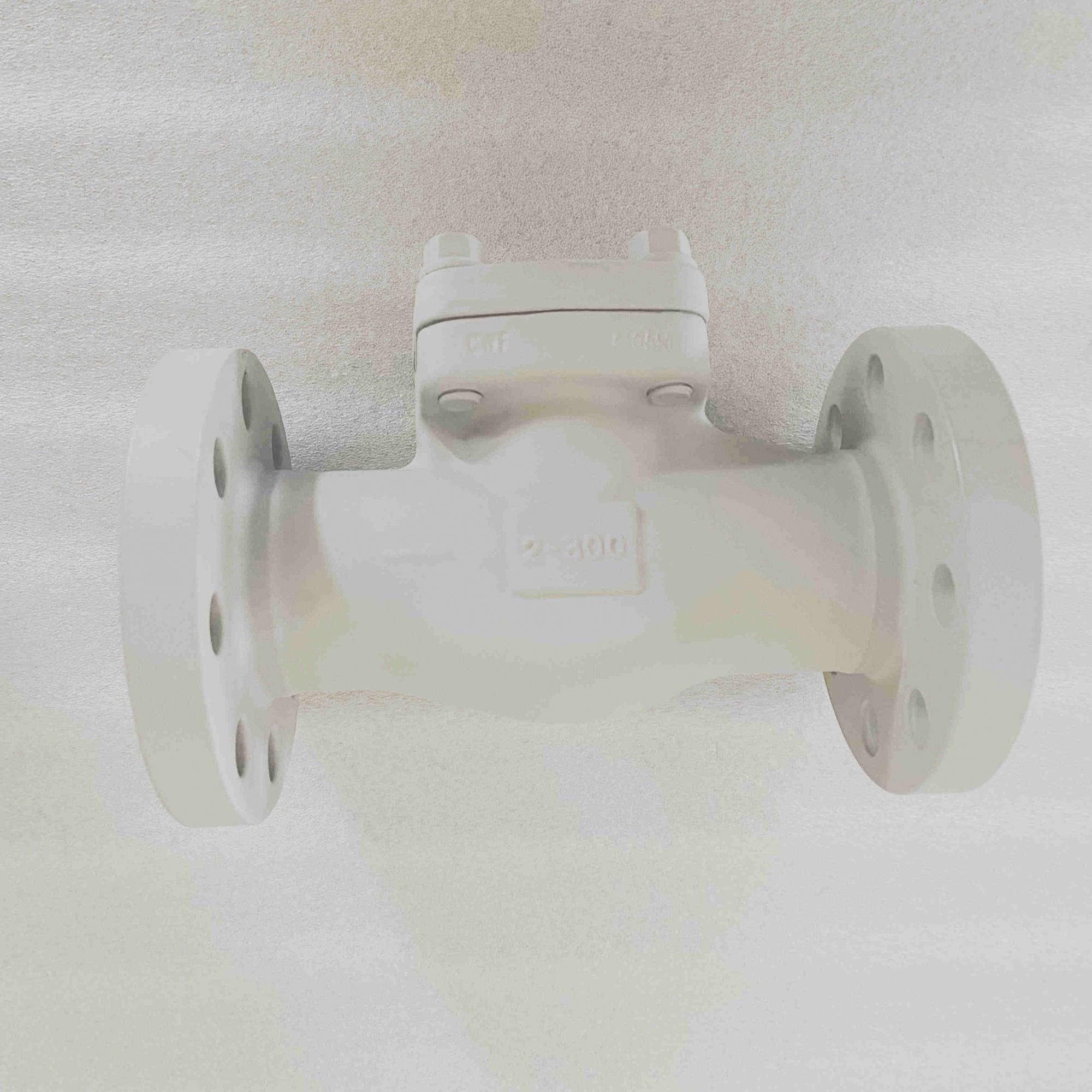
ASTM A105N Lift Check Valve, 2 Inch, 300 LB, API 602, RF
Key Specifications / Features
Get high-quality Carbon Steel Lift Check Valves from a trusted provider. Our valves come in 2-inch size, suitable for Class 300 LB applications. With DN50 and PN50 specifications, these valves meet API 602 and ASME B16.10 standards. Featuring a Bolted Bonnet design and Raised Flanged Ends, these valves also offer an Integral Seat. Perfect for ensuring fluid flow control and preventing backflow.
Detail Information
Lift check valve, carbon steel, NPS 2, ASME B16.10, 300 LB, A105N, RF.
Valve description:
Lift check valve, bolted bonnet, raised flanged, integral seat.
Design: API 602.
Body: ASTM A105N
Nominal size: 2 Inch.
Nominal class: 300 LB.
End Connection: RF flange.
Face to face: ASME B16.10.
Test and inspection: API 598.
Product Range:
Body material: Carbon Steel.
Normal diameter: 1/2 - 3 Inch (DN15 - DN80).
End connection: BW, Flanged.
Pressure range: Class 150 - 2500 LB (PN16 - PN420).
Working temperature: -29℃ - +429℃.
Technical parameters and characteristics
Valve description:
Lift check valve, bolted bonnet, raised flanged, integral seat.
Design: API 602.
Body: ASTM A105N
Nominal size: 2 Inch.
Nominal class: 300 LB.
End Connection: RF flange.
Face to face: ASME B16.10.
Test and inspection: API 598.
Product Range:
Body material: Carbon Steel.
Normal diameter: 1/2 - 3 Inch (DN15 - DN80).
End connection: BW, Flanged.
Pressure range: Class 150 - 2500 LB (PN16 - PN420).
Working temperature: -29℃ - +429℃.
Technical parameters and characteristics
| Product | Lift check valve. |
| Nominal diameter | 1/2 Inch - 3 Inch. |
| Design temp. | Down to -29℃. |
| Design pressure | Class 150 - 2500 LB. |
| Material | Carbon Steel. |
| Design standard | API 602. |
| Face to face | ASME B16.10. |
| Connection end | BW, Flange. |
| Test standard | API 598. |
| Package | Plywood |
| Application | Block reverse flows |
Supplier Information
ZHEJIANG VERVO VALVE CO., LTD
Verified Supplier
浙江丽水
Est. 2020
Certifications:
ISO 9001

ve******ve
1591 article(s)
Comments
Leave a Comment