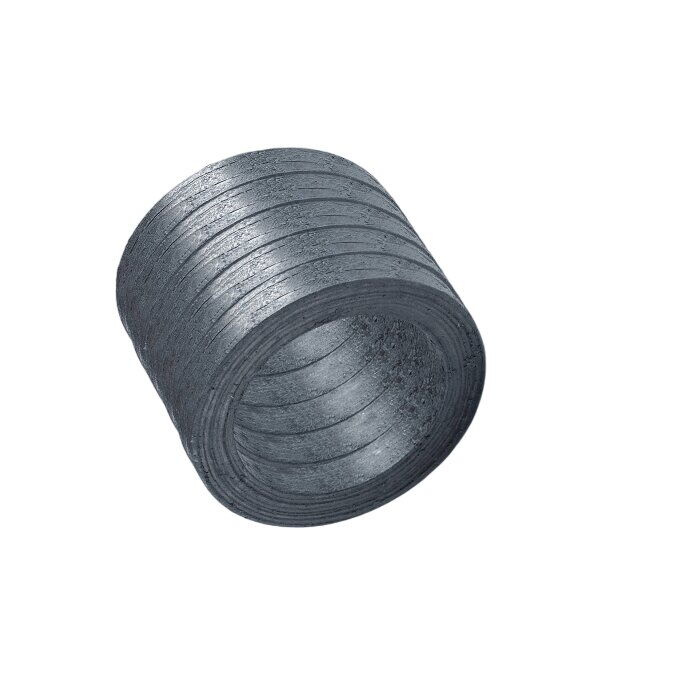
Valve Packing Rings, Carbon Fabric, Expanded Graphite, 25 MPa

Valve Packing Rings, Carbon Fabric, Expanded Graphite, 25 MPa

Key Specifications / Features

As a reliable valve packing rings manufacturer, we offer premium sealing solutions made from laminated carbon non-woven fabric combined with expanded graphite foil. Designed for pressures up to 25 MPa, these rings feature a high-temperature coating and are available in customized sizes, delivering excellent thermal resistance and sealing integrity for demanding industrial applications.
Request a quote

Detail Information

Product Name: Valve Packing Rings
Materials: Laminated Carbon Non-woven Fabric, Expanded Graphite Foil
Impregnation: Special high-temperature-resistant coating
Size: Customized
Pressure: 25 MPa
pH: 0 – 14
Temperature: –200°C to +400°C (most media), –200°C to +550°C (steam)
Applicable Media: Basic Chemicals, Steam, Oil, etc.
Certificates: TA-Luft, ISO 15848-1, API 589

Valve Packing Ring Features

Very Low Leakage Rates: Significantly better sealing than standard expanded graphite rings
Reduced Spindle Adhesion: Carbon non-woven inner layer minimizes graphite particle sticking
Lower Friction: Enhanced material combination ensures reduced friction forces for smoother operation

Send your message to this supplier

FAQs

Modern valve packing systems use advanced engineered materials designed for durability, chemical resistance, and low friction performance. The most widely used material is flexible graphite, which offers excellent thermal stability (often up to 450–600°C in oxidizing environments and higher in non-oxidizing conditions).

To enhance strength and extrusion resistance, graphite packing is often reinforced with materials such as:

Inconel wire mesh reinforcement for high-pressure applications

Carbon fiber or aramid fiber layers for mechanical stability

PTFE-based components for chemical resistance in corrosive media

In some specialized applications, hybrid packing structures are used, combining multiple layers to balance sealing performance, friction control, and wear resistance.

Low-emission packing systems are specifically engineered to minimize microscopic leakage along the valve stem, which is a common source of fugitive emissions in industrial plants.

Compared with conventional packing, low-emission designs achieve better performance through:

Higher material density control to reduce permeation paths

Pre-compressed or die-formed graphite rings for stable sealing stress

Optimized load distribution using live-loading spring systems

Improved surface finish compatibility with stem materials

These design improvements allow the packing to maintain consistent sealing force even under thermal cycling and vibration. As a result, leakage levels can be reduced to extremely low thresholds (often measured in parts per million), supporting compliance with environmental regulations and reducing operational losses.

Valve stem packing is a critical sealing component installed around the valve stem inside the bonnet area. Its primary function is to prevent internal media (gas or liquid) from leaking to the external environment while still allowing smooth linear or rotary movement of the stem.

In industrial applications such as oil & gas, petrochemical, and power generation, packing acts as a dynamic seal that must withstand continuous friction, pressure fluctuations, and thermal cycling. Unlike static seals, packing is constantly in contact with a moving component, making material selection and compression design extremely important.

High-performance packing systems are often designed to meet low-emission requirements such as API 622 and ISO 15848-1, ensuring fugitive emissions remain within strict environmental limits.

Similar Products

Related Searches

Products you might also like