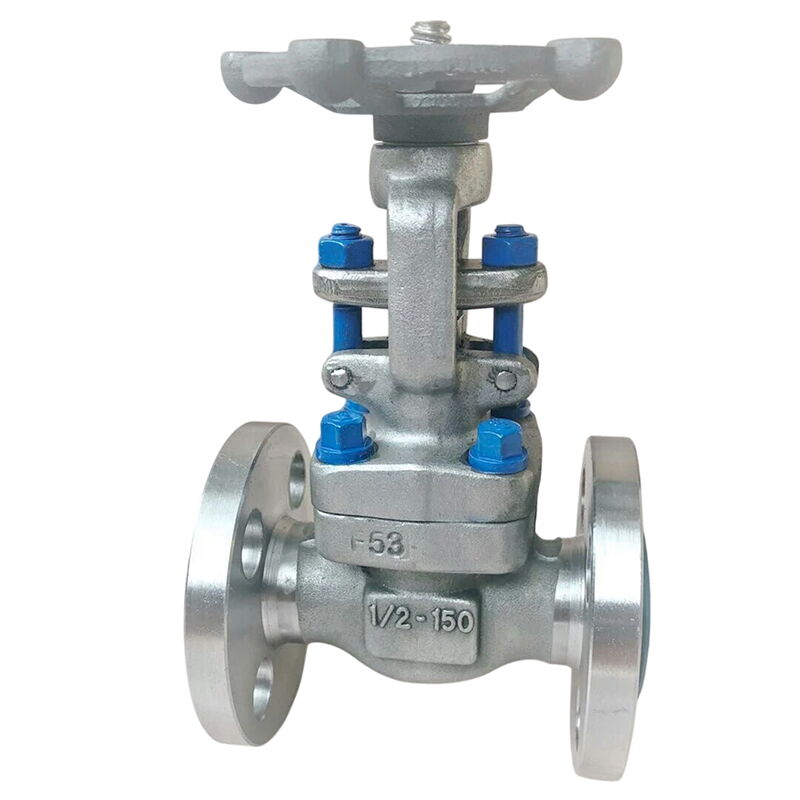
Rising Stem Gate Valve, API 602, A182 F53, 1/2 IN, CL150, RF
Key Specifications / Features
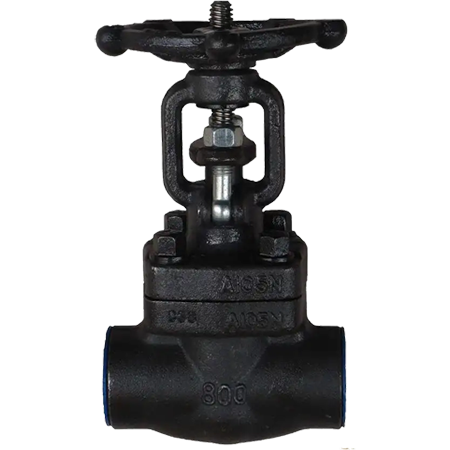
The China Rising Stem Gate Valve Plant offers a high-quality Low Emission Forged Valve designed to meet stringent industry standards. This valve is manufactured to API 602 specifications and made from ASTM A182 F53 material, ensuring durability and reliability. With a 1/2 inch size and a Class 150 LB rating, it features a bolted bonnet and rising stem mechanism for easy operation and maintenance. The RF flanged design ensures secure connections, making it ideal for various industrial applications requiring precision and low emissions.
Detail Information
Product Name: Rising Stem Gate Valve
Key Features: Bolted Bonnet, Rising Stem
Design Standard: API 602
Body Material: ASTM A182 F53
Size: 1/2 Inch, DN15
Pressure: Class 150 LB, PN20
Operation: Handwheel
End Connection: RF Flanged
Standards:
Face to Face: ASME B16.10
Test & Inspection: API 598
Certificates: TA-Luft, ISO 15848-1, API 622, ect
Product Range
Body Materials: Forged Carbon, Stainless, Alloy Steel
Gasket & Packing Material: Graphite/PTFE
Size Range: 1/2-32 Inch (DN15-DN800)
End Connection: Flanged, BW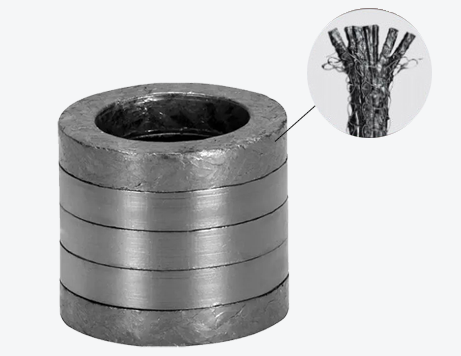
Pressure Range: Class 150-2500 LB (PN16-PN420)
Temperature Range: -29°C to 300°C
Application: Water, Steam, Gas, ect.
The packing used in forged valves is the M800 series graphite packing,
with a graphite carbon content exceeding 99% and a sulfur content below 50 PPM.
The dynamic leakage rate, as tested according to API 622, is less than 12 PPM.
The static leakage rate is below 6 PPM.
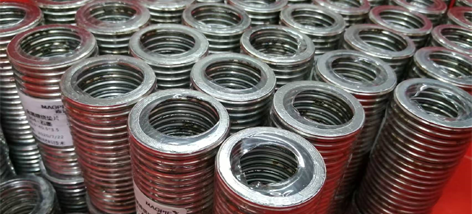
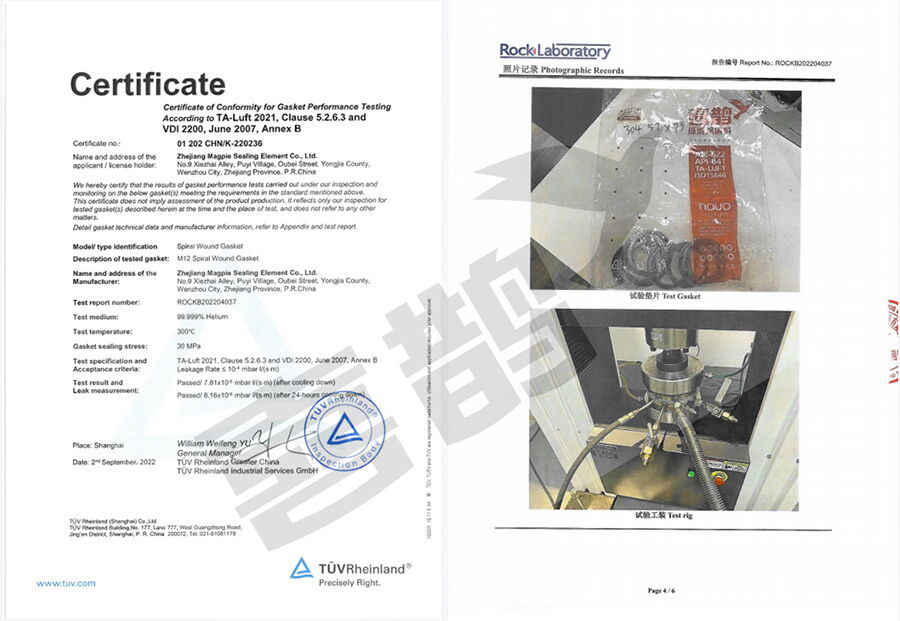
All the gaskets used are low-emission gaskets certified by TÜV Rheinland TA-LUFT.
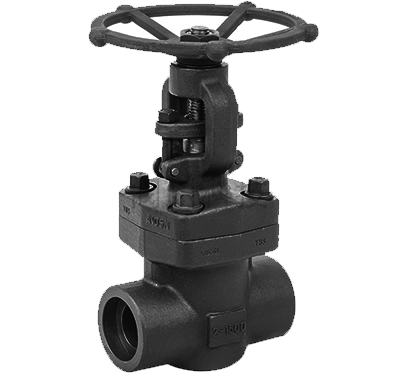
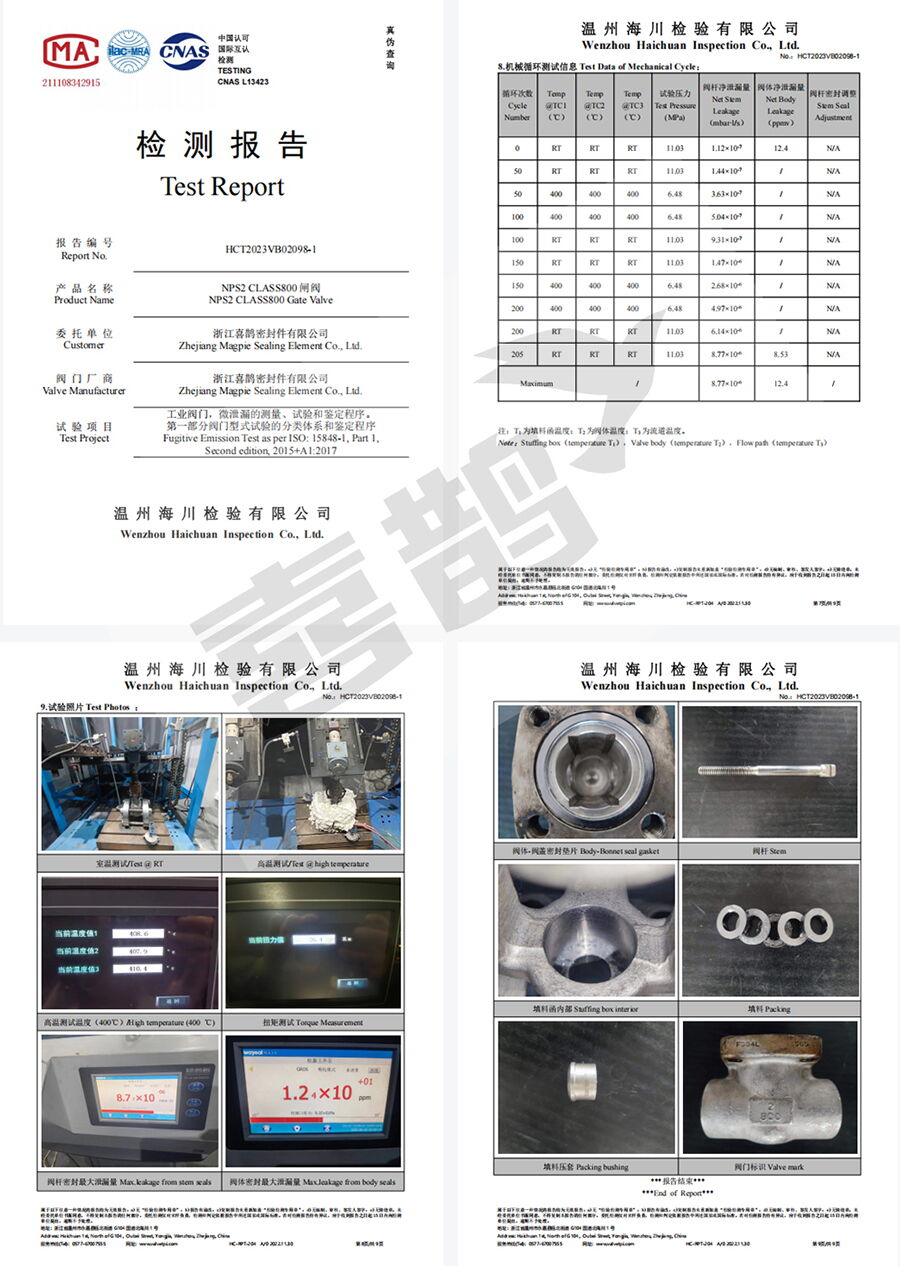
Type Test Report for 2-Inch Gate Valve
According to ISO 15848-1 at 400°C
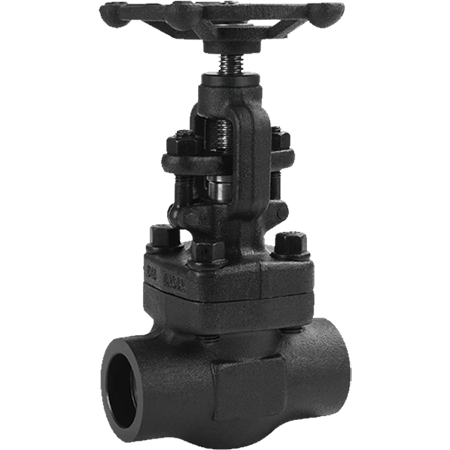
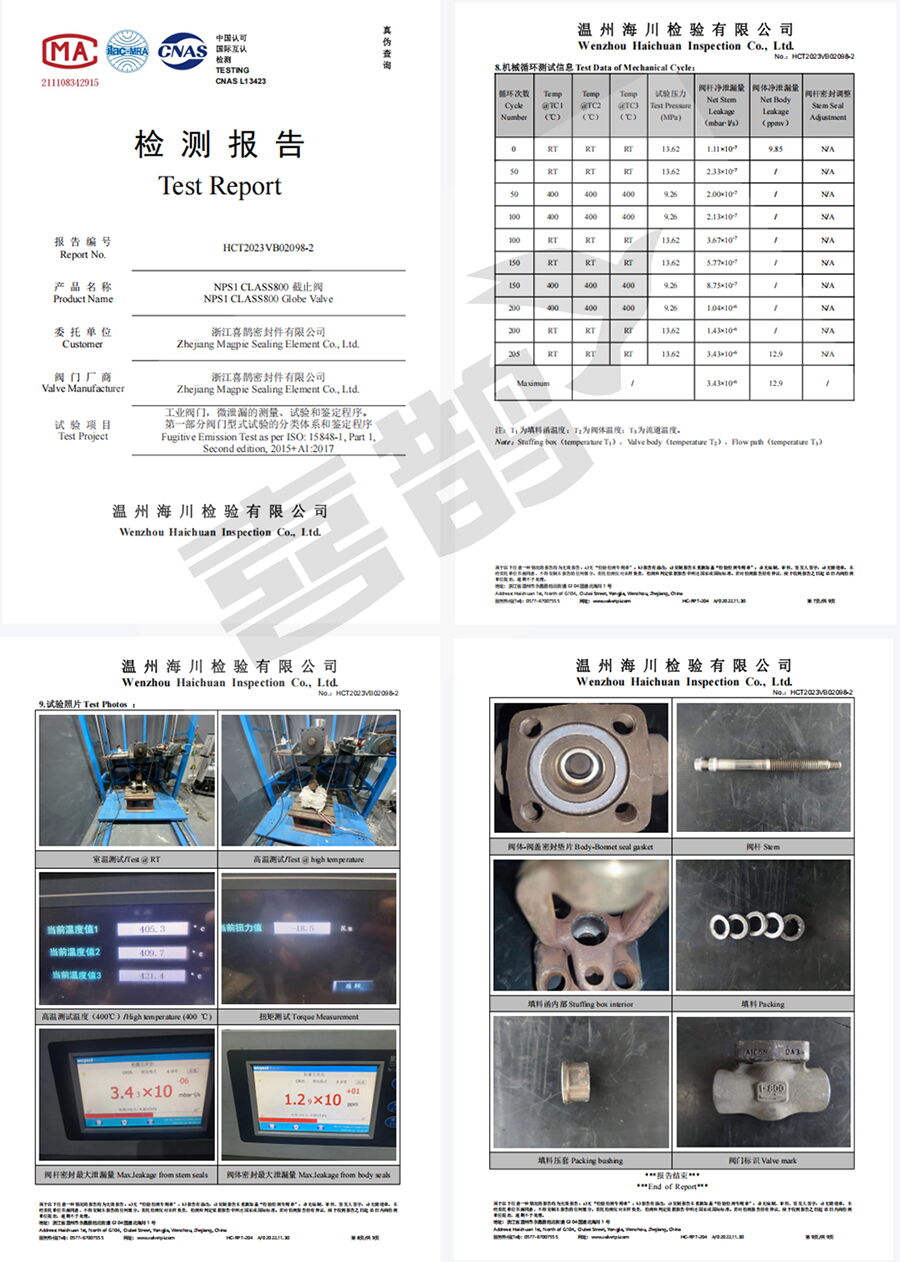
Type Test Report for 1-Inch Globe Valve
According to ISO 15848-1 at 400°C
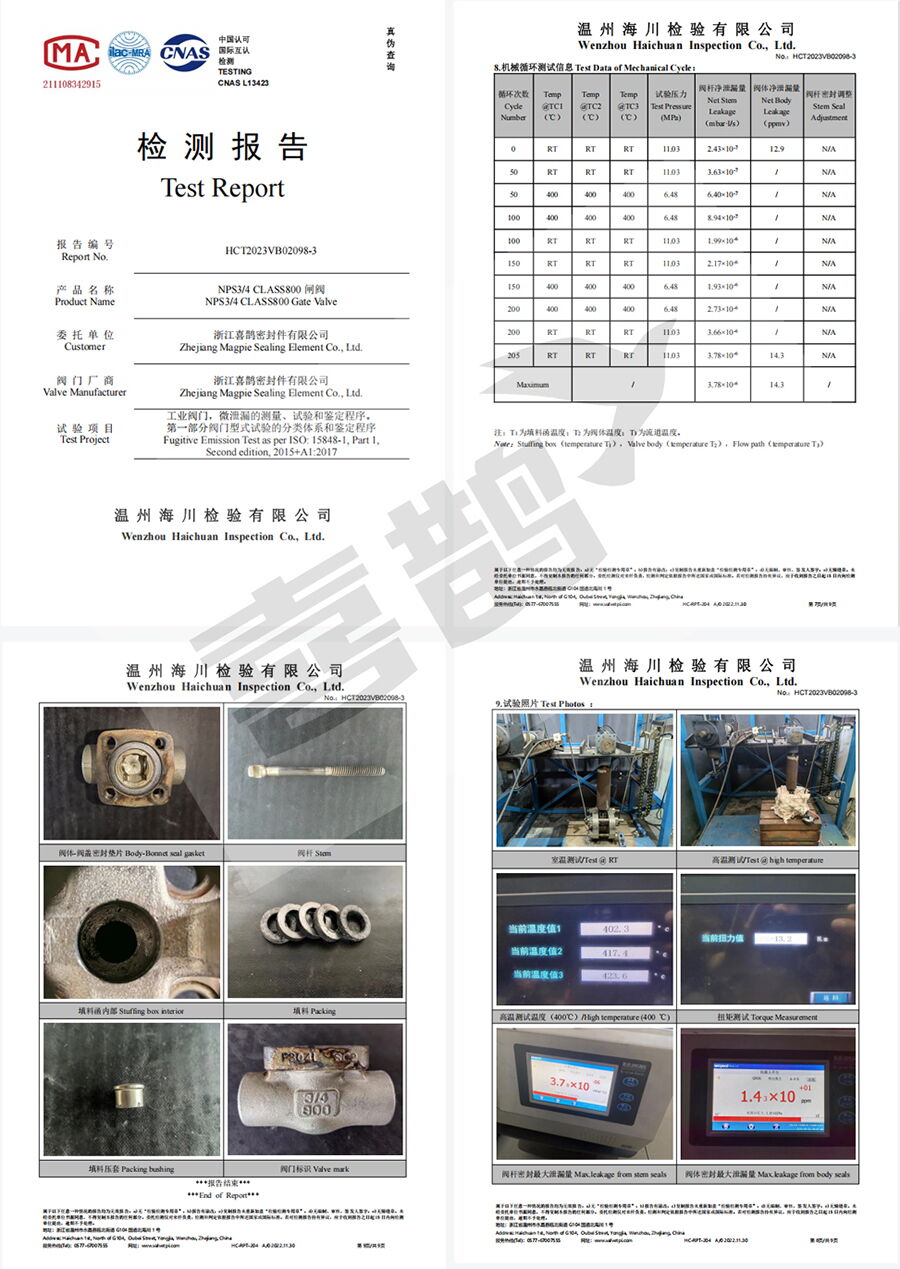
Type Test Report for 3/4-Inch Gate Valve
According to ISO 15848-1 at 400°C
The 0.5-inch forged steel gate valve in accordance with API 602 is tested for an ISO 15848-2 Class A leakage rate below 50 PPMV, using the M600 model low emission packing.
The 1-inch forged steel gate valve, in accordance with API 602, is tested for an ISO 15848-2 Class A leakage rate of less than 50 PPMV, using the M600 model low-emission packing.
The 1.5-inch forged steel globe valve, in accordance with API 602, is tested for an ISO 15848-2 Class A leakage rate of less than 50 PPMV, using the M800 model low-emission packing.
The API 624 test for a 2-inch forged steel gate valve in accordance with API 602 uses the M600 model low-emission packing.
Supplier Information
Zhejiang Magpie Sealing Technology Co., Ltd.
Verified Supplier
Certifications:
