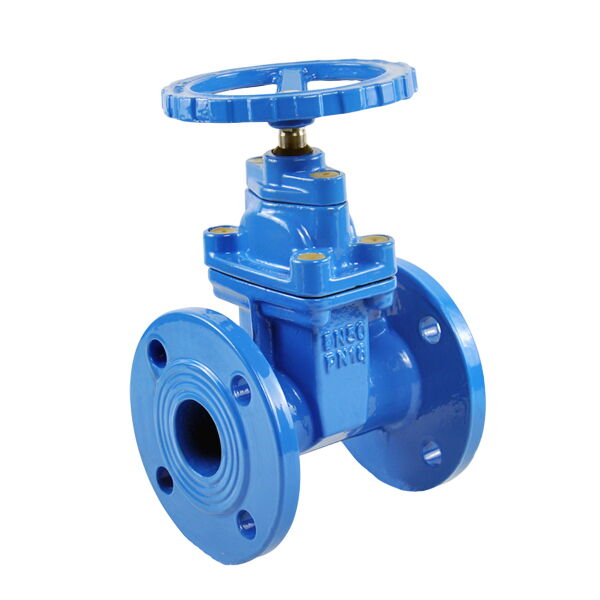
Non-rising Stem Gate Valve, API 600, Ductile Iron, DN50, PN16
Key Specifications / Features
The China Non-rising Stem Gate Valve is designed to meet the API 600 standard, ensuring high quality and reliability. It features a durable ductile iron body, available in GGG40 and GGG50 grades, providing excellent strength and corrosion resistance. The valve has a DN50 nominal diameter, equivalent to 2 inches, and is rated for PN16 and Class 150 LB pressure classes, making it suitable for a wide range of industrial applications. The soft seal design ensures a tight closure, while the RF flanged connection offers easy installation and main
Detail Information
Product Name: Non-rising Stem Gate Valve, Soft Seal
Design Standard: API 600
Body Material: Ductile Iron (GGG40, GGG50)
Wedge Material: Ductile Iron, EPDM Coated
Size: DN50, 2 Inch
Pressure: PN16, Class 150 LB
End Connection: RF Flanged
Operation: Handwheel
Certificates: TA-Luft, ISO 15848-1, API 622, ect
Product Range
Materials: Ductile Iron, Carbon Steel, Stainless Steel
Size Range: DN40-DN500, 1-1/2 Inch - 20 Inch
Working Pressure: PN10, PN16, Class 150 LB
Design Standard: API 600, ASME B16.34
Flange Standard: ASME B16.5
Face to Face Standard: ASME B16.10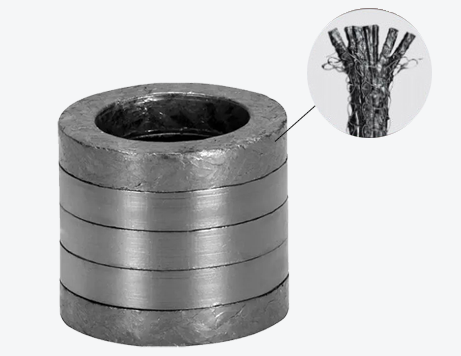
Testing Standard: API 598
Working Temperature: up to 120°C
Medium: Water, Oil, and Corrosive Liquids
The packing used in cast steel valves is the M800 series graphite packing,
with a graphite carbon content exceeding 99% and a sulfur content below 50 PPM.
The dynamic leakage rate, as tested according to API 622, is less than 12 PPM.
The static leakage rate is below 6 PPM.
All the gaskets used are low-emission gaskets certified by TÜV Rheinland TA-LUFT
ISO 15848-1 Valve Tested Case Example: NPS4 Class 300 Valve
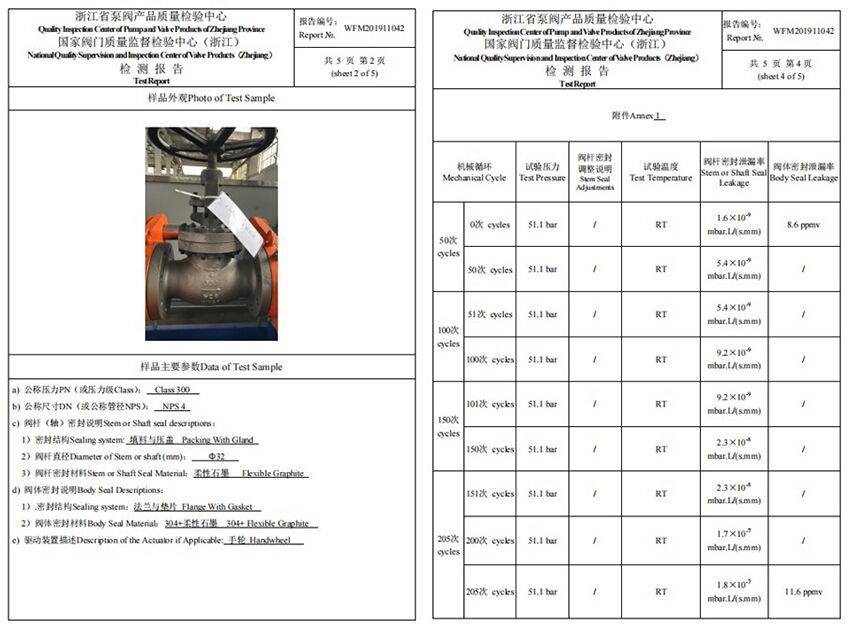
4-inch 300 LB Globe Valve: ISO 15848-1 Test at Ambient Temperature for 205 Cycles, High Leakage Rate of 1.8×10⁻⁷, Maximum Body Leakage at 11.6 PPMV
API 624 Valve Test Case 1: 12-inch 150 LB Gate Valve
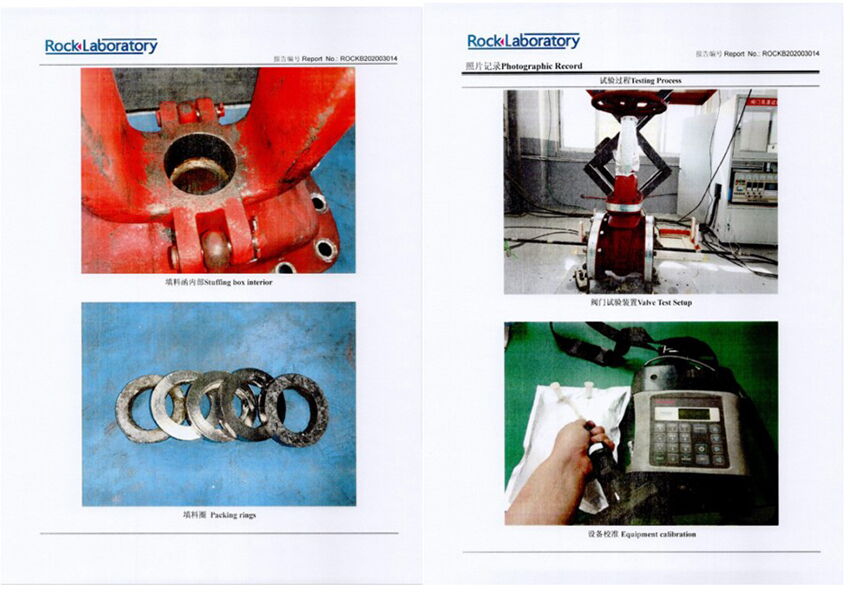
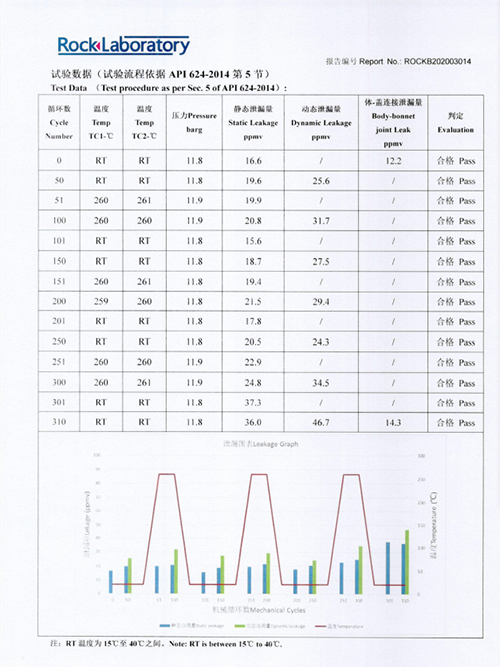
12-inch 150 LB Gate Valve
API 624 Test
Maximum Packing Leakage: 46.7 PPMv
API 624 Valve Test Case 2: 12-inch 600 LB Gate Valve
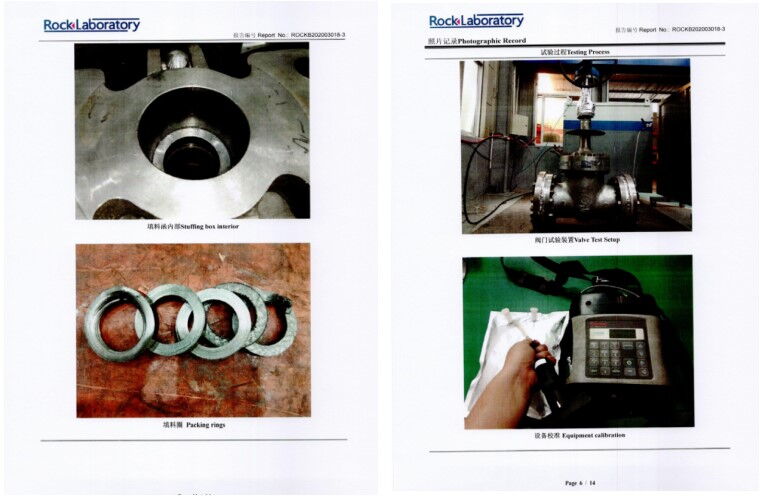
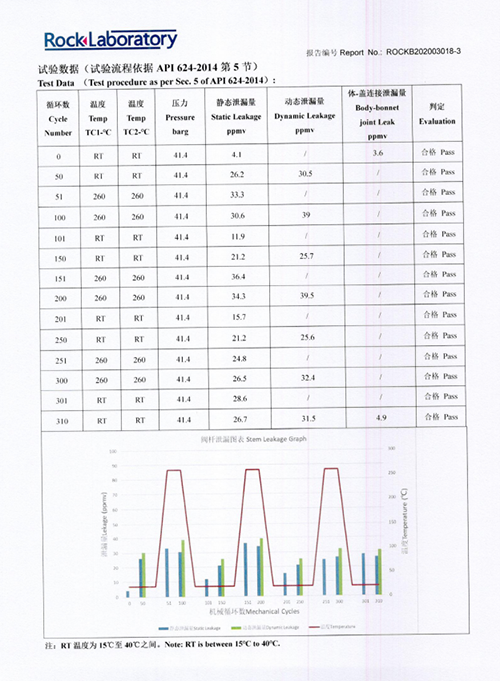
12-inch 600 LB Gate Valve
API 624 Testing
Maximum packing leakage: 32 ppmv
Fire Test Certification of Valve Packing
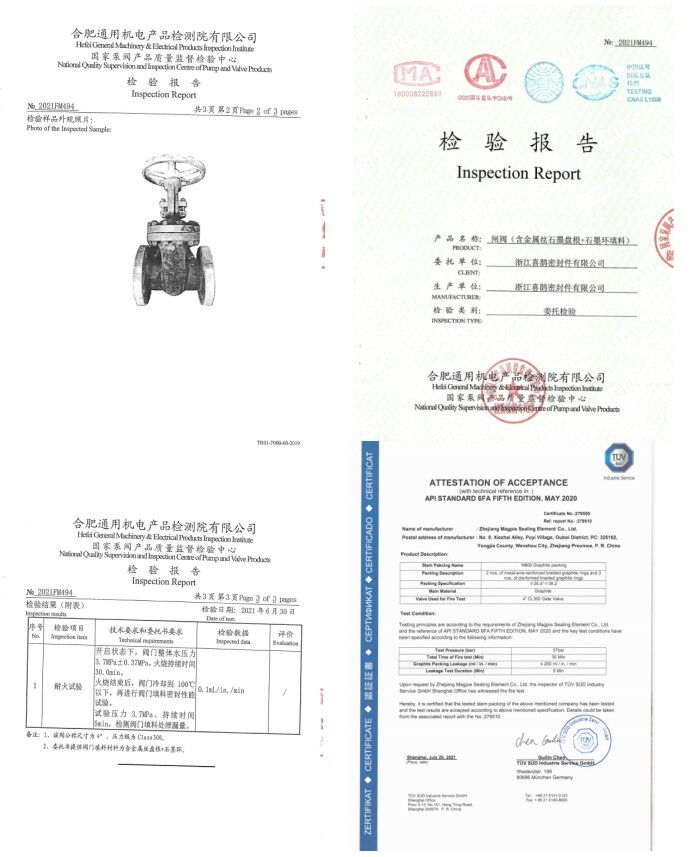
Fire Test Report and Certification for 4-inch Gate Valve with M800 Packing
ISO 15848-1 Valve Tested Case Example: NPS12 Class 300 Valve
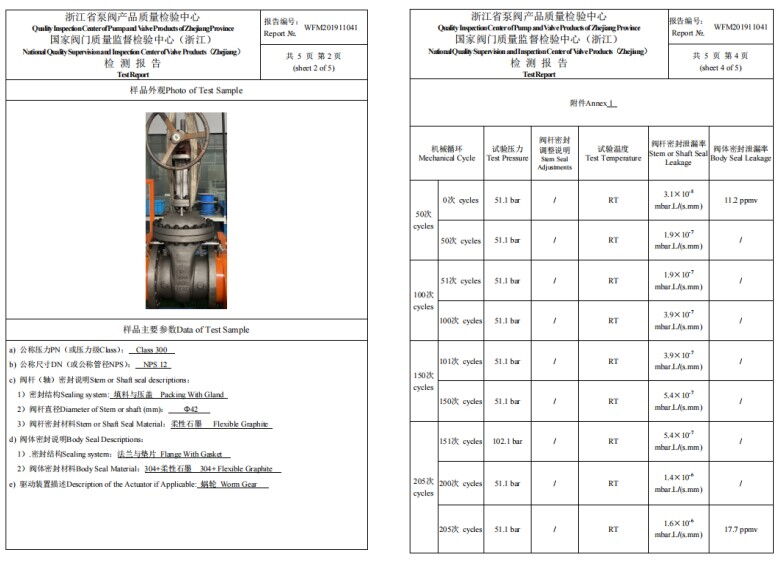
12-inch 300 LB Gate Valve
ISO 15848-1 Test at Ambient Temperature for 205 Cycles
High Leakage Rate: 1.6×10⁻⁶
Maximum Body Leakage: 7.7 PPMV
The API 624 test for the API 600 WCB 12-inch 150 LB gate valve utilized an M600 low-emission graphite packing set.
The ISO 15848-2 Type A test for the API 600 WCB 2-inch 150 LB gate valve, which requires emissions below 50 PPMV, was conducted using an M600 low-emission graphite packing set.
Supplier Information
Zhejiang Magpie Sealing Technology Co., Ltd.
Verified Supplier
Certifications:
