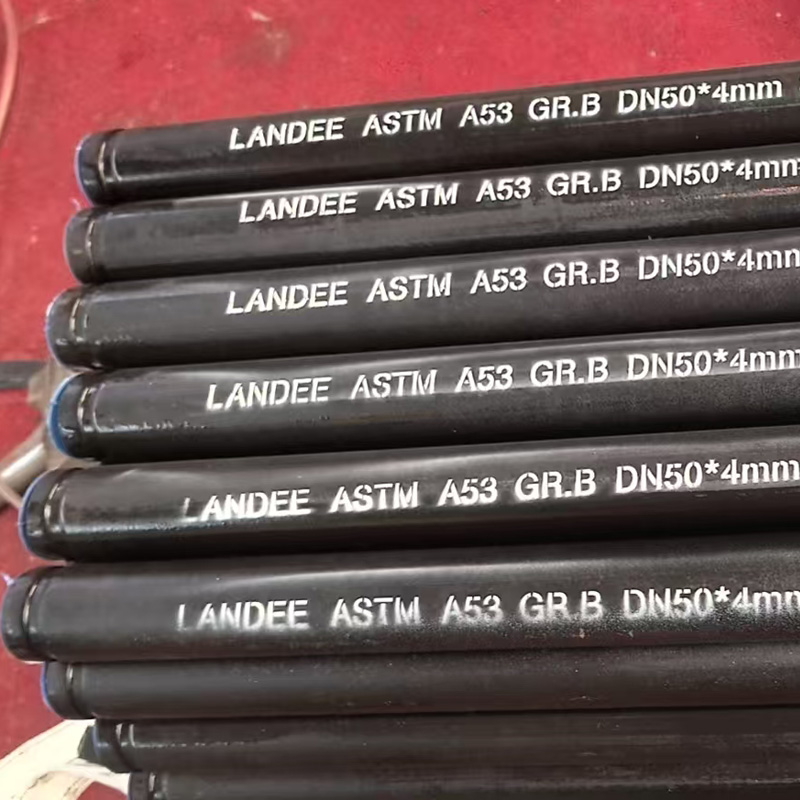
Roll Grooved ERW Pipes, A53 Grade B, 2 Inch, 4 MM, 3 Meters
Model Number: LP-ERWP-20260310-01
Key Specifications / Features
Our ERW steel pipes are manufactured in China to meet ASTM A53 Grade B standards, made from high-quality carbon steel for durability and strength. This DN50 pipe features a 4 mm wall thickness and a standard length of 3 meters, providing reliable performance for a wide range of industrial and construction applications. The roll-grooved ends allow for easy and secure connection, reducing installation time and ensuring leak-free joints. Designed for piping systems requiring strength, corrosion resistance, and precision, these ERW steel pipes are suitable for water, gas, and structural projects. As a leading ERW steel pipe manufacturer in China, we ensure consistent quality and supply.
Detail Information
Product Name: Grooved ERW Steel Pipe
Type: ERW Steel Pipe
Material: ASTM A53 Grade B
Size: DN50, 2 Inch
Wall Thickness: 4 MM
Length: 3 Meters
End Connection: Roll Grooved
Surface Treatment: Black Painting
Brand: Landee
Type: ERW Steel Pipe
Material: ASTM A53 Grade B
Size: DN50, 2 Inch
Wall Thickness: 4 MM
Length: 3 Meters
End Connection: Roll Grooved
Surface Treatment: Black Painting
Brand: Landee
Supplier Information
XIAMEN LANDEE INDUSTRIES CO., LTD.
Verified Supplier
NO. 321 JIAHE ROAD, XIAMEN, P.R.CHINA 361012
Est. 1994
Certifications:
ISO 9001

Eliza
ed***rf
With over five years of experience in foreign trade and B2B sales, she brings a wealth of knowledge and expertise to her role. Her background includes extensive work in international markets, where she has successfully navigated the complexities of cross-border transactions and developed strong relationships with clients. In addition to her sales acumen, she has honed her skills as an editor, ensuring clear, concise, and impactful communication. Her combined experience in sales and editorial work allows her to effectively bridge the gap between product offerings and client needs, driving growth and fostering lasting partnerships.
6707 article(s)
Comments
Leave a Comment