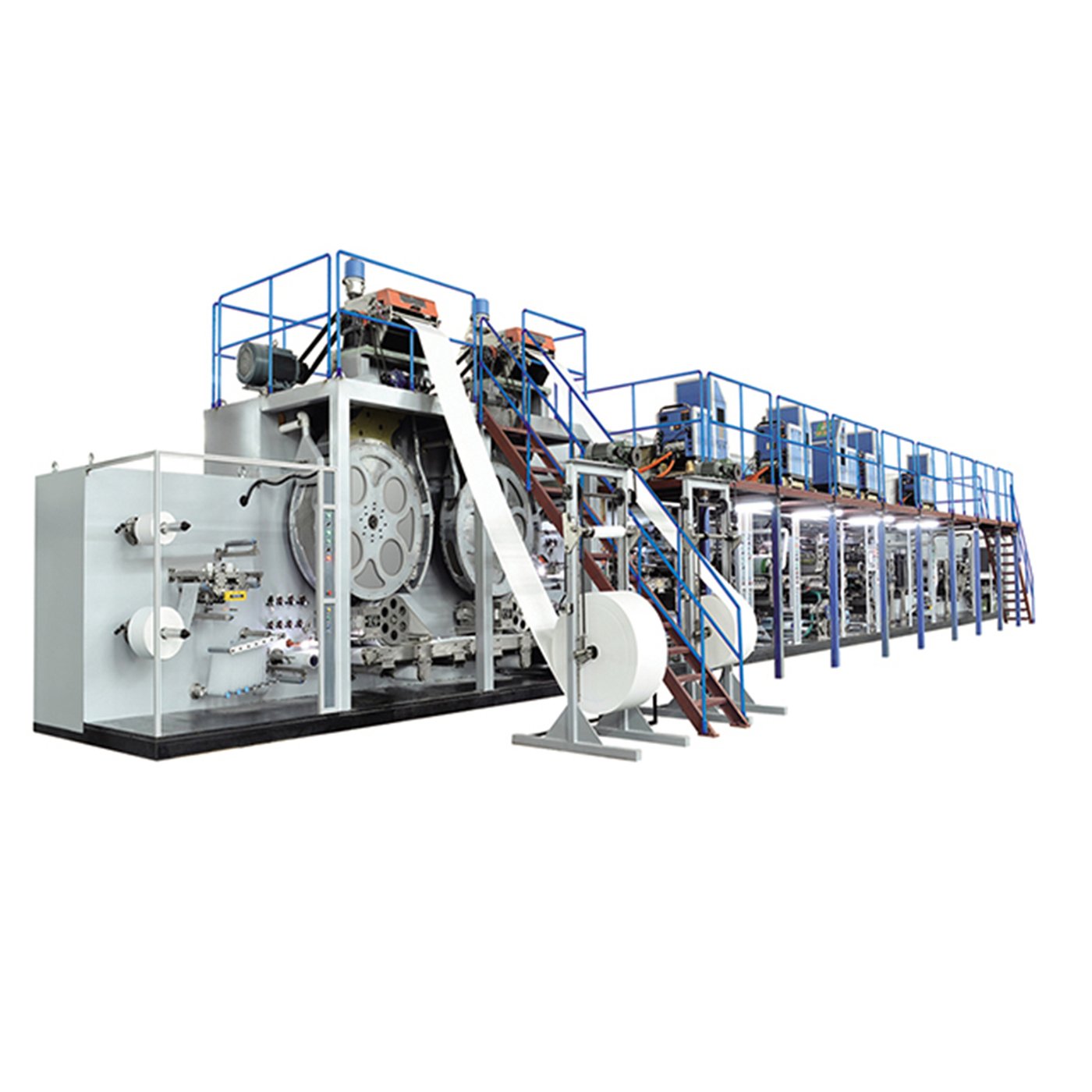
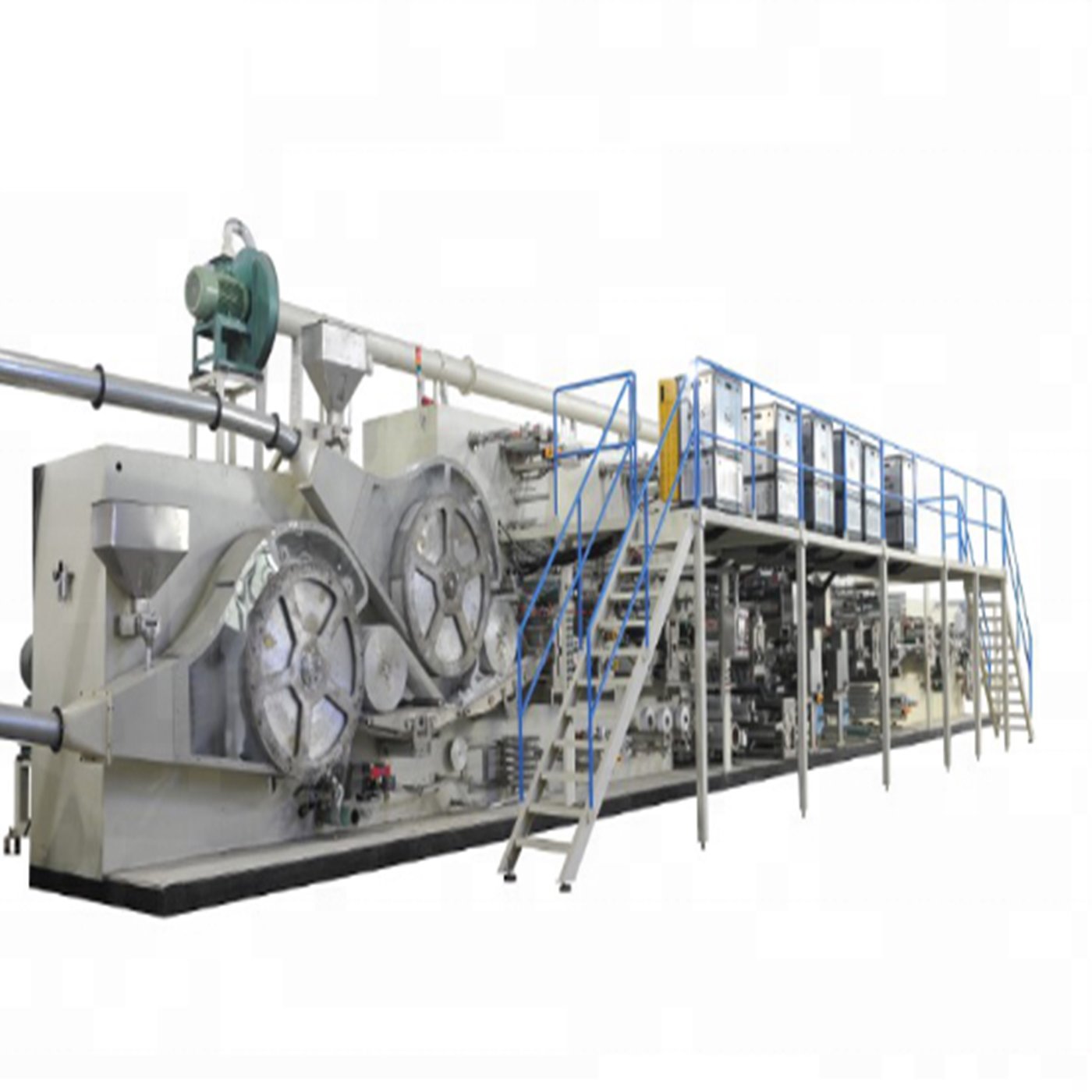
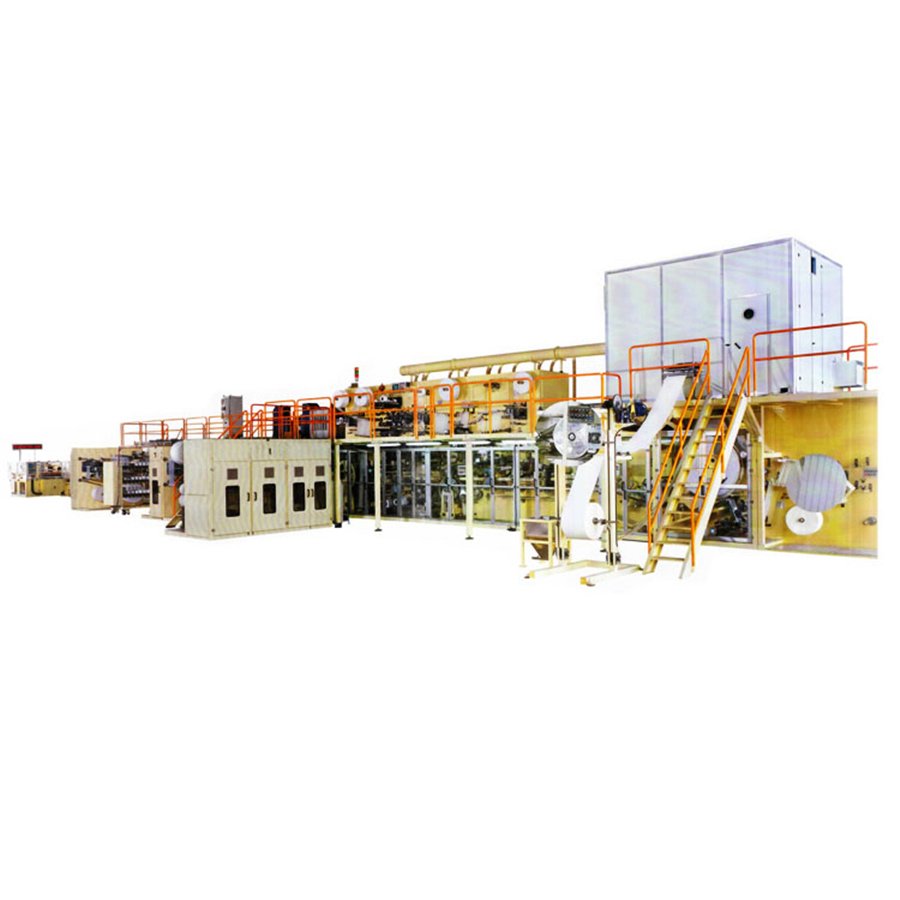
Low Cost Auto Adult Diaper Making Machine with HMI Operation

Low Cost Auto Adult Diaper Making Machine with HMI Operation

Key Specifications / Features

Our low-cost automatic adult diaper making machine is an excellent choice for cost-effective production. This machine can be customized to meet your specific needs, ensuring that it aligns perfectly with your production requirements. With a work speed of 300 pieces per minute and a high product yield of over 97%, it delivers efficient results.
Request a quote

Detail Information


Subject Parameter
Overall size(L*W*H) 24M*4M*3.6M(For reference only)
Machine size(L*W*H) 22m*2.1m*3.3m,based on the product provided by  client
Design speed 300pcs/min
Stable speed 160pcs/min
Pass percentage 98%
Work efficiency 85%-90%
Power source 380V,50HZ,(3phase,4lines+ground wire)
Machine capacity about 400KW
Air pressure 0.6-0.8Mpa
Machine weight  About 95T
Machine color Customized

Configuration:

Product structure:
Leg cuff N.W,Top sheet N.W,Fluff core(with SAP) Side Tape,ELastic waistband,Frontal tape,Back sheet.

Product size:
M: 680*450  L: 800*650    XL: 950*760
 
Control system:
PLC control system,operating on the touch screen,man-machine interface
 
Tension system:
Leg cuff N.W,Top sheet N.W,elastic waistband,upper & down tissue,back sheet are A & B shaft active unwinding by Inverter motor.
 
Drive system:
Timing belt and flat belt are imported products,and all the key parts are imported bearings.
 
Safety system:
It has safety device on the operating side,matched with urgent stop switch,high audio fan uses sound insulation or silencer.
 
Packing way:
Equipped with the stacker at the request of client.
 
Materials corrective system:
Germany BST automatic web guide system(optional)
 Low Cost Auto Adult Diaper Making Machine with HMI Operation

Main Product Lines:

  1. Baby Diaper Production Line (Includes I & T shape diaper, Baby pants, Full Elastic waistband diaper)
  2. Adult Diaper Production Line (Includes Adult diaper, Adult pants)
  3. Sanitary Napkin & Panty Liner Production Line
  4. Menstruation Panty Production Line
  5. Under Pad Production Line
  6. Disposable Breast Pad Production Line

Send your message to this supplier

FAQs

Basic Concept

Low Emission Valves refer to valves that, through special design and manufacturing processes of the stem packing and mid-seat gasket, control the leakage of media (gases, liquids) to extremely low levels. They are primarily used in industrial scenarios with high safety and environmental protection requirements. The core objective is to reduce or prevent the leakage of harmful media (such as volatile organic compounds (VOCs), toxic gases, flammable and explosive substances, etc.) into the external environment. Therefore, low emission valves offer multiple advantages in terms of energy conservation, emission reduction, reduced safety risks, and environmental pollution.

Key Technical Standards and Leakage Grades

The performance of Low Emission Valves is quantified by their leakage rate, and different industries follow different standards. Common standards include:

1. International Standards

ISO 15848-1: This standard classifies valve leakage grades into four levels: A (the highest requirement), B, C, and D. Grade A requires a leakage rate of ≤100 ppm (by volume).

API 624 (American Petroleum Institute): This standard, applicable to the refining and chemical industries, specifies a leakage rate of ≤100 ppm (for gases) under specific pressures.

EPA Standard (U.S. Environmental Protection Agency): This standard, targeting VOC emissions, requires a leakage rate of ≤500 ppm.

2. Chinese Standards

GB/T 42223-2022: This standard, which references international standards, regulates the design, manufacturing, and testing of Low Emission Valves.

Comparison Dimension

Traditional Valves

Low Emission Valves

Leakage Rate

Typically ≥1000 ppm (for gases)

≤100 ppm (some can reach ≤10 ppm)

Sealing Structure

Single seal (e.g., packing gland) with poor initial stability, susceptible to temperature changes and impact

Single seal (e.g., packing gland) with long-term extreme stability, unaffected by temperature changes and impact

Testing Requirements

Hydrostatic / Pneumatic tests

Helium leak detection (leakage rate ≤1×10⁻⁷ Pa・m³/s)

Cost

Lower

Slightly higher, but less than 1-2% more than traditional valves

Applicable Media

General industrial fluids

High-risk, high-value, and high environmental protection requirement media

Storage Performance Deficiencies of Traditional Valves

Traditional valves using ordinary graphite packing face dual storage risks.

1. Physical Adsorption Leading to Operational Failure

During long-term static storage, graphite molecules adhere to the valve stem surface due to van der Waals forces, forming a rigid adsorption layer. This increases the valve opening torque by 2-3 times compared to the initial value. In extreme cases, it may cause the actuator to overload and fail.

2. Chemical Corrosion Leading to Seal Degradation

Ordinary graphite packing typically has a sulfur content of ≥1200 ppm (by mass). In storage environments with humidity ≥60%, sulfur reacts with the metal valve stem through electrochemical corrosion, forming a FeS corrosion layer. This enlarges the seal interface gap, causing the leakage rate to increase exponentially over time, with an average annual leakage increase of 30%-50%.

Storage Performance Advantages of Low Emission Valves

Low Emission Valves achieve a breakthrough in storage stability through the following means:

1. Upgraded Material System

Sealing Packing: High-purity sulfur-free graphite (sulfur content ≤0.01%) with ≥99.5% purity is used. The interlayer bonding is enhanced through nano-scale flake orientation technology, blocking the migration path of sulfur elements.

Mid-flange Gasket: Modified flexible graphite composite material with 15%-20% nickel-based alloy reinforcement is used to form a corrosion-resistant skeletal structure.

2. Performance Verification Data

Traditional Valves: Opening torque increases from 80 N•m to 220 N•m, and leakage rate rises from 500 ppm to 2800 ppm.

Low Emission Valves: Opening torque fluctuation is ≤±5%, and leakage rate remains below 20 ppm, fully meeting the stringent long-term storage performance requirements of API 624.

At first, manufacturing low emission valves was pretty much the same for us as it was for other regular valve manufacturers in China. If we ran into problems like valves not passing tests or having leak rates that kept changing, we'd just try to get better packing materials from a different supplier. We didn't really stop to think about the bigger picture, like how the whole manufacturing process or the properties of the materials we were using might be causing the issues.

Over time, we figured out that the metal parts of the valves were pretty reliable, but we hadn't been paying enough attention to the non-metal parts that actually do the sealing. And those parts are super important for making sure the valves don't leak. So, back in 2008, we decided to focus on manufacturing low emission valves from start to finish.

First, we created a special team just for figuring out better ways to seal valves. They dug deep into how to make the seals work really well and how to build them. At the same time, we started working closely between the people who design the seals and the people who manufacture the valves. By tweaking the design of the seals and how we put the valves together, we made a system where everything works together perfectly. After that, we tested a bunch of different valves to see how well they sealed in all kinds of situations: different sizes, pressures, and temperatures. All the data we collected from these tests helped us keep improving our valves.

Now, when we manufacture a bunch of valves and check them randomly, they all meet the tough standards of API 624 and ISO 15848-1. We've gone from just following a process to really understanding and controlling the technology ourselves.

Similar Products

Related Searches

Products you might also like