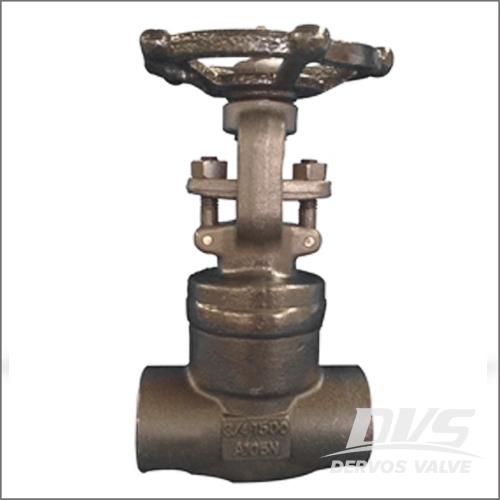
Rising Stem Forged Gate Valves, A105N, CL150-1500, Welded Bonnet
Key Specifications / Features
China Rising Stem Gate Valve Factory Makes Rising Stem Forged Gate Valves, Welded Bonnet, A105N, CL 1500, Threaded, Socket-Welded or Butt-Welded.
Detail Information
Type: Rising Stem Forged Gate Valves.
Material: A105N.
Valve Size: 1/2 - 4 Inch.
Applicable Pressure Rating: Class 150 LB - 2500 LB.
Temperature Rating: Up to 500℃.
Molding Style: Forging.
FORGED STEEL GATE VALVE - Outside Screw & Yoke, Welded Bonnet.
STANDARD MATERIALS:
Design and Manufacture Conform to: API 602, BS5352, ASME B16.34/ B16.11/ B1.20.1/ B16.25.
Structure Features:
★ End Connection: Threaded, Socket-Welded or Butt-Welded.
★ Outside Screw & Yoke, Welded Bonnet.
★ Reduce Bore / Full Bore.
★ Rising Stem / Non-Rising Handwheel.
Material: A105N.
Valve Size: 1/2 - 4 Inch.
Applicable Pressure Rating: Class 150 LB - 2500 LB.
Temperature Rating: Up to 500℃.
Molding Style: Forging.
FORGED STEEL GATE VALVE - Outside Screw & Yoke, Welded Bonnet.
STANDARD MATERIALS:
 |
PART NAMES | MATERIALS |
| BODY | A105; LF2; F5; F22; F304; F304L; F316; F316L; F347; F321; F51; F55; Inconel; Monel; Hastelloy; etc. | |
| BONNET | A105; LF2; F5; F22; F304; F304L; F316; F316L; F347; F321; F51; F55; Inconel; Monel; Hastelloy; etc. | |
| SEAT | ASTM A276 410 + HF | |
| WEDGE | ASTM A276 420 | |
| STEM | ASTM A276 410 | |
| HANDWHEEL | ASTM A197 | |
| PACKING | GRAPHITE | |
| GLAND | ASTM A276 410 |
 |
PRESSURE TEST ( A105 ) | ||||
| CLASS | SHELL (psig) | BACKSEAT(psig) | SEAT(psig) | ||
| WATER | WATER | AIR | WATER | ||
| 150LB | 450 | 325 | 90 | - | |
| 300LB | 1125 | 825 | - | ||
| 600LB | 2225 | 1650 | - | ||
| 800LB | 2975 | 2175 | - | ||
| 900LB | 3350 | 2450 | - | ||
| 1500LB | 5575 | 4100 | - | ||
| 2500LB | 9275 | 6800 | - | 6800 | |
Design and Manufacture Conform to: API 602, BS5352, ASME B16.34/ B16.11/ B1.20.1/ B16.25.
Structure Features:
★ End Connection: Threaded, Socket-Welded or Butt-Welded.
★ Outside Screw & Yoke, Welded Bonnet.
★ Reduce Bore / Full Bore.
★ Rising Stem / Non-Rising Handwheel.

de************02
1384 article(s)
Comments
Leave a Comment