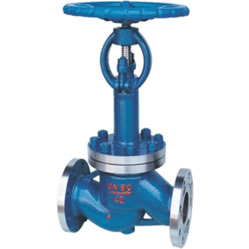
Low Temperature Globe Valve

Low Temperature Globe Valve

Key Specifications / Features

Request a quote

Detail Information

Low temperature globe valve is used for control system which stores low temperature liquid, having reliable sealing. Low temperature globe valve is also applicable for other low temperature medium.


Standards

Design: JB/T 7749-95

Length: GB/T 12221-89 

Face to face: GB/T 9113-2000, HG 20592-97, SH 3406-96, GB/T 12224-89

Testing & inspection: JB/T 7749-95


Parameter

Model

DJ41Y-16

DJ41Y-16P

DJ41Y-25

DJ41Y-25P

DJ41Y-40

DJ41Y-40P

Working Pressure (MPa)

1.6

2.5

4.0

Applicable Temperature(℃)

-45

-101

-196

Applicable Medium

Gas, ethylene, propylene, etc

Materials

Body/bonnet

LCB

LC3

LCB

LC3

LCB

LC3

Disc/base

Nickel chromium steel+cobalt chromium tungsten

stem

Nickel chromium steel

low-temperature-globe-valve


Dimensions

Nominal Diameter

Dimensions

H

L

D

D1

D2

b

Z-d

D0

-46℃

-101℃

-196℃

DJ41Y-16C DJ41Y-16P DJ41Y-16R DJ641Y-16C DJ641Y-16P DJ641Y-16R DJ9B41Y-16C DJ9B41Y-16P DJ9B41Y-16R

50

230

160

125

100

16

4-18

240

460

480

520

65

290

180

145

120

18

4-18

280

475

505

525

80

310

195

160

135

20

8-18

280

520

550

590

100

350

215

180

155

20

8-18

320

545

575

615

125

400

245

210

185

22

8-18

360

590

620

660

150

480

280

240

210

24

8-23

400

650

650

730

200

600

335

295

265

26

12-23

400

850

850

930

250

730

405

355

320

30

12-25

450

956

986

1036

300

850

460

410

375

30

12-25

500

1095

1125

1175

DJ41Y-25 DJ41Y-25P DJ41Y-25R DJ641Y-25C DJ641Y-25P DJ641Y-25R DJ9B41Y-25C DJ9B41Y-25P DJ9B41Y-25R

50

230

160

125

100

20

4-18

240

460

480

520

65

290

180

145

120

22

8-18

280

475

505

525

80

310

195

160

135

22

8-18

280

520

550

590

100

350

230

190

160

24

8-23

320

545

575

615

125

400

270

220

188

28

8-25

360

590

620

660

150

480

300

250

218

30

8-25

400

650

680

730

200

600

360

310

278

34

12-25

400

850

880

930

250

730

425

370

332

36

12-30

450

956

986

1036

300

850

485

430

390

40

16-30

500

1095

1125

1175

DJ41Y-40 DJ41Y-40P DJ41Y-40R DJ641Y-40C DJ641Y-40P DJ641Y-40R DJ9B41Y-40C DJ9B41Y-40P DJ9B41Y-40R

50

230

160

125

100

20

-

240

483

504

546

65

290

180

145

120

22

-

280

499

530

551

80

310

195

160

135

22

-

280

546

578

620

100

350

230

190

160

24

-

320

572

604

646

125

400

270

220

188

28

-

360

620

61

693

150

480

300

250

218

30

-

400

683

741

767

200

600

360

320

282

38

-

400

893

924

977

250

730

425

385

345

42

-

450

1004

1035

1088

300

850

485

450

408

46

-

500

1150

1181

1234

Send your message to this supplier

FAQs

Basic Concept

Low Emission Valves refer to valves that, through special design and manufacturing processes of the stem packing and mid-seat gasket, control the leakage of media (gases, liquids) to extremely low levels. They are primarily used in industrial scenarios with high safety and environmental protection requirements. The core objective is to reduce or prevent the leakage of harmful media (such as volatile organic compounds (VOCs), toxic gases, flammable and explosive substances, etc.) into the external environment. Therefore, low emission valves offer multiple advantages in terms of energy conservation, emission reduction, reduced safety risks, and environmental pollution.

Key Technical Standards and Leakage Grades

The performance of Low Emission Valves is quantified by their leakage rate, and different industries follow different standards. Common standards include:

1. International Standards

ISO 15848-1: This standard classifies valve leakage grades into four levels: A (the highest requirement), B, C, and D. Grade A requires a leakage rate of ≤100 ppm (by volume).

API 624 (American Petroleum Institute): This standard, applicable to the refining and chemical industries, specifies a leakage rate of ≤100 ppm (for gases) under specific pressures.

EPA Standard (U.S. Environmental Protection Agency): This standard, targeting VOC emissions, requires a leakage rate of ≤500 ppm.

2. Chinese Standards

GB/T 42223-2022: This standard, which references international standards, regulates the design, manufacturing, and testing of Low Emission Valves.

At first, manufacturing low emission valves was pretty much the same for us as it was for other regular valve manufacturers in China. If we ran into problems like valves not passing tests or having leak rates that kept changing, we'd just try to get better packing materials from a different supplier. We didn't really stop to think about the bigger picture, like how the whole manufacturing process or the properties of the materials we were using might be causing the issues.

Over time, we figured out that the metal parts of the valves were pretty reliable, but we hadn't been paying enough attention to the non-metal parts that actually do the sealing. And those parts are super important for making sure the valves don't leak. So, back in 2008, we decided to focus on manufacturing low emission valves from start to finish.

First, we created a special team just for figuring out better ways to seal valves. They dug deep into how to make the seals work really well and how to build them. At the same time, we started working closely between the people who design the seals and the people who manufacture the valves. By tweaking the design of the seals and how we put the valves together, we made a system where everything works together perfectly. After that, we tested a bunch of different valves to see how well they sealed in all kinds of situations: different sizes, pressures, and temperatures. All the data we collected from these tests helped us keep improving our valves.

Now, when we manufacture a bunch of valves and check them randomly, they all meet the tough standards of API 624 and ISO 15848-1. We've gone from just following a process to really understanding and controlling the technology ourselves.

Taking the petroleum refining industry as an example, if a conventional valve has a daily average leakage rate of 500 standard cubic meters (calculated based on the volume of gas under standard conditions), for a large refinery with 100,000 valves, the annual media emission loss can be quantified in the following dimensions.

1. Direct Material Loss

Annual leakage volume = 100,000 valves × 500 Nm³/valve•day × 365 days = 1.825 billion standard cubic meters of gas. If the unit price of natural gas is 3 yuan/Nm³, the annual direct economic loss reaches 5.475 billion yuan (without considering the cost of media recovery).

2. Increased Operation and Maintenance Costs

High leakage rates lead to a 3-5 times increase in on-site inspection frequency, with an additional annual maintenance cost of 2,000-3,000 yuan per valve, resulting in an extra 200 million - 300 million yuan in annual O&M costs for the entire plant; emergency shutdowns and repairs caused by sudden leaks can result in average losses of millions of yuan per incident.

3. Compliance Risk Costs

Leakages exceeding environmental emission standards (such as the volatile organic compound leakage limits specified in China's "Pollutant Emission Standards for the Petroleum Chemical Industry") may face:

Single administrative penalty: 100,000 - 1 million yuan

Production suspension and rectification: Daily value loss can reach tens of millions of yuan

Brand reputation loss: Leading to downstream customer loss or restricted financing

4. Release of Hidden Value

Using low emission valves (leakage rate ≤0.1 Nm³/valve•day) can achieve:

Annual emission reduction of over 1.8 billion cubic meters, meeting the carbon trading market quota requirements and creating additional revenue

More than 40% improvement in operation and maintenance efficiency, with a 5%-8% increase in overall equipment utilization rate

Avoidance of the risk of downgraded environmental credit rating, ensuring project approval and expansion qualifications

Conclusion: Low Emission Valves, through a three-dimensional value system of "material conservation control, operation and maintenance efficiency optimization, compliance risk isolation", can not only directly reduce losses of hundreds of millions of yuan but also build a sustainable development capability that meets ESG (environmental, social, and corporate governance) requirements. Especially under the "dual carbon" goals, they have become a core cost control tool for industries with high leakage risks.

Similar Products

Related Searches

Products you might also like