Yuanda (Xiamen) Textile Technology Co., Ltd.
Recycled Nylon: A Sustainable Solution for the Future

On this page
In the global shift toward sustainable practices, recycled nylon has emerged as a groundbreaking innovation, particularly in the textile and manufacturing industries. This eco-conscious alternative to traditional virgin nylon is reshaping how we think about materials and their environmental impact.
Recycled nylon is crafted from waste materials, including discarded nylon products and industrial scraps. These materials may come from post-consumer sources, such as old fishing nets, carpets, and worn-out clothing, or from post-industrial waste generated during the manufacturing process.
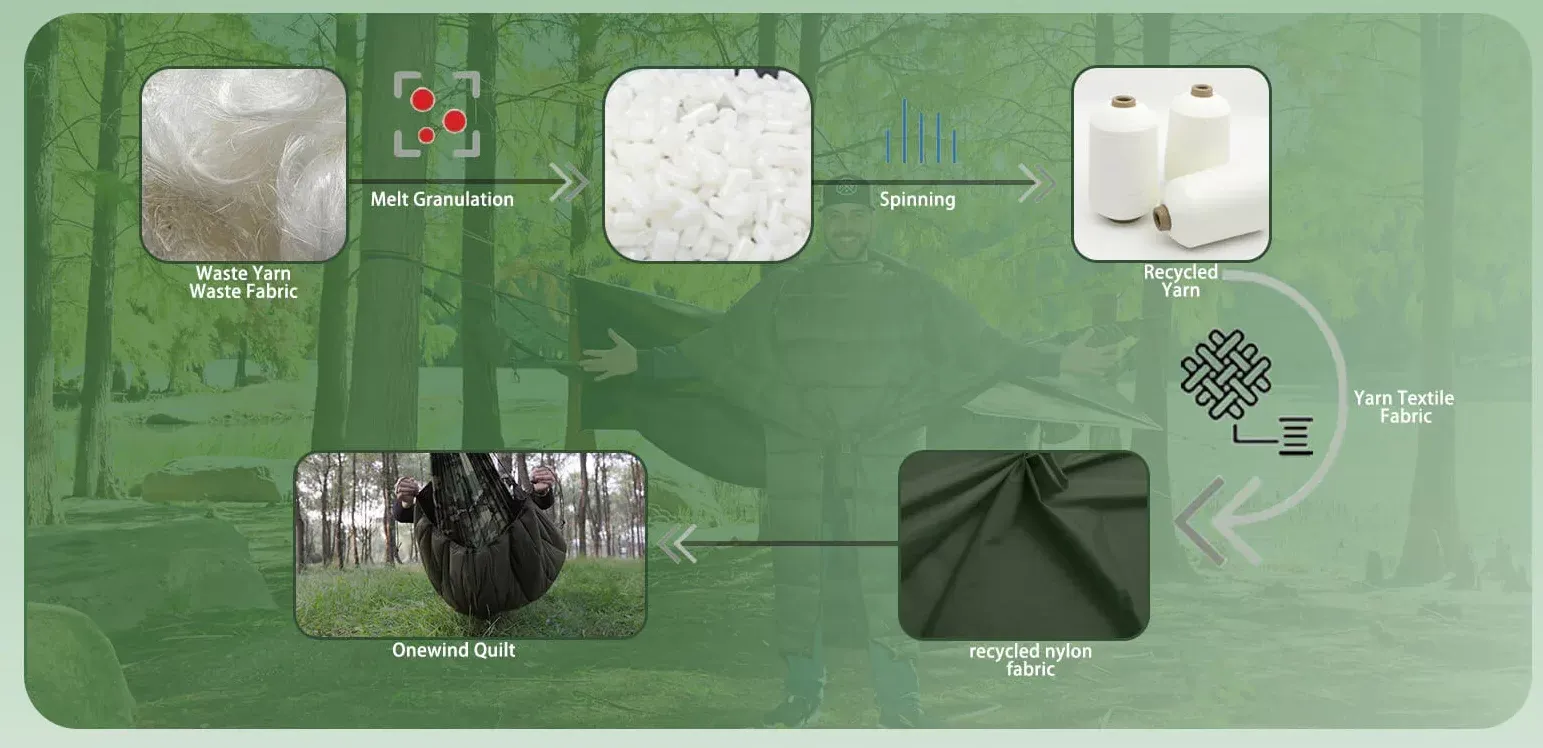
In contrast, virgin nylon originates from petroleum, a non-renewable fossil fuel. Petroleum not only fuels the production of nylon but is also the backbone of countless plastic products used globally. This dependency on finite resources makes the case for recycled alternatives even stronger. The journey of recycled nylon begins with the collection of waste nylon materials. These are broken down into their base chemical components through a process known as depolymerization. This step ensures that the resulting components are of high purity and can be reprocessed into new nylon material.
Once depolymerized, these components are recombined to form nylon sheets. The next steps mirror those of virgin nylon production: the sheets are heated and passed through a spinneret to produce fibers. These fibers are then woven into fabrics or molded into other forms for diverse applications.
By giving discarded materials a second life, recycled nylon not only reduces waste but also diminishes the demand for petroleum-based virgin nylon.
 Recycled nylon has become synonymous with sustainable fashion. As consumers increasingly seek environmentally friendly options, brands are adopting recycled materials to align with these values. The use of recycled nylon contributes to a circular economy, minimizing the textile industry's ecological footprint and encouraging responsible consumption.
Despite its origin in waste, recycled nylon is in no way inferior to virgin nylon. It retains the same properties that make virgin nylon popular: strength, durability, and versatility. Whether for outdoor gear, activewear, or casual clothing, recycled nylon proves to be a reliable and adaptable material.
The production of recycled nylon is inherently more eco-friendly than that of virgin nylon. By repurposing existing materials, the process uses significantly less water and energy while generating fewer greenhouse gas emissions. Additionally, it mitigates the environmental hazards associated with waste disposal, particularly for materials like fishing nets that often end up polluting oceans.
Recycled nylon is making waves across various industries. Its applications include:
Recycled nylon has become synonymous with sustainable fashion. As consumers increasingly seek environmentally friendly options, brands are adopting recycled materials to align with these values. The use of recycled nylon contributes to a circular economy, minimizing the textile industry's ecological footprint and encouraging responsible consumption.
Despite its origin in waste, recycled nylon is in no way inferior to virgin nylon. It retains the same properties that make virgin nylon popular: strength, durability, and versatility. Whether for outdoor gear, activewear, or casual clothing, recycled nylon proves to be a reliable and adaptable material.
The production of recycled nylon is inherently more eco-friendly than that of virgin nylon. By repurposing existing materials, the process uses significantly less water and energy while generating fewer greenhouse gas emissions. Additionally, it mitigates the environmental hazards associated with waste disposal, particularly for materials like fishing nets that often end up polluting oceans.
Recycled nylon is making waves across various industries. Its applications include:
In contrast, virgin nylon originates from petroleum, a non-renewable fossil fuel. Petroleum not only fuels the production of nylon but is also the backbone of countless plastic products used globally. This dependency on finite resources makes the case for recycled alternatives even stronger. The journey of recycled nylon begins with the collection of waste nylon materials. These are broken down into their base chemical components through a process known as depolymerization. This step ensures that the resulting components are of high purity and can be reprocessed into new nylon material.
Once depolymerized, these components are recombined to form nylon sheets. The next steps mirror those of virgin nylon production: the sheets are heated and passed through a spinneret to produce fibers. These fibers are then woven into fabrics or molded into other forms for diverse applications.
By giving discarded materials a second life, recycled nylon not only reduces waste but also diminishes the demand for petroleum-based virgin nylon.
Recycled nylon has become synonymous with sustainable fashion. As consumers increasingly seek environmentally friendly options, brands are adopting recycled materials to align with these values. The use of recycled nylon contributes to a circular economy, minimizing the textile industry's ecological footprint and encouraging responsible consumption.
Despite its origin in waste, recycled nylon is in no way inferior to virgin nylon. It retains the same properties that make virgin nylon popular: strength, durability, and versatility. Whether for outdoor gear, activewear, or casual clothing, recycled nylon proves to be a reliable and adaptable material.
The production of recycled nylon is inherently more eco-friendly than that of virgin nylon. By repurposing existing materials, the process uses significantly less water and energy while generating fewer greenhouse gas emissions. Additionally, it mitigates the environmental hazards associated with waste disposal, particularly for materials like fishing nets that often end up polluting oceans.
Recycled nylon is making waves across various industries. Its applications include:
From activewear to high-performance outdoor gear, recycled nylon is a favorite among brands striving for sustainability.
Durable and robust, recycled nylon is used in products such as ropes, seat belts, and carpeting.
Bags, shoes, and other everyday items are increasingly incorporating recycled nylon, blending style with sustainability.
The adoption of recycled nylon extends beyond the material itself, symbolizing a shift toward more sustainable industrial practices. By opting for recycled materials, manufacturers can lessen their reliance on fossil fuels and help combat the adverse effects of climate change.
Moreover, recycled nylon addresses the growing concern of ocean pollution. Ghost fishing nets, abandoned or lost in the ocean, pose a severe threat to marine ecosystems. Programs that collect these nets for recycling not only reduce waste but also protect marine life.
Moreover, recycled nylon addresses the growing concern of ocean pollution. Ghost fishing nets, abandoned or lost in the ocean, pose a severe threat to marine ecosystems. Programs that collect these nets for recycling not only reduce waste but also protect marine life.
Despite its numerous advantages, scaling the production and adoption of recycled nylon poses challenges:
The recycling process can be more expensive than producing virgin nylon, particularly due to the technical requirements of depolymerization and purification.
The supply of waste materials suitable for recycling is limited and relies heavily on efficient collection and sorting systems.
Many consumers remain unaware of the benefits of recycled materials, underscoring the need for education and advocacy.
Addressing these challenges requires collaboration across industries, governments, and consumers to create supportive policies, invest in technology, and promote sustainable choices.
As the demand for sustainable materials grows, recycled nylon is poised to play a pivotal role in reducing the environmental footprint of various industries. Innovations in recycling technology are likely to enhance efficiency and scalability, making recycled nylon more accessible and affordable.
Governments and organizations can further accelerate this transition by implementing policies that incentivize the use of recycled materials and penalize wasteful practices. Consumer awareness campaigns can also drive demand for products made from recycled nylon, encouraging brands to prioritize sustainability.
Governments and organizations can further accelerate this transition by implementing policies that incentivize the use of recycled materials and penalize wasteful practices. Consumer awareness campaigns can also drive demand for products made from recycled nylon, encouraging brands to prioritize sustainability.
Recycled nylon represents a powerful solution to some of the most pressing environmental challenges of our time. By transforming waste into a valuable resource, it promotes a circular economy and reduces dependence on finite resources like petroleum.
With its high quality, versatility, and eco-friendly production, recycled nylon is not just an alternative to virgin nylon—it is a step toward a more sustainable and responsible future. As industries, governments, and individuals embrace this innovation, recycled nylon has the potential to reshape how we interact with materials and the environment.
With its high quality, versatility, and eco-friendly production, recycled nylon is not just an alternative to virgin nylon—it is a step toward a more sustainable and responsible future. As industries, governments, and individuals embrace this innovation, recycled nylon has the potential to reshape how we interact with materials and the environment.