Cold Rolling of Nuclear-Grade 316L Stainless Steel Tubes
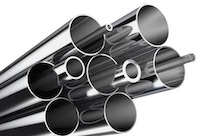
To address the significant dimensional variations observed during the finish rolling of nuclear-grade 316L seamless stainless steel tubes, this study combines experimental investigations with a literature review. The results indicate that the final tube dimensions are primarily influenced by the rolling mill tooling and internal lubricant. The dimensional stability of the existing rolling process can be significantly improved by:
- optimizing the slideway profile of the rolling mill
- using high-performance internal lubricants
- improving the dimensional accuracy of the mandrel.
These measures significantly improve dimensional stability during rolling and increase the acceptance rate of finished nuclear-grade 316L stainless steel tubes.
Austenitic stainless steels offer good corrosion resistance and workability and are therefore widely used in the nuclear power industry. The Φ9.7 mm nuclear-grade 316L seamless stainless steel tube produced by the company is a key component of the nuclear fuel control rod assembly used in China's third-generation Hualong One (HPR1000) nuclear power technology. The tube is used to control the nuclear reaction rate and shut down the reaction in the reactor. Consequently, these tubes are subject to stringent requirements for raw material microstructure, mechanical properties, nondestructive testing (NDT), and dimensional accuracy.
This study focuses on the dimensional instability and low acceptance rate encountered during the cold rolling of the company's nuclear-grade 316L stainless steel tubes. A series of process trials was conducted to identify the primary factors affecting dimensional accuracy. The rolling process was subsequently improved through the following measures:
- optimizing the slideway profile of the cold rolling mill
- using higher-precision mandrels manufactured from higher-quality materials
- adopting a high-performance internal lubricant.
These measures significantly improved the dimensional accuracy of the rolled tubes.
The chemical composition of the 316L stainless steel ingot used in this study is given in wt.% as follows: C 0.024, Cr 16.47, Ni 13.52, Mo 2.38, Mn 1.08, and Si 0.30. The ingot was hot-pierced to produce a Φ82 mm tube blank, which was then rolled in four passes and heat-treated to obtain a 10.2 mm tube. The 10.2 mm tubes were subsequently cold-rolled into Φ9.7 mm finished tubes using an LDD12 three-roll, four-line cold pilger mill. After rolling, the finished tubes were ultrasonically cleaned. The inner diameter was measured using pneumatic bore gauges, while the outer diameter was measured using infrared diameter gauges.
Nuclear power plants employ a wide range of materials, with stainless steel being one of the primary structural materials used in reactor systems. Austenitic stainless steels, in particular, are widely used in applications such as fuel cladding, reactor internals, and heat-transfer tubes in steam generators. Throughout their design life, control rod assemblies in nuclear power plants are exposed to extremely demanding operating conditions, including high temperatures, high pressures, intense neutron irradiation, flow-induced vibration and erosion, and pressure fluctuations. Nuclear-grade 316L stainless steel tubing is a critical material for the nuclear fuel control rod assemblies used in China's third-generation Hualong One (HPR1000) nuclear power technology. These tubes play an important role in regulating the nuclear reaction rate and shutting down the reactor when required.
As a key component of control rod assemblies, nuclear-grade 316L stainless steel tubing must meet stringent requirements for dimensional accuracy. The tubing provides a protective barrier for the relevant components and helps prevent the leakage of fission products into the reactor coolant. Consequently, its dimensional accuracy is critical to the service life of the reactor core. It also has a significant effect on the quality of the subsequent end-plug welding process. Optimizing the fit between the tube and the end plug to achieve an appropriate clearance can help reduce the risk of weld cracking. The main production route for nuclear-grade 316L stainless steel tubing is illustrated as follows. Among the various manufacturing stages, the final cold-rolling stage has the greatest influence on the dimensional accuracy of the finished product. Therefore, strict control of this stage is essential for improving the dimensional precision of the tubing.
Main production process for nuclear-grade 316L stainless steel tubes
Stainless Steel Tube → Straightening, Pickling, and Passivation → Solution Heat Treatment → Cleaning and Straightening → Finished Cold Rolling → Cutting to Length and Cleaning → Inner and Outer Surface Treatment
Among these factors, rolling mill tooling and internal lubricants have the most significant effects. For the rolling mill tooling, the slideway profile and mandrel dimensional accuracy are the two factors with the greatest influence on the dimensional accuracy of the finished tubing.
Fundamentally, the pass design of an LD-type multi-roll cold pilger mill determines the dimensions of the rolling tooling, including the rolls, slideways, and mandrel. Among these components, the shape and dimensions of the slideway are particularly critical. During rolling, tube deformation occurs through four main stages: diameter reduction, wall-thickness reduction, pre-finishing, and sizing. In multi-roll mills, proper slideway design is essential for maintaining the dimensional accuracy of the rolled tubes.
Based on the shape of the working surface, slideways can be classified into two types:
- Polygonal (broken-line) slideways
- Curved slideways
Polygonal slideways are currently the most widely used in industrial applications because they are relatively simple to design and manufacture.
Compared with intermediate rolling, the deformation during finish rolling is relatively small, at approximately 10%. According to the classical sizing-section formula, which incorporates the finishing coefficient K, feed per pass M (mm), and total elongation coefficient, a K value of 7–8 is considered appropriate for thin-walled tubes.
Dimensional stability can be improved through the following measures:
- optimizing the mill pass design in collaboration with the tooling manufacturer
- increasing the proportion of the sizing-section length
- subjecting the tubes to multiple precision-rolling passes.
The selection of a suitable lubricant is critical for stainless steel tube rolling for several reasons:
- Friction and galling: Plastic deformation during rolling generates friction between the tooling and the inner and outer surfaces of the tube. Without effective lubrication, friction can generate excessive heat at the contact interfaces, resulting in adhesion or galling between the tube and tooling and adversely affecting surface quality and dimensional accuracy.
- High deformation resistance and poor thermal conductivity: Compared with carbon steel and low-alloy steels, high-chromium, high-nickel austenitic stainless steels exhibit high resistance to deformation. In addition, their relatively low thermal conductivity causes the heat generated during plastic deformation to accumulate near the tube surface.
- Susceptibility to adhesion: Austenitic stainless steels are particularly susceptible to metal-to-metal adhesion during forming.
Consequently, cold working of austenitic stainless steels requires lubricants with high load-carrying capacity, good heat absorption, a low coefficient of friction, and effective anti-adhesion properties.
Lubrication during tube rolling involves both the inner and outer surfaces:
- Inner-surface lubrication: Reduces friction between the mandrel and the inner wall of the tube, thereby reducing the force required to extract the mandrel.
- Outer-surface lubrication: Reduces friction between the roll pass and the tube, thereby lowering rolling pressure and axial force, preventing excessive tooling temperature, and reducing the load on the feed and main drive mechanisms.
The key factors affecting the lubricant film during rolling include:
- rolling speed
- deformation resistance
- roll surface roughness
- lubricant viscosity
- application rate
- ambient temperature.
The company currently uses two types of internal lubricants. Comparative rolling tests showed that the two lubricants produced different effects on inner-diameter dimensional accuracy as the ambient and rolling temperatures varied. Based on these results, a high-performance lubricant was selected for the finish cold-rolling process. The selected lubricant exhibits rapid adhesion to the tube surface, high load-carrying capacity, good extensibility, and stable performance.
During the rolling process, particularly during finish rolling, the dimensional accuracy of the finished tube is primarily determined by the precision of the roll pass and mandrel, in addition to the characteristics of the rolling mill itself. The outer diameter of the tube is primarily controlled by the roll pass, whereas the inner diameter is governed by the mandrel. Therefore, mandrel dimensional accuracy is a critical factor affecting the inner diameter of the finished tube. The mandrels are made of LD cold-work die steel (7Cr7Mo2V2Si) and undergo heat treatment consisting of quenching at 1150°C followed by tempering at 550°C, providing good wear resistance and toughness. The company uses a three-roll, four-line cold pilger mill. Dimensional deviations among the mandrels installed on different mill lines, together with dimensional changes caused by wear during operation, can result in variations in the inner and outer diameters of the finished tubes.
Based on the literature review, on-site process trials, and statistical analysis, this study identified three primary factors affecting the dimensional stability of nuclear-grade 316L stainless steel tubes:
- LD mill slideway profile: The slideway profile of the three-roll LD finishing mill is not well matched to the deformation requirements and dimensional accuracy specifications of the finishing pass.
- Internal lubricant: The internal lubricant used during finish rolling significantly affects the inner and outer diameters of the tubes. Variations in lubricant viscosity, particularly under large fluctuations in workshop ambient temperature, can lead to dimensional instability.
- Mandrel dimensional variation and wear: The LD finishing mill is a three-roll, four-line system. Differences in mandrel dimensional tolerances and wear among the four rolling lines can result in fluctuations in the inner and outer diameters of the finished tubes.
Based on the three primary factors identified through preliminary testing and statistical analysis, process trials were conducted using a controlled-variable approach, with the results verified by comparing the dimensional data obtained before and after each modification. By optimizing the slideway profile, a suitable configuration for rolling nuclear-grade 316L stainless steel tubes was determined. The deformation during finish rolling is approximately 10%. According to the standard sizing-zone formula, the required sizing-zone length was calculated to be 15 mm. Because the changes in outer diameter and wall thickness during this stage are relatively small, the curvature of the deformation section of the original slideway was modified to provide a more gradual transition. The inner and outer diameters were measured before and after the slideway was replaced, and the results are presented in Table 1. The results show a significant improvement in dimensional tolerances after the replacement.
Process validation was conducted using the company's existing lubricants to identify the most suitable internal and external lubricants for the product. Chlorinated paraffin, which had previously been used as the internal lubricant for finish rolling, exhibits significant changes in viscosity and flowability with temperature. For tubing with stringent dimensional requirements, these variations in lubricant properties can have a noticeable effect on the final tube dimensions. High-alloy stainless steel imposes stringent requirements on lubricant performance during rolling deformation. Chlorinated paraffin functions as a chemically reactive lubricant additive. The high temperatures generated by friction during rolling cause chlorinated paraffin to thermally decompose and react with the metal surface, forming a solid ferric chloride film that provides solid lubrication. In contrast, the additives used in high-performance lubricants contain polar groups that adsorb onto the metal surface, forming a lubricating layer between the tooling and the tubing. These additives can withstand the high pressures in the deformation zone, remain in a solid state, and are less sensitive to changes in ambient temperature. The use of the company's high-performance internal lubricant significantly improved dimensional stability. A comparison of the dimensional measurements before and after the lubricant change is presented in Table 2. After switching to the high-performance lubricant, the inner diameter tolerance decreased from 0.036 mm to 0.023 mm, while the outer diameter tolerance decreased from 0.047 mm to 0.023 mm. Thus, the dimensional fluctuation for both the inner and outer diameters was reduced by 0.013 mm, indicating a significant improvement in dimensional stability.
Further optimization of the mandrel material and dimensional accuracy can improve the dimensional precision of finished tubes after rolling. Table 3 compares the dimensional measurements before and after mandrel dimensional optimization. The test results indicate that optimizing the mandrel dimensions significantly improves the dimensional accuracy of both the inner and outer diameters of nuclear-grade stainless steel tubes, particularly the inner diameter, for which dimensional fluctuation decreased from 0.024 mm to 0.006 mm.
Table 1. Comparison of Tube Dimensions Before and After Guide Rail Replacement
|
Tube No. |
Before Replacement |
|
After Replacement |
|
Variation |
|
|
|
OD (mm) |
ID (mm) |
OD (mm) |
ID (mm) |
OD (mm) |
ID (mm) |
|
1 |
9.684 |
8.715 |
9.698 |
8.722 |
0.014 |
0.007 |
|
2 |
9.673 |
8.706 |
9.685 |
8.738 |
0.012 |
0.032 |
|
3 |
9.695 |
8.735 |
9.710 |
8.742 |
0.015 |
0.007 |
|
4 |
9.714 |
8.729 |
9.722 |
8.715 |
0.008 |
0.014 |
|
5 |
9.725 |
8.744 |
9.728 |
8.748 |
0.003 |
0.004 |
|
6 |
9.701 |
8.757 |
9.681 |
8.715 |
0.020 |
0.042 |
|
7 |
9.681 |
8.728 |
9.694 |
8.721 |
0.013 |
0.007 |
|
8 |
9.734 |
8.731 |
9.705 |
8.730 |
0.029 |
0.001 |
|
Max. |
9.734 |
8.757 |
9.728 |
8.748 |
0.006 |
0.009 |
|
Min. |
9.673 |
8.706 |
9.681 |
8.715 |
0.008 |
0.009 |
|
Avg. |
9.701 |
8.731 |
9.703 |
8.729 |
0.002 |
0.002 |
|
D-Value |
0.061 |
0.051 |
0.047 |
0.033 |
0.014 |
|
Table 2. Comparison of Tube Dimensions Before and After Lubricant Optimization
|
Tube No. |
Before Optimization |
|
After Optimization |
|
Variation |
|
|
|
OD (mm) |
ID (mm) |
OD (mm) |
ID (mm) |
OD (mm) |
ID (mm) |
|
1 |
9.722 |
8.722 |
9.715 |
8.730 |
0.007 |
0.008 |
|
2 |
9.729 |
8.729 |
9.698 |
8.743 |
0.031 |
0.014 |
|
3 |
9.718 |
8.739 |
9.722 |
8.733 |
0.004 |
0.006 |
|
4 |
9.697 |
8.716 |
9.718 |
8.736 |
0.021 |
0.020 |
|
5 |
9.705 |
8.744 |
9.694 |
8.720 |
0.011 |
0.024 |
|
6 |
9.708 |
8.736 |
9.688 |
8.722 |
0.020 |
0.014 |
|
7 |
9.682 |
8.725 |
9.698 |
8.736 |
0.016 |
0.011 |
|
8 |
9.685 |
8.752 |
9.695 |
8.740 |
0.010 |
0.012 |
|
Max. |
9.729 |
8.752 |
9.722 |
8.743 |
— |
— |
|
Min. |
9.682 |
8.716 |
9.688 |
8.720 |
— |
— |
|
Avg. |
9.706 |
8.733 |
9.704 |
8.733 |
— |
— |
|
D-value |
0.047 |
0.036 |
0.034 |
0.023 |
0.013 |
0.013 |
Table 3. Comparison of Tube Dimensions Before and After Mandrel Dimensional Accuracy Optimization
|
Tube No. |
Before Optimization |
|
After Optimization |
|
Variation |
|
|
|
OD (mm) |
ID (mm) |
OD (mm) |
ID (mm) |
OD (mm) |
ID (mm) |
|
1 |
9.701 |
8.725 |
9.702 |
8.731 |
0.001 |
0.006 |
|
2 |
9.695 |
8.736 |
9.708 |
8.731 |
0.013 |
0.005 |
|
3 |
9.705 |
8.745 |
9.695 |
8.732 |
0.010 |
0.013 |
|
4 |
9.689 |
8.728 |
9.696 |
8.735 |
0.007 |
0.007 |
|
5 |
9.708 |
8.739 |
9.697 |
8.736 |
0.011 |
0.003 |
|
6 |
9.690 |
8.738 |
9.705 |
8.730 |
0.015 |
0.008 |
|
7 |
9.711 |
8.721 |
9.701 |
8.730 |
0.010 |
0.009 |
|
8 |
9.695 |
8.733 |
9.699 |
8.730 |
0.004 |
0.003 |
|
Max. |
9.711 |
8.745 |
9.708 |
8.736 |
0.015 |
0.013 |
|
Min. |
9.689 |
8.721 |
9.695 |
8.730 |
0.001 |
0.003 |
|
Avg. |
9.699 |
8.733 |
9.700 |
8.732 |
0.009 |
0.007 |
|
D-value |
0.022 |
0.024 |
0.013 |
0.006 |
0.014 |
0.010 |
The nuclear-grade 316L stainless steel tubes produced by the company are subject to stringent dimensional requirements. Based on on-site process trials and a review of the relevant literature, this study identified three primary factors affecting the cold rolling process. By optimizing the rolling mill tooling, specifically the guide tracks and mandrels, and introducing a high-performance internal lubricant, the dimensional pass rate of the nuclear-grade stainless steel tubes increased from approximately 30% to over 95%.