Shanghai Shinjo Valve Co., Ltd.
LET US DISCUSS AIR-OPERATED DIAPHRAGM PUMPS
Jul 14, 2018
Allen Wang
On this page
Fundamental design features
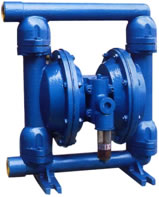
Most diaphragm pumps (in this particular example we are using Sandpiper) are determined by compressed air. The directional air distribution valve and pilot valve referred to as "air finish", are available in the middle area of the pump. Liquid moves through two manifolds and outer chambers in the pump referred to as "wet finish". Generally, check valves are available towards the top and bottom of each and every outer chamber or around the common manifold. The Two outer chambers are connected by suction and discharge manifolds. The pumps are self-priming.
No-lube air distribution valve
During operation, the atmosphere distribution valve controls alternate pressurizing of just one diaphragm, your other. The valve instantly transfers air pressure for the opposite chamber after each stroke. This provides alternating suction and discharges strokes since the diaphragms relocate parallel pathways. Sandpiper air valves require no lube. This really is really the most well-liked mode of operation as clean, dry air will enhance pump performance.
Diaphragms
Flexible diaphragms are clamped within their outer perimeters, involving the outer and inner chambers. The diaphragms are connected within their movable centers having a fishing rod.
Check valves
As fluid moves using the pump, check valves enter and exit. This permits each outer chamber to alternately fill and discharge. The check valves respond to differential pressures. Ball-type check valves can pass small particles.
The pumping cycle
Since the air distribution valve directs pressurized air left diaphragm, the diaphragm is pressed outward. This is often a discharge stroke, which forces liquid within the left outer chamber. The discharged liquid moves within the chamber, by having an open discharge check valve, and exits the pump within the discharge manifold.
The career from the discharge port might be top, bottom or side. Since the left diaphragm is pressurized outward, the connecting fishing rod pulls the very best diaphragm inward around the suction stroke, which fills the very best chamber with fluid. Liquid enters the pump within the suction manifold, moves by having an open suction check valve and fills the chamber. Within the finish in the cycle, the atmosphere distribution valve instantly shifts the atmospheric pressure for the opposite diaphragm, initiating another pumping cycle.

.jpg)