China Butterfly Valve Sourcing: Specify, Verify and Inspect
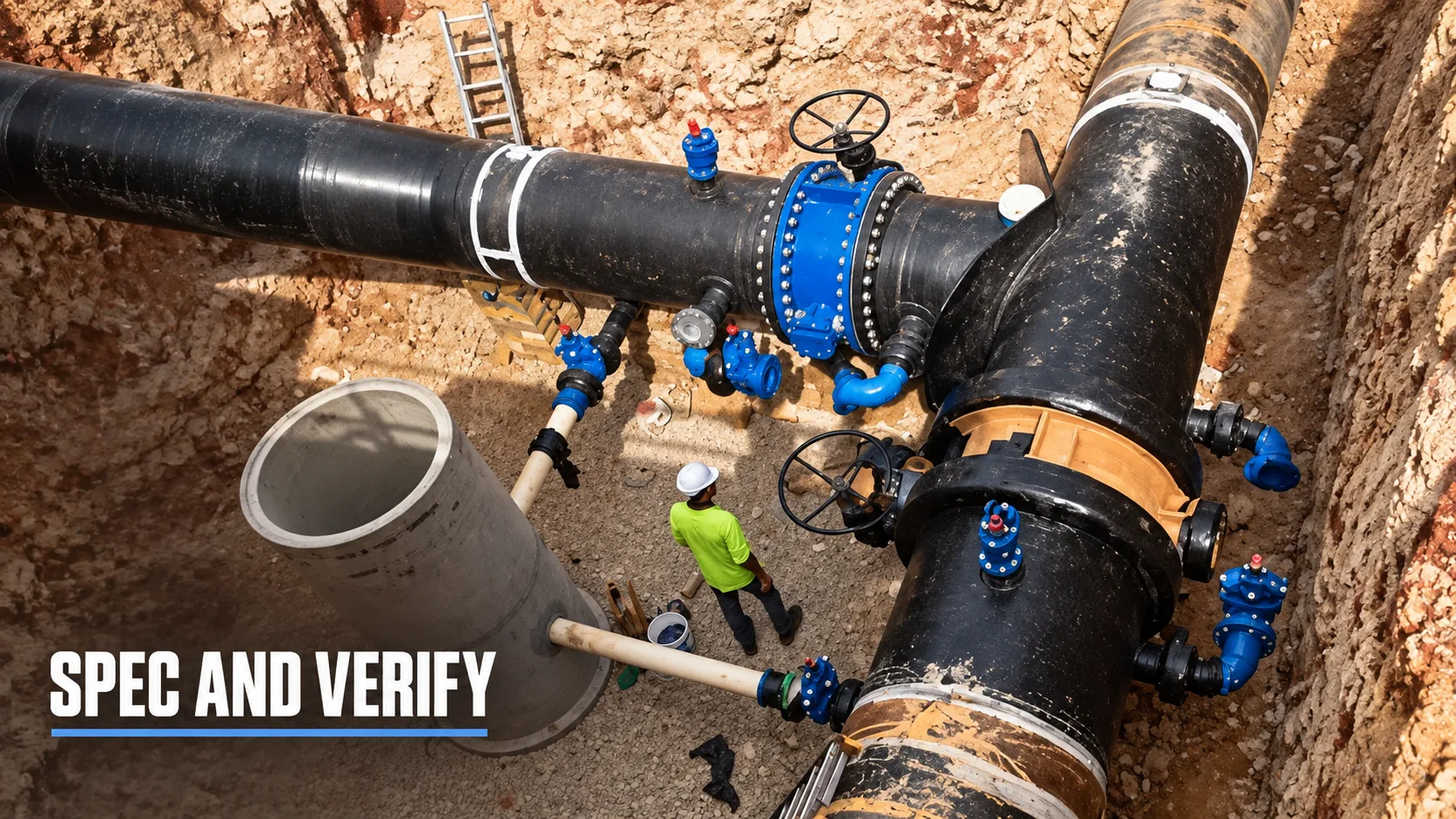
A China butterfly valve can be a rubber-lined concentric wafer valve or an API 609 Category B triple-offset valve with a metal seat. Specify from the service conditions: design category, body style, design standard and edition, face-to-face and flange drilling, test standard with a named leakage acceptance, EN 10204 certificates and witnessed inspection. Compare suppliers only after the datasheets match.
China butterfly valve is a sourcing term, not a valve type. The phrase covers everything from a rubber-lined concentric wafer valve at one end to an API 609 Category B double-offset or triple-offset valve, the triple-offset with a metal seat, at the other. A vague line on a request for quotation (RFQ) lets both answer it. That spread, not the country on the nameplate, is the buyer's risk. The datasheet is where the buyer controls it: the design category, the body style, the standards, the tests and the certificates are decisions on paper before they are hardware.
This guide is written for an engineering, procurement and construction (EPC) buyer, a distributor procurement lead or a plant engineer turning a line list into a purchase order with a Chinese supplier. Decisions come in order: service conditions, then design category and body style, with ISO 5211 setting the actuator top flange. Design standards a Chinese supplier builds to are API 609, EN 593, MSS SP-67 and SP-68, AWWA C504 and GB/T 12238. Shell and seat tests follow API 598, ISO 5208, EN 12266-1 and GB/T 13927. Certificate levels track EN 10204. Suppliers are judged on operations and third-party inspection, and known defects map back to spec lines and an RFQ checklist.
- The spread is the risk, not the origin. One vague RFQ line can draw very different valves.
- Start from service conditions. Media, pressure class, temperature, shutoff and end-of-line duty set design and body style.
- Name the design standard and edition. API 609 Category A or B, EN 593, AWWA C504 or GB/T 12238.
- Put the test and leakage rate on the PO. API 598, ISO 5208, EN 12266-1 or GB/T 13927.
- Ask for EN 10204 3.1 certificates with heat numbers. Then verify pressure-retaining parts by positive material identification (PMI) and measurement.
- Judge a supplier by evidence. Who casts and machines, what it tests in-house, and what it documents.
- Ask for the supplier's TS license copy and scope. Back it with third-party inspection of your own valves.
- TL;DR
- Abstract
- Key Takeaways
- China Butterfly Valve: One Search Term, Very Different Valves
- How to Choose: Service Conditions, Design Category, Body Style
- Butterfly Valve Standards: API 609, EN 593, MSS SP-67, AWWA C504, GB/T 12238
- Butterfly Valve Inspection and Testing: API 598, ISO 5208, EN 12266-1, GB/T 13927
- Specification Setups by Service Condition
- Materials and Certificates: What to Verify, Part by Part
- How to Judge a Chinese Butterfly Valve Supplier
- Known Defects, and the Catalog Words to Ignore
- Butterfly Valve RFQ Checklist: What the Datasheet Must Say
- Frequently Asked Questions
- Conclusion
- References
China butterfly valve is a sourcing term, not a valve type. The term covers a wide range: a concentric, rubber-lined wafer valve at one end, an API 609 Category B triple-offset valve with a metal seat at the other. The datasheet, not the origin, decides which one arrives.
Solliec and Danbon list three advantages of butterfly valves: their low cost, their mechanical suitability for fast operation, and their small pressure drops when they are fully open (Solliec & Danbon, 1999).
Where the valve type itself is still open, the gate valve vs ball valve comparison and the ball valve vs butterfly valve breakdown cover that question. The remaining risk lives inside butterfly designs. Two quotes for "butterfly valve, NPS 8 (DN 200), Class 150" can describe different designs, seats and tests, so comparing their prices means nothing until the datasheets match. The buyer controls the result through the datasheet, not the country of origin.
Catalogs often write "eccentric" where API 609 datasheets write "offset", and the buyer confirms the geometry on the drawing, not by the name.
- Concentric: stem through the disc center, disc centered in the bore, edge seals against a resilient seat.
- Double offset (double eccentric, high-performance): stem behind the sealing face; disc lifts clear of the seat soon after it starts to open.
- Triple offset (triple eccentric): adds an angular offset so a metal seal ring meets a metal seat without rubbing.
- Resilient-seated (soft-seated, rubber-lined): describes the seat material, not the disc geometry.
- Metal-seated: describes the seat, used on triple-offset and some double-offset designs.
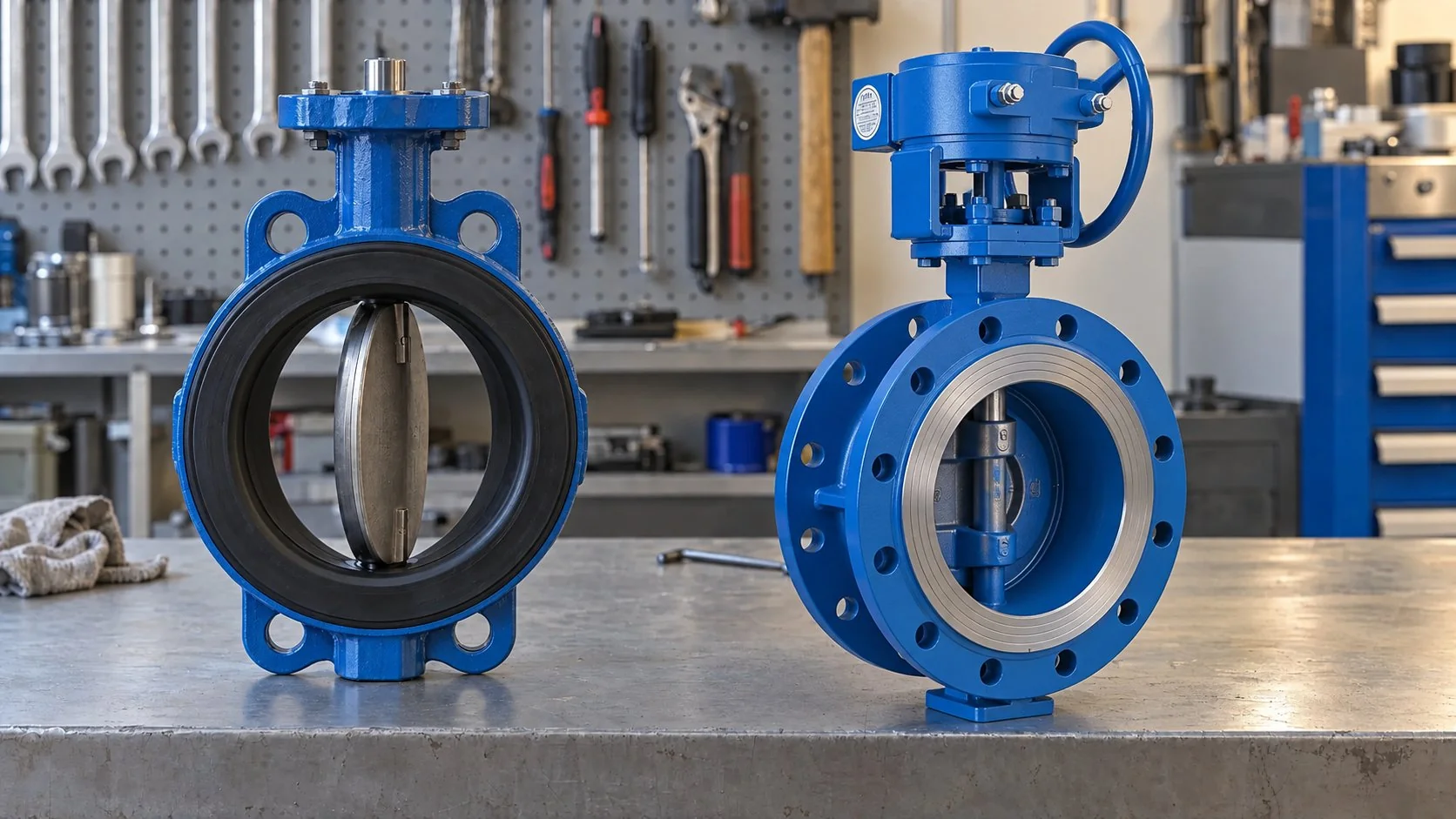
The sourcing risk on any butterfly valve line to China is the design spread, not the country of origin. One line can draw a concentric wafer valve or an API 609 Category B triple-offset valve with a metal seat. When the datasheet pins design, seat and tests, the country stops deciding what arrives.
Choose a butterfly valve by working from the service conditions to the design category, then to the body style and top flange, and write each choice on the datasheet. Pressure, temperature, medium and duty come first. They fix the category. The seat follows the category, and the body style follows the piping.
Answer each line before you touch a catalog:
- Medium in the line, and any solids or particulates carried.
- Pressure class or PN, and maximum differential across the closed disc.
- Minimum and maximum service temperature, in °C and °F.
- Shutoff tightness the service needs (it becomes the test acceptance).
- On-off or throttling duty, and how often the valve cycles.
- Flow direction: one-way, or bidirectional through the disc.
- End-of-line service, yes or no, and its dead-end rating.
Cavitation behind a partly open disc is a studied risk when a butterfly valve throttles near closed (Brett et al., 2011).
The three API 609 designs differ in how the disc and seat meet (American Petroleum Institute, 2026).
| Design | How disc and seat meet | Usual seat | Usual API 609 category | Typical duty | Confirm on the drawing |
|---|---|---|---|---|---|
| Concentric | Stem through disc center; disc edge rubs a resilient seat closing | Resilient | Category A | Water, HVAC and general utility | Category letter, seat |
| Double offset | Stem behind sealing face and off-center; disc swings clear on opening, touches near closure | Soft (PTFE, RPTFE) or metal | Category B | Process duty with Class or PN ratings | Category, offsets, seat |
| Triple offset | Third angular offset; metal seal ring meets metal seat without rubbing; seals by torque | Metal | Category B | High temperature, hydrocarbons, steam and tight metal-seated shutoff | Category, offset geometry |
API 609 defines two categories. Category A covers butterfly valves rated by the manufacturer's cold working pressure, usually of concentric design (American Petroleum Institute, 2026). Category B covers ASME Class and pressure-temperature rated butterfly valves with an offset seat and an eccentric or concentric disc (American Petroleum Institute, 2026). For reference, Shinjo supplies a double eccentric butterfly valve; confirm its category and rating on the datasheet like any other.
Match the design to a body style. A wafer valve clamps between two pipe flanges by bolts that pass outside the body, and is not for end-of-line service. A lug valve has threaded lugs that let each pipe flange bolt to the valve separately, so the downstream side can be removed for end-of-line service only within the dead-end rating the supplier states in writing. A double-flanged valve carries its own two flanges. A butt-weld valve is welded into the line, has no flange joint, and removal means cutting.
Name the ISO 5211 top flange and drive on the datasheet (International Organization for Standardization, 2017). Ask the supplier for seating, unseating and dynamic torque data. Solliec and Danbon note that "the fluid dynamic torque about the axis of large valves has to be considered as the actuator could be overstrained" (Solliec & Danbon, 1999). A torque chart for triple-eccentric metal-seated butterfly valves shows the format; ask for numbers that match your valve.
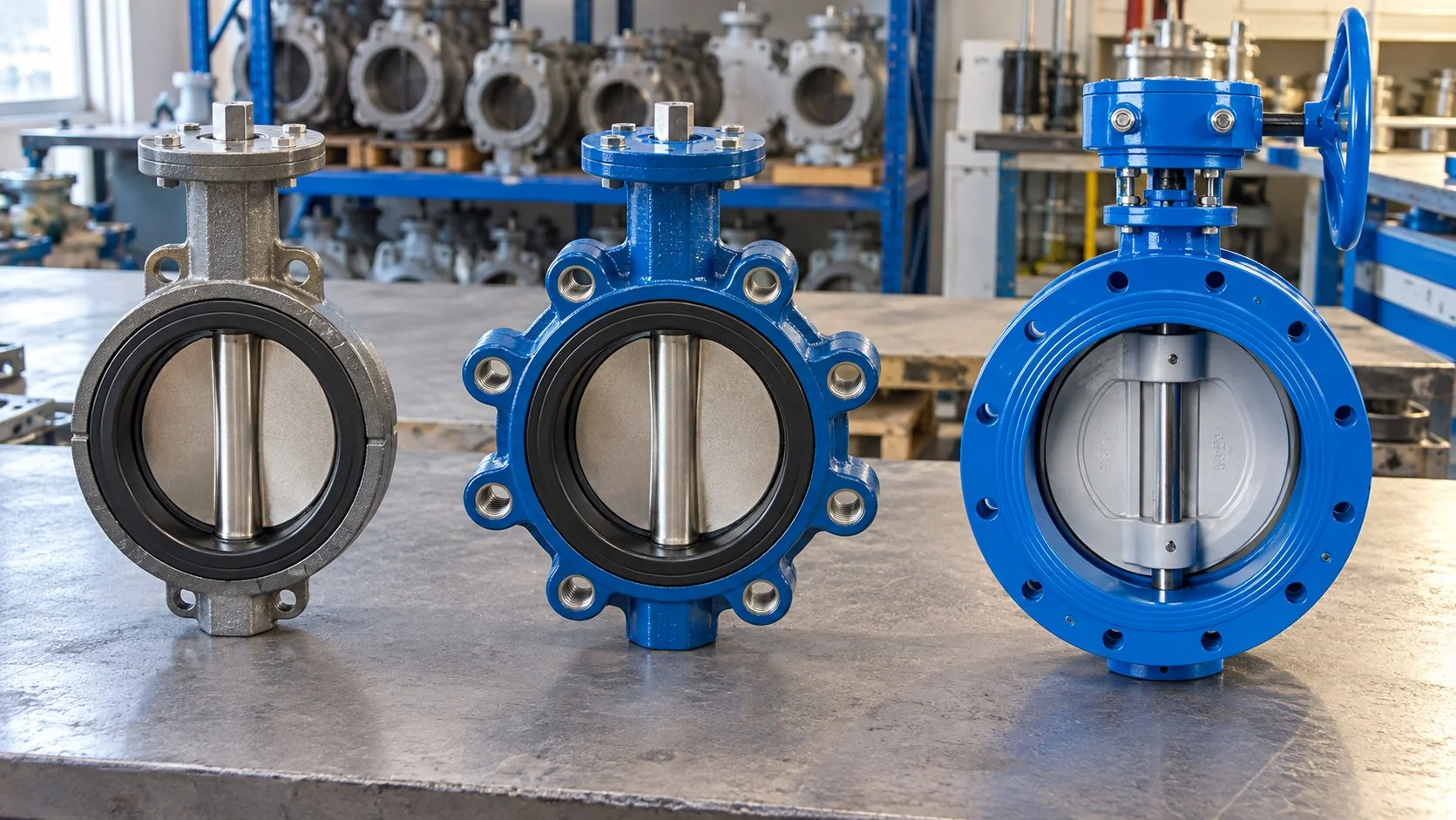
Choose a butterfly valve in three moves and write each choice on the datasheet. First list the service conditions. Second pick the design category (concentric, double offset or triple offset) from those conditions (American Petroleum Institute, 2026). Third pick the body style (wafer, lug, double-flanged or butt-weld) from the piping and end-of-line rules.
A butterfly valve datasheet names one design standard, the interface standards that fit the valve to the pipe and actuator, and the edition of each.
The design standard sets construction and rating basis. Interface standards then fit the valve to its pipe and its actuator.
| Standard | What it covers | Where buyers meet it | Datasheet line |
|---|---|---|---|
| API 609 | Butterfly valves, double-flanged, lug- and wafer-type; Category A or B (American Petroleum Institute, 2026) | Oil, gas and process work | API 609 Category A or B |
| EN 593 | Metallic butterfly valves for general purposes | European process work | EN 593 |
| MSS SP-67 | Butterfly Valves (Manufacturers Standardization Society, 2011) | North American process piping | MSS SP-67 |
| MSS SP-68 | High Pressure Butterfly Valves with Offset Design (Manufacturers Standardization Society, 2011) | High-pressure offset-disc service | MSS SP-68 |
| AWWA C504 | Rubber-seated butterfly valves for water utility service | North American waterworks | AWWA C504 |
| GB/T 12238 | Chinese standard for flanged and wafer resilient-seated butterfly valves (Standardization Administration of China, 2008) | Chinese suppliers' catalogs | GB/T 12238 |
| JB/T 8527 | Chinese machinery-industry standard for metal-sealed butterfly valves | Chinese suppliers' catalogs | JB/T 8527 |
AWWA C504 covers rubber-seated butterfly valves 3 in. (75 mm) through 72 in. (1,800 mm) in diameter, for raw water, potable water, wastewater and reclaimed water with pH 6-12 and a temperature of 0.6-52 °C (33-125 °F) (American Water Works Association, n.d.). The Manufacturers Standardization Society of the Valve and Fittings Industry (MSS), an ANSI-accredited standards developer, maintains MSS SP-67 (Butterfly Valves) and MSS SP-68 (High Pressure Butterfly Valves with Offset Design) (Manufacturers Standardization Society, 2011). When a supplier lists API 609 and GB/T 12238 together, ask which one governs design and which governs dimensions.
Face-to-face dimensions are set by ISO 5752 or EN 558; ISO 5752:2021 is the ISO edition (International Organization for Standardization, 2021). Flange drilling comes from ASME B16.5 for smaller sizes, ASME B16.47 for larger sizes, or EN 1092-1 for PN-designated steel flanges. For a Class-rated valve, read the pressure-temperature rating from the ASME B16.34 table for the named material group and class; never interpolate between printed values, and never take the rating from a catalog (American Petroleum Institute, 2026). Top-flange dimensions for the part-turn actuator come from ISO 5211 (International Organization for Standardization, 2017).
Editions change. ISO 5752:2021, the third edition (June 2021), sets face-to-face dimensions for metal valves used in flanged pipe systems (International Organization for Standardization, 2021). For API 609, MSS SP-67, SP-68, EN 593, AWWA C504 and GB/T 12238, write the edition into the purchase order and confirm it with the publisher (api.org, msshq.org, awwa.org, openstd.samr.gov.cn). A bare standard number is not enough.
The revised AWWA C504 added foreword guidance on chlorine and chloramine degradation of elastomers (American Water Works Association, n.d.). That guidance is a pointer for the buyer's own material check, not a verdict about any elastomer.
A Chinese butterfly valve datasheet is complete when it names one design standard (API 609, EN 593, MSS SP-67 or SP-68, AWWA C504, GB/T 12238), the interface standards that fit the valve to the pipe (face-to-face, flange drilling, pressure-temperature rating) and to the actuator (top flange), and the edition of each standard.
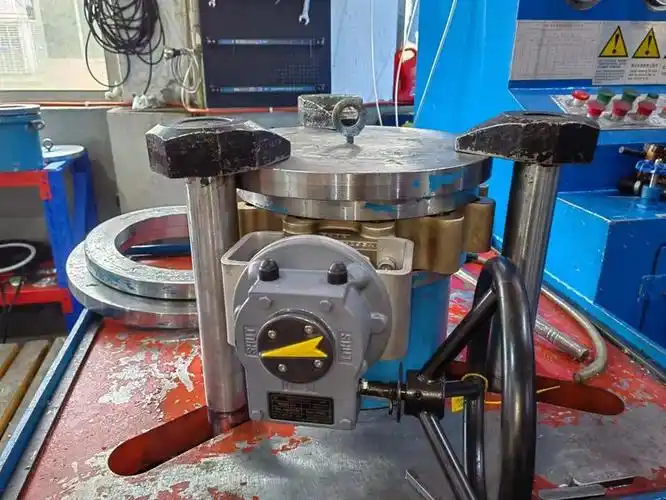
Two pressure tests decide whether a butterfly valve leaves the works. The shell test proves the body holds pressure without visible leakage. The seat test proves the closed disc seals to an acceptance the purchase order names. State the test standard and the acceptance on the datasheet, not a catalog phrase.
The shell test pressurizes the assembled body with the disc part open and looks for weeps at the flanges, the stem seal and the body joint. API 598 requires no visible leakage for the shell test (Wermac, 2025). The seat test pressurizes one side of the closed disc and measures what passes through to the other. The acceptance is what the purchase order names, not what the valve builder assumes. On a bidirectional valve, the seat test is run from each direction.
| Standard | Where it comes from | How seat leakage acceptance is written | What to write on the PO |
|---|---|---|---|
| API 598 | api.org | By four NPS size bands and by resilient-seated versus metal-seated construction (Wermac, 2025) | Size band, seat type, and no visible shell leakage |
| ISO 5208 | iso.org | As lettered rates the purchaser names (Wermac, 2025) | The rate letter and the edition |
| EN 12266-1 | European standard published by CEN | As lettered rates the purchaser names (Wermac, 2025) | The rate letter and the edition |
| GB/T 13927 | openstd.samr.gov.cn | China's national pressure-test standard for industrial metallic valves (Standardization Administration of China, 2022) | The edition, confirmed with the publisher |
The API 598 bands are smaller than NPS 2 (DN 50), NPS 2 to 6 (DN 50 to 150), NPS 8 to 12 (DN 200 to 300), and larger than NPS 12 (DN 300) (Wermac, 2025).
A metal-seated triple-offset valve is ordered to a named API 598 metal-seat acceptance, or to a named ISO 5208 or EN 12266-1 rate, and the test report must show that acceptance. A catalog line like "zero leakage" or "bubble-tight" is not an acceptance until it names a test standard and a rate.
Note: API 598 does not use Classes I to VI. Those classes come from ANSI/FCI 70-2, the control-valve seat leakage standard (Wermac, 2025). If a quote for an on-off butterfly valve says "Class VI", ask which standard and which test produced it.
Witness the shell test, the seat test from each direction on a bidirectional valve, the operation and torque check through a full cycle, the dimensional check against the approved drawing, and the marking and serial numbers. The test report should state the standard, the test medium, the test pressure, the duration, the result and the valve serial number. A third-party witnessed test supports an EN 10204 3.2 certificate.
Four valve test standards state seat leakage differently. API 598, whose scope includes butterfly valves, sets seat acceptance by four NPS size bands and by resilient-seated versus metal-seated construction, while ISO 5208 and EN 12266-1 use lettered rates the purchaser names (Wermac, 2025). GB/T 13927 is China's national pressure-test standard for industrial metallic valves (Standardization Administration of China, 2022).
A datasheet that names the design category, body style, seat material and test acceptance is what a supplier needs to price a line correctly. Shinjo supplies a range of butterfly valves, from concentric to triple offset, and quotes each design against the service conditions you send rather than a generic catalog listing.
There is no best China butterfly valve, only a setup that matches the service. Each setup names a design category, a body style, a governing standard and a test set, chosen before any product page opens.
| Service | Design category | Body style | Governing standard | Tests and acceptance | Confirm before quoting |
|---|---|---|---|---|---|
| Potable, raw and wastewater | Concentric resilient-seated | Double-flanged or lug | AWWA C504; EN 593 or GB/T 12238 by region | API 598 shell and seat, resilient-seat band | Seat elastomer and its basis vs the disinfectant |
| HVAC and chilled water | Concentric resilient-seated | Wafer, or lug within a written dead-end rating | API 609 Category A, MSS SP-67 or EN 593 | API 598 shell and seat | ISO 5211 top flange where actuated |
| Steam and hot hydrocarbons | Triple offset, or double offset with metal seat | Double-flanged, lug or butt-weld | API 609 Category B; ASME B16.34 Class rating | Named metal-seat acceptance; fire type-test if the service names one | Class from the B16.34 table for the material group |
| Seawater and brine | By pressure and temperature | With the design | API 609 Category A or B by duty | Shell and seat, plus PMI on every wetted part | Materials, lining or coating and thickness vs a compatibility source |
| Slurry and abrasive media | Resilient-lined | Wafer or lug | API 609 Category A, EN 593 or GB/T 12238 | Shell and seat, plus a service reference in the same medium | Liner material and thickness on the drawing; throttle or isolate |
AWWA C504 covers rubber-seated butterfly valves 3 in. (75 mm) through 72 in. (1,800 mm) in diameter, for raw water, potable water, wastewater and reclaimed water with pH 6-12 and a temperature of 0.6-52 °C (33-125 °F) (American Water Works Association, n.d.). Name the seat elastomer on the datasheet, and ask the supplier for the basis of its resistance to the disinfectant. The revised AWWA C504 adds foreword guidance on chlorine and chloramine degradation of elastomers (American Water Works Association, n.d.). State no verdict on any compound.
HVAC and chilled water take a concentric resilient-seated valve. Choose wafer for in-line service between two pipe flanges. Choose lug where end-of-line isolation is called for, and only within a dead-end rating the supplier states in writing. A wafer clamps between flanges by bolts that pass outside the body and is not for end-of-line service. Lug threads let each flange bolt to the valve separately. Where an actuator is fitted, the ISO 5211 top flange sets the mounting. That design range covers Shinjo's lug and wafer butterfly valves.
Steam and hot hydrocarbons take an offset metal-seated design: a triple offset, or a double offset with a metal seat. The category is API 609 Category B, which sets a pressure-temperature rating by ASME B16.34 Class for the material group; read the rating from the table, never interpolated (American Petroleum Institute, 2026). A fire-type test belongs on the purchase order only when the service specification calls for one; the purchaser names the standard and asks for the type-test report for that valve family and size. Shinjo supplies triple-offset butterfly valves in PN 63 and PN 100 ratings. For ASME Class 150, 300 and 600 service, Shinjo also supplies ANSI-flanged metal-seat butterfly valves.
Seawater and brine start with the pressure and temperature step, then turn on the materials. Check every wetted part, and the lining or coating with its thickness, against a compatibility source: the polymer supplier's datasheet, an alloy compatibility chart, and NACE/AMPP MR0175 (ISO 15156) where the service is sour. Verify each material by measurement and by PMI on the part before it ships. The material verdict comes from the datasheet, the mill certificate and the PMI report.
Slurry and abrasive media are usually handled by a resilient-lined design. State the liner material on the drawing, and its thickness against the approved drawing. Both belong on the datasheet and on the inspection report. State whether the valve throttles or only isolates: throttling wear on the disc edge and seat is not the same duty as on-off cycling. Ask the supplier for a service reference in the same medium at a similar particle load and flow, and record that reference on the RFQ line.
A China butterfly valve setup names a design category, body style, governing standard and test set, chosen from the service. Waterworks selection rests on the AWWA C504 rubber-seated scope (American Water Works Association, n.d.). Hot service is set by API 609 Category B and ASME B16.34 class ratings (American Petroleum Institute, 2026). Materials are checked, not assumed.
Once the setup is written down, Shinjo's butterfly valve category page is where to match it against the designs Shinjo supplies.
Material risk is controlled by documents that match the part, and by checks on the part itself. Ask for the grade the datasheet names, confirm the heat number, and read the alloy on the casting before shipment.
| Part | Options often named on datasheets | What to verify | Evidence to ask for |
|---|---|---|---|
| Body | Ductile iron, WCB carbon steel | Grade on the certificate matches the datasheet; heat number on the casting matches the certificate | EN 10204 3.1 certificate; visual check of the cast heat number |
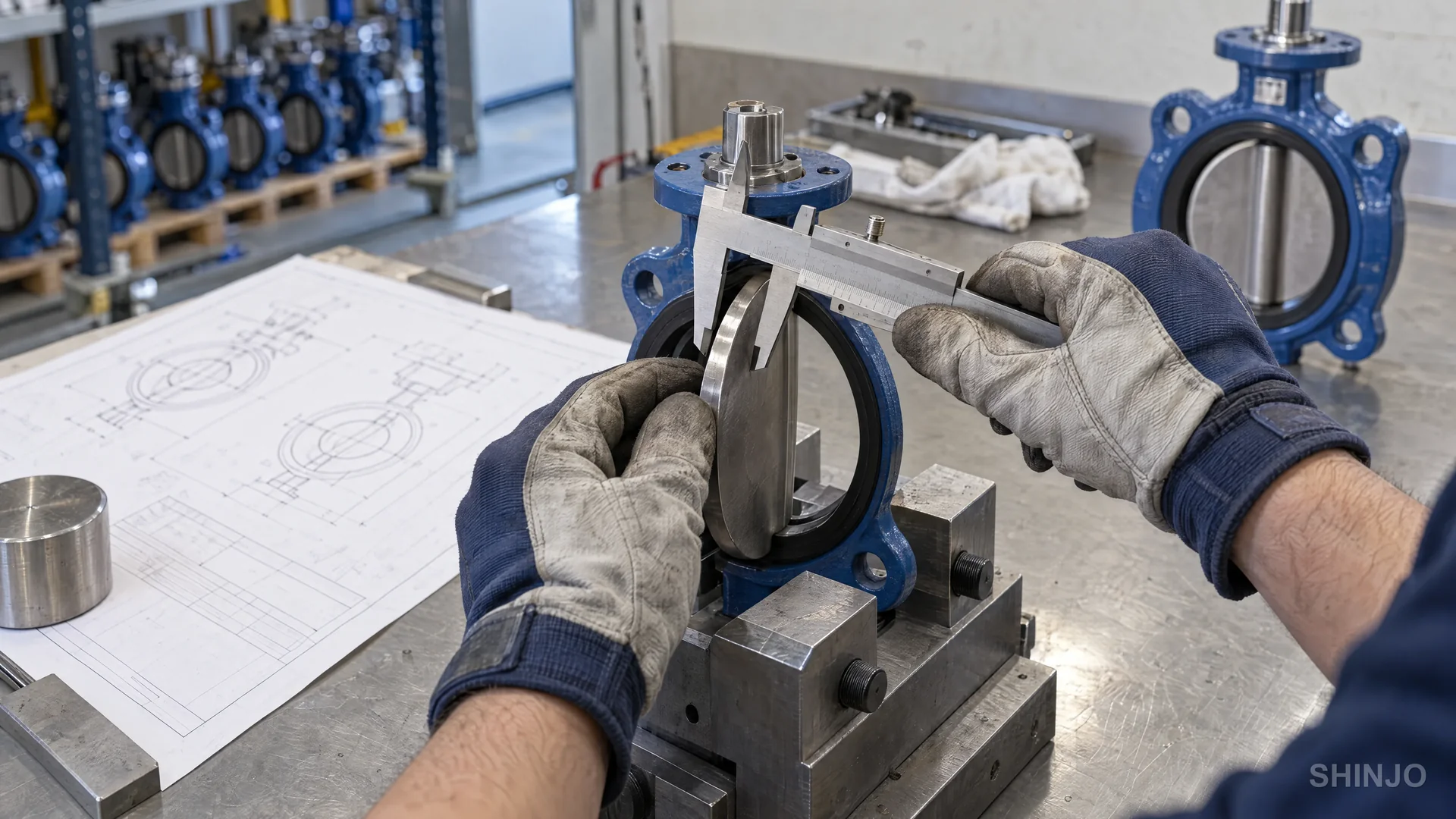
| Disc | Ductile iron coated or plated, stainless | Thickness at hub and edge against the approved drawing; coating or plating named | Drawing; measured dimensions |
| Stem | Alloy per the drawing | Diameter against the drawing; material by PMI; how the stem is retained in the body | Drawing; PMI record |
| Seat or liner | EPDM, PTFE, RPTFE, metal or laminated for triple offset | Compound named; thickness against the drawing; replaceable or bonded | Seat datasheet; compatibility source |
| Stainless body and trim | CF8, CF8M | Grade confirmed by PMI and certificate; select the grade separately | PMI record; 3.1 certificate |
EN 10204 defines four inspection documents. Type 2.1 is a declaration of compliance with the order, without test results (European Committee for Standardization, 2004). Type 2.2 is a test report on non-specific inspection (European Committee for Standardization, 2004).
An EN 10204 3.1 inspection certificate carries specific test results validated by the manufacturer's authorized inspection representative, independent of manufacturing; it proves the results are the part's own (European Committee for Standardization, 2004). Type 3.2 adds a second signature: the purchaser's authorized representative, or an inspector named in official regulations (European Committee for Standardization, 2004).
Ask for 3.1 on pressure-retaining parts, and 3.2 where the project requires a third-party or purchaser witness. Traceability rests on the heat number stamped or cast on the part matching the certificate; positive material identification reads the alloy composition on the part itself (European Committee for Standardization, 2004).
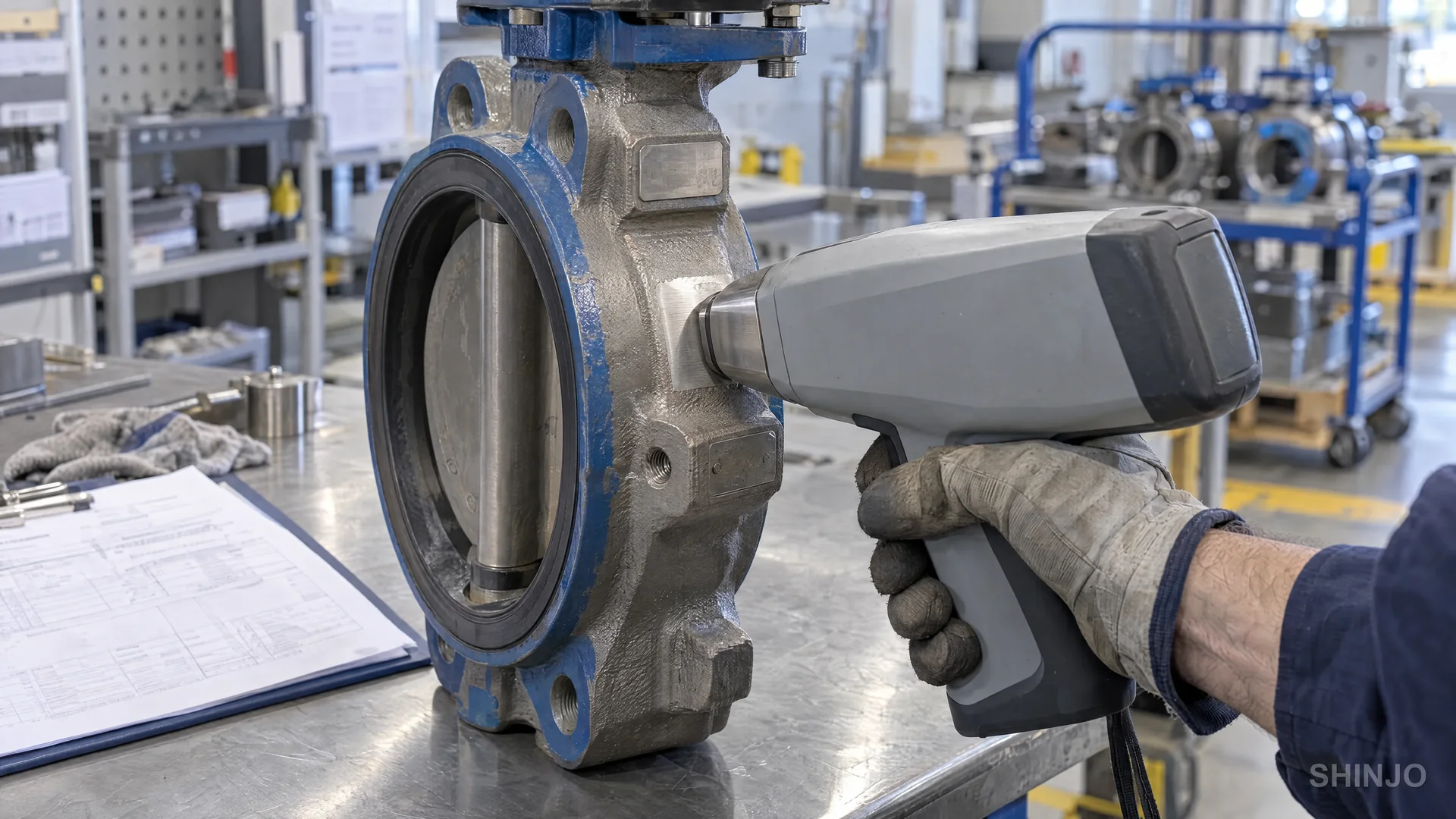
The compatibility verdict for any material and medium rests on three sources. First, the elastomer or polymer supplier's datasheet, which states each compound's temperature limits and known incompatible media. Second, NACE/AMPP MR0175 (ISO 15156) for sour service; it governs metallic materials in oil and gas environments containing hydrogen sulfide (International Organization for Standardization, 2015). Third, the supplier's own compatibility chart, which pairs each seat or liner with rated media. Laminated metal seats are one seat construction used in triple-offset valves (Kwak et al., 2019). The approved drawing carries each hardness value, chemistry limit and thickness figure.
Judge a China butterfly valve supplier by what it can show, not by a ranking or logo wall. No 'top manufacturers' list can tell a buyer whether one supplier's valve fits one line; the answer sits in drawings, test records and certificates.
Ask which operations happen in-house: casting, machining, assembly and testing. A supplier that pours its own bodies answers for the metallurgy on site. A machine shop that buys castings and does its own machining is common and workable. A trader can be a sound supplier if it holds the approved drawings, material certificates and test records, and names the factory that answers for the casting.
A supplier can only test what its bench covers. The bench should carry the largest size and class on the order, with calibrated gauges whose certificates are on file. Ask for a sample test report on a valve of the same family, a dimensioned drawing at the size ordered, and a material certificate template. An outside laboratory's report should carry a China National Accreditation Service for Conformity Assessment (CNAS) accreditation number that resolves at cnas.org.cn.
Place a sample or first-article order before volume. A third-party inspector, for example SGS, Bureau Veritas, TUV or Intertek, witnesses the shell and seat tests and checks dimensions against the approved drawing. A witnessed test supports an EN 10204 3.2 certificate on the production order.
The Special Equipment Safety Law of the People's Republic of China was promulgated on June 29, 2013, by the Standing Committee of the National People's Congress, and came into force on January 1, 2014. It defines special equipment as boilers, pressure vessels (including gas cylinders), pressure pipelines, elevators, lifting machinery, passenger ropeways, large-scale amusement devices and non-road motor vehicles (Standing Committee of the National People's Congress, 2013). The State runs a category-based license system on the production of special equipment, and imported special equipment must comply with the safety technical specifications that apply in China (Standing Committee of the National People's Congress, 2013). The list names pressure pipelines but not valves; whether a general-service butterfly valve falls under the license could not be confirmed from open sources. Ask which license the supplier holds, for which product scope, see the copy, and rely on third-party inspection either way.
Ask for and read the following evidence before signing the order:
- In-house operations named on paper.
- Test bench range covering the ordered size and class.
- A sample test report from the same valve family.
- The dimensioned drawing, marked approved.
- A material certificate sample with heat numbers.
- License copy and product scope, wherever a license is claimed.
- Third-party inspection access.
A China butterfly valve supplier is judged by evidence the buyer can verify: a CNAS accreditation number that resolves at cnas.org.cn, a signed test report with heat numbers, a drawing stamped as approved, and a third-party witnessed test on the valves shipped, which supports an EN 10204 3.2 certificate. A logo wall proves none of these.
The defects that matter are the ones a datasheet and an inspection can catch. Ayman Cheta of Shell Global Solutions has listed valves among industrial items commonly counterfeited, as reported by Valve Magazine (Cleaveland, 2009). In the control-valve field, refurbished units resold by questionable suppliers are "just as big a problem as newly made pieces" (Cleaveland, 2009). The US Nuclear Regulatory Commission uses the term Suspect/Counterfeit Items (S/CI), and the Department of Energy requires contractors to report every finding (Cleaveland, 2009). Each defect worth watching is a specification risk the buyer controls.
| Defect | What it puts at risk | Spec line that prevents it | Check before shipment |
|---|---|---|---|
| Thin or lightened disc | Seat leakage | Drawing dimensions with tolerances | Measure against the approved drawing |
| Undersized stem | Stem twisting under seating torque | Stem diameter on the drawing, keyed to actuator torque | Measure the stem |
| Thin seat liner | Early seat leakage | Liner thickness and material on the drawing | Measure the liner |
| Material substitution | Corrosion failure, brittle fracture | Named material with an EN 10204 3.1 or 3.2 certificate | PMI on body, disc and stem |
| Missing stem retention | A blown-out stem | Stem-retention design shown on the drawing | Confirm the feature is present as drawn |
| Casting porosity | A leaking body | The non-destructive examination (NDE) the order calls for | Witness the NDE and read the report |
| Certificate that does not match the valve | Material and test verification | EN 10204 3.1 or 3.2 tied to heat numbers | Match heat numbers to the valve marks |
Note: When two quotes for the same line differ widely, compare the datasheets line by line before comparing prices. A price gap has to come from something the drawing or the test plan will show.
- "zero leakage" or "bubble-tight": ask for a named test standard and the rate
- "API standard" or "international standards": ask for a number, an edition and the API 609 category
- "high performance": ask for the design category and Class rating
- "fire-safe design": ask for a type-test report for that valve family
- "heavy duty", "premium" or "OEM quality": ask for the datasheet lines these words replace
- certificate logos: ask for a certificate number and product scope
- "100% tested": ask which tests, on which sample, with what acceptance
A datasheet line specifies; an adjective does not. Valve Magazine's reporting names valves among the industrial items commonly counterfeited (Cleaveland, 2009). The words that carry specification weight are a standard number and edition, an API 609 category, a Class or PN rating, and a named test with a stated acceptance.
A quotation is only as exact as the service conditions and datasheet lines sent with it.
- Tag and quantity for the line.
- Size as NPS with the DN equivalent.
- Body style and end connection, with flange standard and drilling.
- Face-to-face standard the valve is built to.
- Pressure class or PN for the body.
- Design standard, edition and API 609 category where it applies.
- ASME B16.34 material group for a Class-rated valve.
- Medium and solids carried by the line.
- Temperature and pressure ranges: minimum, maximum, operating, differential.
- Flow direction and end-of-line duty, stated clearly.
- Design category: concentric, double offset or triple offset.
- Body, disc, stem, seat or liner and coating materials.
- Operator package: type, ISO 5211 flange, torque, fail position.
- Test standard, acceptance rate and which tests are witnessed.
- EN 10204 certificate type per part.
- Marking and traceability stated on the valve.
- Documents required: drawing, test reports, certificates.
- Third-party inspection and its scope.
Four line conditions block a firm quotation:
- Differential pressure is unknown.
- Medium composition is unknown.
- End-of-line duty is undecided.
- Standard edition is not named.
Price and delivery time move with the design category, the materials selected, the level of witness and documentation required, the size and class of the valve, and the operator package.
An RFQ that lets a supplier price a China butterfly valve carries the tag and quantity, size in NPS with DN, body style and end connection, pressure class or PN, design standard and edition, service conditions, design category, materials by part, operator with ISO 5211 flange and torque, test standard, EN 10204 certificate type and required documents.
A request that carries these lines can be matched against Shinjo's butterfly valve range, and the Shinjo product catalog is the reference used to check what Shinjo supplies against each row.
API 609 defines two types. Category A covers butterfly valves rated by the manufacturer's cold working pressure, usually of concentric design. Category B covers ASME Class and pressure-temperature rated butterfly valves with an offset seat and an eccentric or concentric disc. By geometry, the split is concentric versus offset.
A butterfly valve is a quarter-turn valve that isolates or regulates flow by turning a disc across the bore. Solliec and Danbon list three advantages: low cost, fast operation and a small pressure drop when fully open. The disc stays in the flow, so throttling range is limited.
The "top ten" lists that rank highly on search are published by vendors themselves. Judge any supplier by in-house operations, test capability, the documents it can hand you, and third-party inspection at the factory, not by its position on such a list.
No brand is best for every service. The right valve is the one whose datasheet matches the service: the API 609 design category, the design standard and its edition, the shell and seat test acceptance, and the material and inspection certificates the purchase order requires.
That depends on end-of-line duty. A wafer body is clamped between two pipe flanges by bolts that pass outside the body, and is not for end-of-line service. A lug body lets each pipe flange bolt to the valve separately and allows end-of-line service within the dead-end rating the supplier states in writing.
All three set shell and seat tests for valves. API 598 writes seat acceptance by size band and seat type. ISO 5208 and EN 12266-1 write it as lettered rates the purchaser names on the order. Name one standard and its acceptance on the PO.
Both are inspection certificates with specific test results. A 3.1 certificate is validated by the manufacturer's authorized inspection representative, independent of manufacturing. A 3.2 certificate is validated both by that representative and by the purchaser's authorized representative or an inspector named in official regulations.
That could not be confirmed from open sources. The Special Equipment Safety Law's list names boilers, pressure vessels, pressure pipelines, elevators and several other categories, but not valves as such. Ask the supplier for a copy of the license and its product scope, and rely on third-party inspection either way.
A China butterfly valve arrives right when the order closes the spread between a single catalog term and many different designs. The order of the datasheet is the same on every line. Service conditions come first: medium, temperature range, pressure rating, cycle rate and end connections. From those duties follow the design category and the body style, in that direction, never the reverse. The design standard and its edition go on the datasheet next, character for character, so the supplier and the inspector read the same rules.
Test standard and acceptance follow, with the leakage rate the purchaser names rather than a vendor default. Certificates tie the material back to the parts. Supplier evidence, in-house scope, test capability and license copies where they apply, together with a witnessed inspection at the factory, turn the paper contract into a valve on the pipe.
- Solliec, C., & Danbon, F. (1999). Aerodynamic torque acting on a butterfly valve. Comparison and choice of a torque coefficient. Journal of Fluids Engineering, 121(4), 914-917. https://doi.org/10.1115/1.2823555
- Brett, G., Riveland, M., Jensen, T. C., & Heindel, T. J. (2011). Cavitation from a butterfly valve: Comparing 3D simulations to 3D X-ray computed tomography flow visualization. In ASME-JSME-KSME 2011 Joint Fluids Engineering Conference: Volume 2, Fora (pp. 161-169). ASMEDC. https://doi.org/10.1115/ajk2011-33003
- Kwak, H., Seong, H., & Kim, C. (2019). Design of laminated seal in cryogenic triple-offset butterfly valve used in LNG marine engine. International Journal of Precision Engineering and Manufacturing, 20(2), 243-253. https://doi.org/10.1007/s12541-019-00056-6
- American Petroleum Institute. (2026). API Standard 609: Butterfly valves: Double-flanged, lug- and wafer-type, and butt-welding ends (10th ed.). https://www.api.org/-/media/Files/Certification/Monogram-APIQR/0_API-Monogram-APIQR/Advisories-Updates/Updates/API_Standard_609_10th_Edition_Update_20260526.pdf
- American Water Works Association. (n.d.). AWWA's comment period on ANSI/AWWA C504 - Rubber-seated butterfly valves. Retrieved September 28, 2026, from https://www.awwa.org/AWWA-Articles/awwas-comment-period-on-ansiawwa-c504-rubber-seated-butterfly-valves
- Manufacturers Standardization Society. (2011, December 20). MSS publishes eleven revised standards [Press release]. https://msshq.org/news/587140/MSS-PUBLISHES-ELEVEN-REVISED-STANDARDS.htm
- International Organization for Standardization. (2021). ISO 5752:2021 - Metal valves for use in flanged pipe systems - Face-to-face and centre-to-face dimensions (3rd ed.). https://www.iso.org/standard/77335.html
- International Organization for Standardization. (2017). ISO 5211:2017 - Industrial valves - Part-turn actuator attachments. https://www.iso.org/standard/62594.html
- Wermac. (2025, October). Leakage of valves - Testing API 598, ANSI FCI 70-2, MSS-SP-61 and ISO standard 5208. Retrieved September 28, 2026, from https://www.wermac.org/valves/valve_leakage.html
- Standardization Administration of China. (2008). GB/T 12238-2008 - Flanged and wafer resilient seal butterfly valves. https://openstd.samr.gov.cn/bzgk/std/newGbInfo?hcno=EF682E1459A71302420FFA623452BB51
- Standardization Administration of China. (2022). GB/T 13927-2022 - Industrial valves - Pressure testing. https://openstd.samr.gov.cn/bzgk/std/newGbInfo?hcno=67B6DC8CAE15EFF6FD97717C3AF58EE2
- European Committee for Standardization. (2004). EN 10204:2004 - Metallic products - Types of inspection documents. https://standards.iteh.ai/catalog/standards/sist/aba75e3c-8a86-4a55-aa11-9fa7c3feebbf/sist-en-10204-2004
- International Organization for Standardization. (2015). ISO 15156-1:2015 - Petroleum and natural gas industries - Materials for use in H2S-containing environments in oil and gas production - Part 1: General principles for selection of cracking-resistant materials. https://www.iso.org/standard/66640.html
- Standing Committee of the National People's Congress. (2013). Special equipment safety law of the People's Republic of China [English translation, China Justice Observer]. Retrieved September 28, 2026, from https://www.chinajusticeobserver.com/law/x/special-equipment-safety-law-20130629
- Cleaveland, P. (2009, July 17). Suspicious and counterfeit valves: An avoidable danger. Valve Magazine. https://valvemagazine.com/articles/suspicious-and-counterfeit-valves-an-avoidable-danger
Last reviewed and updated: September 2026. Author: Shinjo Valve engineering team. For valve selection support or a quotation against your service conditions, contact our team.
