Non-Clogging Pump Selection for Solids, Fibers and Rags
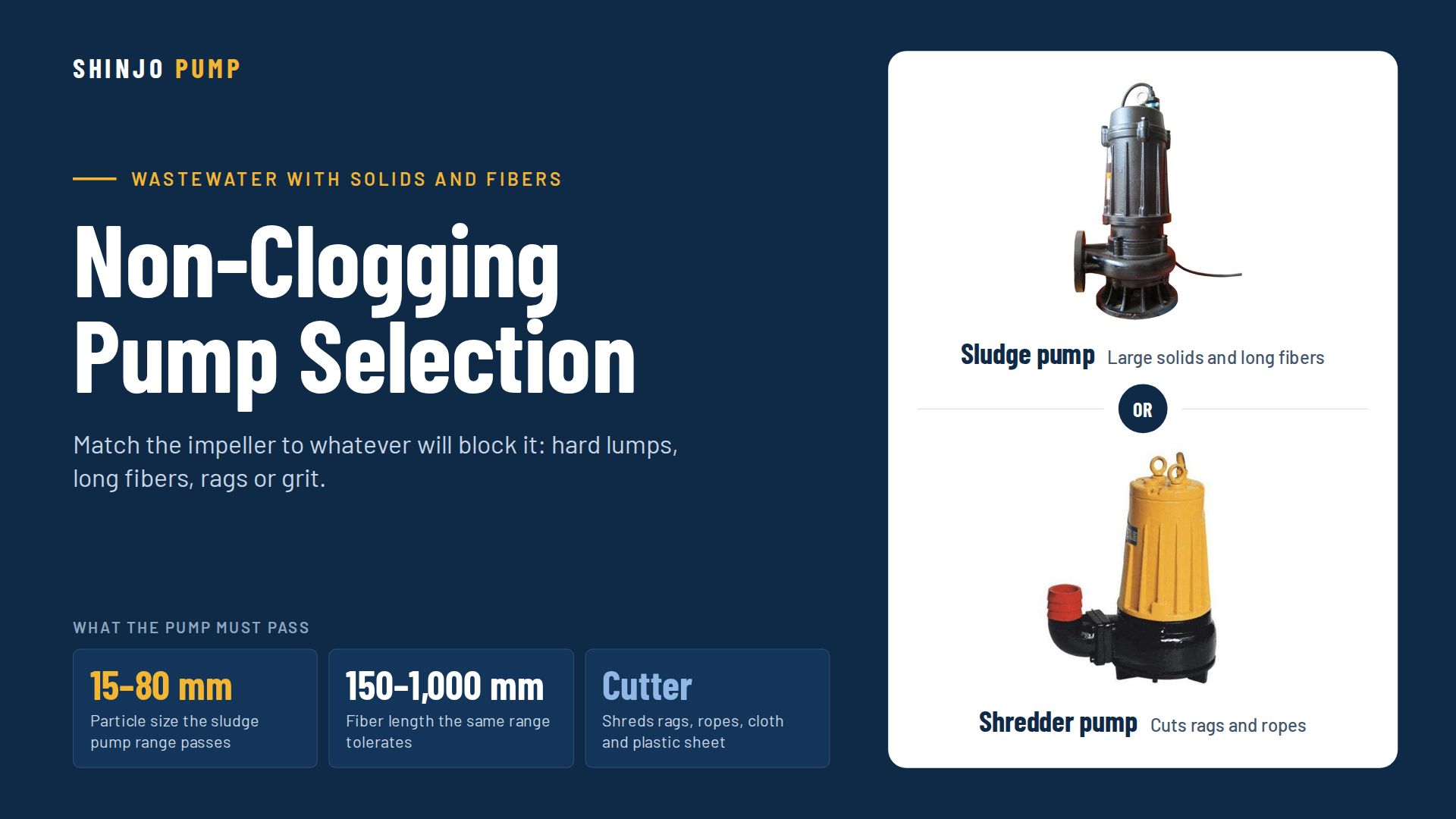
Choose a non-clogging pump around whatever is most likely to block it, not just around flow and head. Hard lumps need a free passage larger than the biggest lump. Long fibers and rags need an impeller they cannot wrap around, or a cutter that shreds them. Grit and sand rarely block a pump, but they wear it, so they call for harder materials. Shinjo's non-clogging sludge pump passes particles of 15–80 mm and fibers of 150–1,000 mm, depending on size. For rags, ropes and plastic sheet, the submersible non-clogging pump with a shredder cuts them up before they reach the impeller.
"Dirty water" is not a specification. Different solids block a pump in different ways, and each calls for a different design.
| Solid | How it causes trouble | What to look for |
|---|---|---|
| Hard lumps: stones, scale, metal | Wedge in the narrowest passage | Free passage larger than the largest lump, in the pump and in every valve and fitting |
| Long fibers: textile waste, hair | Wrap around the impeller hub and vane edges | A high fiber rating and a channel or vortex impeller |
| Rags, wet wipes, plastic film | Twist into ropes and mats on the vanes and inlet | A cutter (shredder) pump, or screening upstream |
| Grease and sticky sludge | Build up in layers and narrow the passages | Smooth passages, regular flushing, mixing in the pit |
| Sand and grit | Rarely block, but wear the impeller and casing | Hard, wear-resistant materials and moderate velocity |
| Sludge settled on the pit floor | Reaches the pump as a thick slug at start-up | A mixing device that keeps the solids suspended |
Look at the worst case, not the average. A batch discharge at the end of a shift, or the first flush after a rainstorm, can block a pump that handled weeks of normal flow.
| Impeller | Best for | Trade-off |
|---|---|---|
| Single-channel (single vane) | Large solids and fibers; widest free passage for its size | Unbalanced hydraulic forces, so more vibration away from the design point |
| Double-channel (two vanes) | General sewage and larger flows | Smaller passage than a single-channel impeller of the same size, but smoother running |
| Vortex (recessed) | Stringy, sludgy or gassy liquids; most solids never touch the impeller | Lowest efficiency of the group |
| Cutter or shredder | Rags, ropes, cloth strips and plastic sheet | Lower flow and head; cutters wear and cannot cut hard objects such as metal |
Most sewage pumps use single- or double-vane impellers with large channels. The JYWQ, for example, uses a double-channel non-clogging impeller. For a deeper look at impeller construction, see open, semi-open and closed impellers.
Free passage is the diameter of the largest sphere that can pass through the pump. It tells you about hard lumps, and nothing about fibers. A strip of cloth far thinner than the free passage can still catch on a vane edge and wrap.
Fiber rating is the longest fiber the pump can pass. Across Shinjo's non-clogging sludge pump range, particle tolerance runs from 15 to 80 mm and fiber tolerance from 150 to 1,000 mm. Both rise with pump size, so check the values for the model you select. The ZW self-priming non-clogging pump passes suspended solids up to 60% of its bore and fibers up to five times its bore. A DN100 ZW therefore passes solids of about 60 mm and fibers of about 500 mm.
The whole route counts. A large pump passage is wasted if a check valve, reducer or strainer downstream is smaller. Oregon's design rules for wastewater pump stations, for example, require raw sewage pumps to pass at least a 63 mm (2½ in) sphere and preferably 76 mm (3 in), and require the piping and valves to pass 76 mm.
| Pump | Construction | Flow | Head | Solids handling |
|---|---|---|---|---|
| Non-clogging sludge pump, iron or stainless steel | Iron or stainless steel | 8–300 m³/h | 7–35 m | Particles 15–80 mm, fibers 150–1,000 mm |
| Stainless steel non-clogging sludge pump | Stainless steel, oil-filled submersible motor | 10–950 m³/h | 7–35 m | Large solids and fibers, motors up to 110 kW |
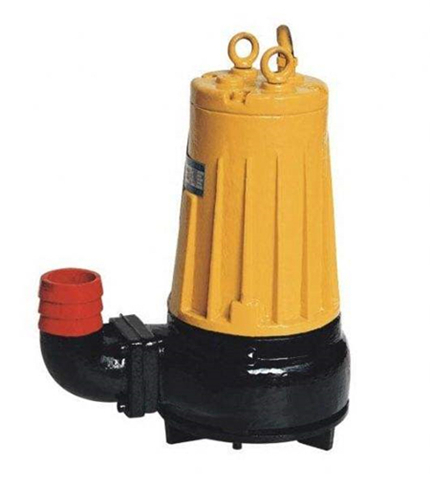
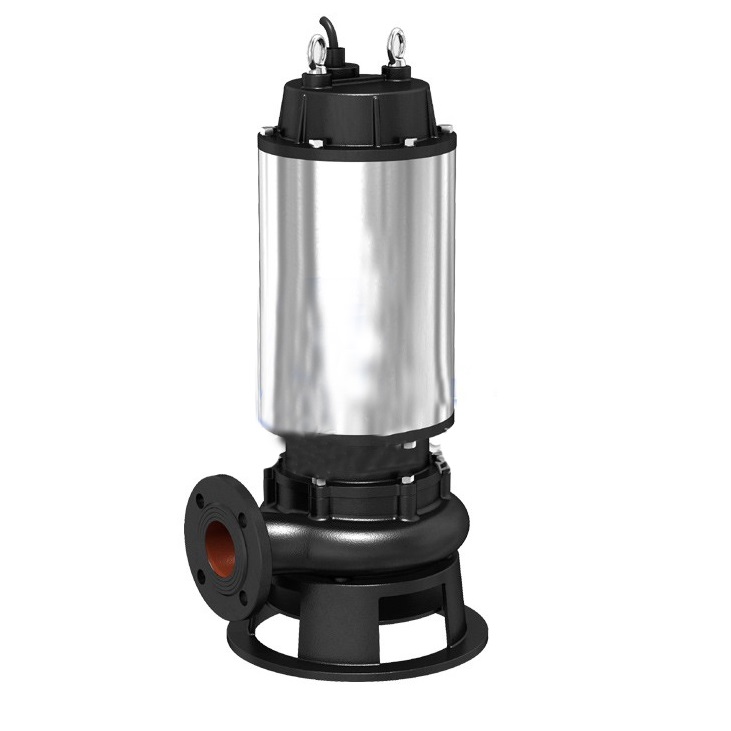
| Submersible pump with shredder | Submersible, with cutter | 15–145 m³/h | 4–25 m | Cuts long fibers, plastic sheet, cloth strips and ropes |
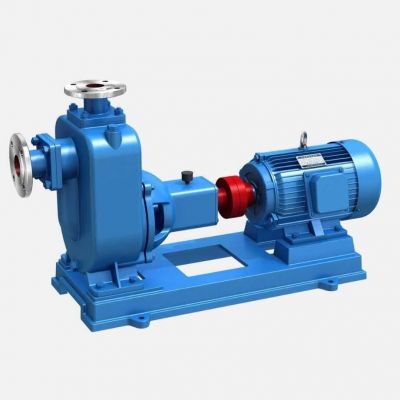
| ZW self-priming non-clogging | Self-priming, installed above ground | 8–800 m³/h | Up to 70 m | Solids up to 60% of bore, fibers up to 5 times bore |
| JYWQ with mixer | Submersible, with mixing device | 10–600 m³/h | 7–40 m | Double-channel impeller; mixer stirs settled sludge |
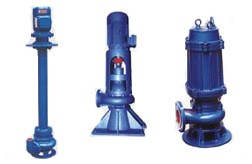
Many blockages blamed on the pump are caused by how it runs.
- Stay near the best efficiency point. At low flow, liquid recirculates inside the pump, solids settle in the casing, and single-vane impellers vibrate. Calculate the total dynamic head at both high and low pit levels, and check both points on the pump performance curve.
- Keep the velocity up in the discharge line. Slow flow lets solids settle in the pipe. Oregon's rules call for 3.5–8 ft/s (about 1.1–2.4 m/s) in force mains. With a variable-frequency drive, they require at least 3.5 ft/s once in each pumping cycle and never less than 2 ft/s (0.6 m/s).
- Do not slow a variable-speed pump too far. Below a certain speed, solids stop moving and the impeller loses its ability to shed fibers.
- Do not oversize the motor to fight clogging. A bigger motor does not change the passage geometry. Size it for the full operating range of the curve.
- A check valve or reducer smaller than the pump outlet. Solids pass the pump and jam downstream.
- Long running at low flow, which lets solids settle and fibers collect.
- A variable-speed drive set too slow to carry solids through the pipe.
- A standby pump left standing in settled sludge. Alternate the duty and standby pumps.
- Incoming flow dropping straight onto the pump inlet, which drives air and debris into it.
The wet well decides much of what the pump sees. Bring the incoming flow in away from the pump inlet, and avoid dead corners where solids collect. Slope the floor toward the pump. Where sludge settles, a mixer keeps it in suspension. The JYWQ has a built-in mixing device, with a stirring diameter of 1,200–3,000 mm, that turns settled sediment back into a slurry the pump can carry away.
If rags are a constant problem and a cutter pump does not suit the duty, a screen upstream of the pit removes them. The screen then needs regular cleaning, or the blockage just moves upstream.
Choose materials for both corrosion and wear. On the ZW, cast iron suits liquids from pH 6 to 9 and stainless steel from pH 2 to 13. Abrasive grit needs hard wear surfaces and moderate speed. Where corrosion and abrasion occur together, as in many industrial effluents, the combined effect is worse than either alone.
Shinjo's non-clogging sludge pumps use two sets of hard-alloy mechanical seals. Hard faces matter in wastewater, because grit grinds away softer seal faces. Submersible versions run the seals in an oil chamber that protects the motor.
- Flow, and the head at high and low pit levels.
- Solids: largest lump, fiber length, rags or wipes, grit, and solids concentration.
- A photo or sample of the worst material, if available.
- Liquid temperature, pH and chemical content.
- Pit dimensions and how the pump will be installed.
- Discharge pipe size and length, including valves and reducers.
Need a pump that will not block on your wastewater? Send a description of the solids to SHINJO and we will recommend a non-clogging pump and impeller. See our full range of sewage pumps.
Yes. "Non-clogging" describes a design aim, not a guarantee. Oversized lumps, long rags, grease build-up, low-flow operation and undersized valves downstream can all stop a non-clogging pump.
It depends on the pump size and impeller. Shinjo's non-clogging sludge pumps pass particles of 15–80 mm and fibers of 150–1,000 mm across the range. The ZW self-priming pump passes solids up to 60% of its bore.
A vortex impeller keeps most solids away from the impeller and copes well with stringy material, but it is less efficient. A channel impeller is more efficient and passes large solids. For rags and plastic film, a cutter pump is often the most reliable answer.
When the wastewater carries rags, wipes, ropes or plastic sheet, and the flow and head are within the cutter pump's range: 15–145 m³/h and 4–25 m for Shinjo's shredder model. Cutter pumps are not suited to hard objects such as metal or stones.
No. Extra power does not change the passage size or stop fibers from wrapping. Prevent clogging with the right impeller, free passage, operating point and pit design, and size the motor for the full operating range.
