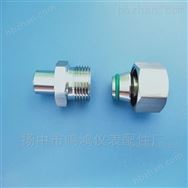
Welded union fittings are important connection components widely used in industrial piping, hydraulic systems, mechanical engineering equipment, and reinforced concrete construction applications. They provide reliable connection performance, strong mechanical strength, and excellent sealing capability, making them suitable for demanding operating environments where safety and durability are essential.
Unlike ordinary threaded or compression connections, welded union fittings create a strong connection through welding processes, allowing the fitting and pipeline or reinforcement components to work as an integrated structure. This design improves connection reliability and reduces the risk of leakage or mechanical failure.
In industrial applications, welded union fittings are commonly used with media such as oil, water, and gas. They can handle both non-corrosive and certain corrosive environments when appropriate materials and protection methods are selected.
The development of welded connection technology has significantly improved installation efficiency, maintenance convenience, and system reliability. With advantages such as easy operation, strong adaptability, and excellent sealing performance, welded union fittings continue to be widely applied in petroleum, chemical processing, shipbuilding, metallurgy, hydraulic systems, and mechanical equipment industries.
One of the most important advantages of welded union fittings is their high structural strength. For reinforcement connection applications, threaded union joints can effectively transfer the strength and ductility of the original steel reinforcement material. The connection performance can meet high-level joint requirements, ensuring that failure occurs in the base material rather than at the connection point.
This characteristic provides several benefits:
- 1. Reliable load transfer
- 2. Improved structural safety
- 3. High resistance to mechanical stress
- 4. Stable performance under dynamic loads
In construction projects where reinforcement integrity is critical, strong connection performance directly affects the overall durability of the structure.
Welded union fittings are designed to simplify installation procedures. Compared with traditional connection methods that may require complicated preparation or large amounts of equipment, welded fittings can provide faster assembly and more convenient operation.
The installation process usually involves:
1. Preparing the pipe or reinforcement end
2. Positioning the fitting
3. Completing the welding connection
4. Performing inspection
The straightforward procedure reduces labor requirements and improves construction efficiency.
Another important feature of welded union fittings is operational simplicity. Workers do not need complicated installation techniques, and the connection process can be completed with standard welding equipment and professional procedures.
Once installed correctly, welded connections provide:
1. Strong mechanical stability
2. Long service life
3. Reduced maintenance requirements
4. Reliable sealing performance
This makes them particularly suitable for industrial systems requiring continuous operation.
A major advantage of welded union systems is the possibility of prefabrication. Steel components and threaded sections can be processed in advance, while fittings can be manufactured under controlled factory conditions.
This approach provides several benefits:
1. Improved manufacturing accuracy
2. Reduced field workload
3. Shorter construction periods
4. Better quality control
Factory production ensures consistent dimensions and performance, reducing installation errors at the construction site.
Industrial production of welded fittings allows manufacturers to achieve higher efficiency.
Standardized manufacturing processes help improve:
1. Product consistency
2. Processing speed
3. Quality inspection
4. Supply capability
For large construction projects or industrial equipment production, efficient prefabrication significantly reduces overall project time.
Depending on the specific welded union design and application method, certain connection processes can reduce dependence on complex field resources.
In reinforcement connection applications, mechanical threaded union systems do not require:
1. Electric welding
2. Gas cutting
3. Open flame operation
This improves construction safety, especially in environments where fire risks must be minimized.
Welded and mechanical union technologies provide better flexibility under different working conditions.
Many connection systems can continue operation in:
1. Rainy weather
2. Windy environments
3. Remote construction areas
4. Limited-access locations
This improves project scheduling efficiency and reduces delays caused by environmental conditions.
Modern connection methods focus increasingly on reducing environmental impact.
Advantages include:
1. Reduced pollution
2. Lower material waste
3. Cleaner installation processes
4. Better workplace safety
These characteristics support sustainable construction and industrial development goals.
One of the most valuable advantages of welded union fittings is their flexibility in difficult installation environments. In areas where reinforcement bars or pipelines are densely arranged, traditional connection methods may become difficult.
Welded union fittings can provide solutions in:
1. Narrow construction spaces
2. Complex pipeline layouts
3. Dense reinforcement structures
4. Difficult maintenance areas
Their compact structure allows easier installation where working space is limited.
Welded union fittings provide excellent connection flexibility.
They can be used for:
1. Horizontal connections
2. Vertical connections
3. Inclined connections
They can also connect steel reinforcement materials with the same or different diameters according to engineering requirements. This adaptability makes them suitable for various structural designs and industrial applications.
Welded union fittings are widely used with different process media.
Common applications include systems handling:
1. Oil
2. Water
3. Gas
4. Hydraulic fluids
5. Industrial liquids
Depending on material selection, welded fittings can support both non-corrosive and corrosive service environments. Proper material selection is essential to ensure long-term reliability.
In corrosive applications, welded union fittings may provide advantages compared with other connection methods.
When selecting fittings for corrosive systems, engineers should consider:
1. Material compatibility
2. Chemical resistance
3. Temperature conditions
4. Pressure requirements
For aggressive environments, corrosion-resistant materials or protective treatments can extend service life.
Welded hydraulic tube fittings are widely used in hydraulic transmission systems because of their excellent connection strength and sealing performance.
Compared with some detachable connection methods, welded hydraulic fittings create a stronger permanent connection between the fitting and the pipeline.
Their advantages include:
1. High pressure resistance
2. Good sealing capability
3. Strong vibration resistance
4. Long operating life
These characteristics make them suitable for industrial hydraulic equipment.
One important feature of welded hydraulic fittings is their flexibility regarding pipe specifications. They can be matched with various steel pipe sizes and wall thicknesses according to system requirements. This provides engineers with greater design flexibility when developing hydraulic systems.
The petroleum industry requires reliable piping systems capable of handling high-pressure and demanding operating conditions.
Welded union fittings are widely applied in:
1. Refining equipment
2. Oil transportation systems
3. Hydraulic control systems
4. Process pipelines
Their strong sealing performance helps reduce leakage risks and improve operational safety.
Chemical plants often involve complex fluids and challenging environments.
Welded fittings are suitable for applications requiring:
1. Corrosion resistance
2. Reliable sealing
3. Long-term stability
They are used in:
1. Chemical pipelines
2. Processing equipment
3. Hydraulic systems
4. Fluid transfer systems
Marine environments require components with excellent reliability due to vibration, humidity, and corrosion risks.
Welded hydraulic fittings are commonly used in:
1. Ship hydraulic systems
2. Marine equipment
3. Offshore machinery
Their strong connection performance helps maintain system stability under harsh conditions.
Metallurgical equipment often operates under:
1. High temperatures
2. Heavy loads
3. Continuous operation
Welded union fittings provide durable connections for hydraulic and process systems used in steel production and metal processing facilities.
Welded hydraulic fittings are also widely used in mechanical equipment.
Applications include:
1. Machine tools
2. Hydraulic presses
3. Industrial machinery
4. Automation equipment
Their reliable sealing performance supports accurate hydraulic control and stable equipment operation.
Threaded connections are convenient but may have limitations under high vibration or high-pressure conditions.
Welded connections provide:
1. Higher mechanical strength
2. Better sealing reliability
3. Improved resistance to vibration
4. Longer service life
For critical systems, welded fittings often provide better long-term performance.
Compression fittings are easy to install but may have limitations in highly corrosive or high-pressure environments.
Welded fittings are preferred when:
1. Higher strength is required
2. Leakage prevention is critical
3. Long-term reliability is important
In applications where compression fittings cannot meet performance requirements, welded hydraulic fittings are often considered a better solution.
Although welded union fittings require less maintenance, regular inspection remains important.
Inspection should include:
1. Checking weld quality
2. Monitoring leakage conditions
3. Inspecting corrosion
4. Verifying structural integrity
Early detection of problems helps prevent unexpected failures.
To maximize service life, users should consider:
1. Proper installation procedures
2. Suitable material selection
3. Correct operating conditions
4. Periodic maintenance programs
A well-designed and properly maintained welded connection system can provide reliable performance for many years.
Future welded union fittings will continue to benefit from advanced manufacturing methods.
Development trends include:
1. Automated production
2. Improved welding technology
3. Precision machining
4. Better quality inspection systems
These improvements will enhance product reliability and consistency.
Material innovation will remain a key development direction.
Future materials will focus on:
1. Higher corrosion resistance
2. Improved mechanical strength
3. Longer service life
4. Better environmental performance
Advanced materials will expand the application range of welded union fittings.
Welded union fittings provide strong, reliable, and versatile connection solutions for construction, hydraulic systems, and industrial pipelines.
Their major advantages include:
1. High mechanical strength
2. Excellent sealing performance
3. Flexible installation
4. Strong environmental adaptability
5. Wide industrial application range
From petroleum and chemical processing to shipbuilding, metallurgy, and mechanical engineering, welded union technology continues to support safer and more efficient industrial operations.
With continuous improvements in materials, manufacturing processes, and connection technology, welded union fittings will remain an important component in modern industrial piping and structural systems.
