Large Flange Pressure Requirements: Key Design Factors
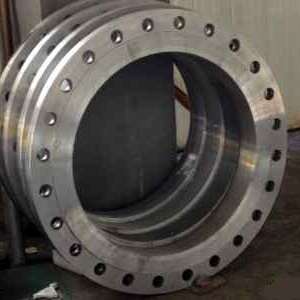
Large flanges are essential components in modern industrial piping systems, especially in industries requiring reliable connections under demanding operating conditions. From oil and gas pipelines to chemical processing plants, power generation facilities, and heavy industrial equipment, large flanges provide a secure connection method between pipes, valves, pressure vessels, and other components.
The pressure requirements of large flanges directly influence their design, material selection, bolt configuration, sealing method, and overall performance. Unlike small-diameter flanges, large flanges must withstand significant mechanical loads caused by internal pressure, temperature changes, vibration, and external forces. Therefore, selecting the correct pressure rating is critical to ensuring operational safety and preventing leakage.
A properly designed large flange not only reduces installation space and overall weight but also improves sealing reliability. Modern flange technologies focus on optimizing the sealing structure, reducing unnecessary material usage, and maintaining sufficient pressure resistance. By improving the relationship between flange dimensions, gasket performance, and bolt loading, manufacturers can achieve lightweight designs while maintaining high-pressure capabilities.
The pressure rating of a large flange determines almost every aspect of its design. Industrial flanges are commonly classified according to pressure classes, such as Class 150, Class 300, Class 600, Class 900, Class 1500, and Class 2500 under ASME standards. Higher pressure ratings require stronger materials, thicker flange bodies, larger bolts, and improved sealing structures.
When the operating pressure increases, the force acting on the flange connection also increases. Internal fluid pressure attempts to separate the two flange faces, creating a force that must be resisted by bolts and sealing components. Therefore, high-pressure large flanges require stronger bolt connections and more robust flange designs.
For example, a large flange used in a low-pressure water pipeline may only require a relatively thin flange body and fewer bolts. However, the same flange diameter used in a high-pressure oil or gas system must have increased thickness, stronger alloy materials, and a higher number of fastening bolts to maintain structural integrity.
The pressure rating is not only determined by internal pressure but also by operating temperature, corrosion conditions, and mechanical stress. A flange suitable for room-temperature applications may require a lower pressure rating than the same flange used in high-temperature steam service.
The primary function of a large flange connection is to prevent leakage. Even if a flange has sufficient mechanical strength, poor sealing performance can lead to serious operational problems.
Traditional flange designs usually rely on gaskets placed between two flange faces. The bolts apply compression force to the gasket, allowing it to fill surface irregularities and create a sealed connection. However, as flange sizes become larger, gasket diameter increases, requiring greater bolt loading to achieve proper sealing.
Modern large flange designs often use advanced sealing rings instead of conventional large-diameter gaskets. By reducing the sealing surface area, the required compression force can be significantly reduced. This allows engineers to design smaller, lighter flange systems while maintaining reliable sealing performance.
The sealing system must also consider pressure fluctuations. In real industrial environments, pressure is rarely constant. Sudden pressure changes, vibration, and thermal expansion can cause movement between flange faces. Therefore, high-quality large flanges must maintain sealing performance even under dynamic operating conditions.
Large flanges can generally be divided into threaded flanges and welded flanges. Threaded flanges are mainly used in low-pressure and small-diameter applications because their connection strength is limited compared with welded designs.
Threaded flange connections rely on mechanical engagement between the pipe threads and flange body. They are convenient to install because welding equipment is not required. However, they are generally unsuitable for large-diameter pipelines or high-pressure systems because threaded connections may experience leakage risks under severe operating conditions.
For applications involving hazardous fluids, high temperature, or high pressure, industries typically avoid threaded flange connections and choose welded flange solutions instead.
Welded flanges are the preferred choice for large-diameter and high-pressure applications. Welding creates a permanent connection between the pipe and flange, providing better structural strength and improved resistance against pressure loads.
Common welded flange types include:
-
Weld neck flanges
-
Slip-on flanges
-
Socket weld flanges
-
Blind flanges
Among these, weld neck flanges are widely used in high-pressure systems because their tapered hub design provides excellent stress distribution. They are commonly found in oil pipelines, chemical plants, refineries, and power stations.
Large welded flanges must be designed according to pressure class requirements. As pressure increases, flange thickness, bolt diameter, and bolt quantity must also increase to provide sufficient clamping force.
The material of a large flange has a direct impact on its pressure capability. Different industrial environments require different materials to withstand pressure, temperature, and corrosion.
Common flange materials include:
-
Carbon steel
-
Stainless steel
-
Alloy steel
-
Duplex stainless steel
-
Nickel alloys
Carbon steel flanges are widely used in general industrial applications because of their good strength and cost efficiency. Stainless steel flanges are preferred for corrosive environments because they provide excellent corrosion resistance.
For extremely demanding applications, alloy materials may be selected to withstand high temperature and high pressure conditions. Material selection must always match the operating environment to ensure long-term reliability.
Bolts are one of the most important components controlling large flange pressure performance. The bolts provide the clamping force required to compress the gasket and maintain sealing integrity.
When flange pressure requirements increase, engineers must increase:
-
Bolt diameter
-
Number of bolts
-
Bolt material strength
-
Bolt tightening accuracy
A flange connection with insufficient bolt loading may fail even if the flange body itself is strong enough. Uneven bolt tightening can also create uneven pressure distribution, resulting in gasket failure and leakage.
For this reason, large industrial flange installations often require controlled bolt tightening procedures using hydraulic tensioning tools or torque systems.
One major advantage of modern large flange technology is weight reduction. Traditional flange designs often required oversized dimensions to achieve sufficient pressure resistance.
Through improved sealing technology and optimized structural design, modern large flanges can reduce unnecessary material usage. Some lightweight flange designs can reduce weight by approximately 70% to 80% compared with traditional flange structures.
The reduction in weight provides several benefits:
-
Lower transportation costs
-
Easier installation
-
Reduced supporting structure requirements
-
Smaller equipment footprint
This is particularly valuable in offshore platforms, petrochemical facilities, and large-scale pipeline systems where space and weight are critical factors.
Large flange optimization contributes to higher efficiency throughout the entire industrial system. Smaller and lighter components reduce installation difficulty and shorten maintenance time.
In large-scale projects, thousands of flange connections may be required. Even a small improvement in flange weight and installation efficiency can create significant economic benefits.
Industries such as oil and gas, chemical processing, shipbuilding, and energy production increasingly demand flange solutions that combine high pressure resistance with compact design.
Although large flanges provide reliable connections, they cannot completely eliminate leakage risks. One of the biggest design challenges is that flange connections are not completely static systems.
During operation, factors such as:
-
Thermal expansion
-
Pressure cycling
-
Vibration
-
Mechanical loading
-
Temperature fluctuations
can cause slight movement between flange faces.
Over time, these movements may reduce gasket compression and damage sealing performance. Once the sealing force decreases below the required level, leakage may occur.
Therefore, flange manufacturers must carefully consider operating conditions during design to minimize these risks.
No industrial product can completely eliminate all potential failures. The goal of modern engineering is to reduce risks through better design, manufacturing processes, and installation methods.
Manufacturers producing large flanges continuously improve:
-
Material quality
-
Manufacturing accuracy
-
Sealing technology
-
Surface finishing
-
Pressure testing procedures
Through these improvements, large flanges can achieve higher reliability and longer service life in demanding industrial environments.
The pressure requirements of large flanges are determined by multiple factors, including operating pressure, temperature, material strength, sealing structure, bolt design, and application environment.
For low-pressure applications, simpler flange designs may be sufficient. However, high-pressure and large-diameter systems require welded flange solutions with optimized sealing structures and stronger fastening systems.
Modern large flange technology focuses on achieving the ideal balance between strength, sealing reliability, weight reduction, and installation efficiency. Although challenges such as leakage risks remain, continuous improvements in engineering design and manufacturing technology allow large flanges to provide dependable performance across critical industries.
Selecting the correct pressure rating is therefore essential. A properly designed large flange not only ensures safe operation but also improves the efficiency and reliability of entire industrial piping systems.
