What are Plastic Valves and Their Advantages
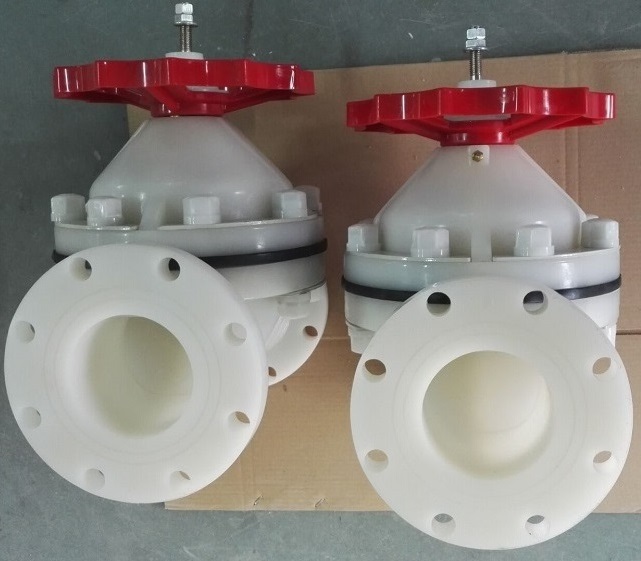
Polypropylen (PP)
Polypropylen is a thermoplastic belonging to the polyolefin formed by the polymerization of propylene.
PP is a semi-crystalline material with a density lower then of other common used thermoplastics. It has very good mechanical properties, resists chemically against a broad range of media and has a high heat deflection temperature.
Mainly three types of PP are used for industrial applications: the isotactic homopolymer (PP-H), the block copolymer (PP-B) and the randomized copolymer (PP-R).
Due to its homogeneity PP-H is preferred by Praher for the production of industrial valves.
Polyvinyliden fluoride (PVDF)
PVDF is a semi-crystalline thermoplastic synthesized from vinylidene fluoride by polymerization in emulsion or in suspension.
Polyvinylidene fluoride is belonging to the class of fluoropolymers having an unique combination of properties: excellent chemical resistance, high thermal stability, very good mechanical properties.
PVDF has an extremely good pressure-temperature range and an outstanding resistance against UV and -radiation, which allows it to be used for many unique applications when compared to other thermoplastics.
Polyvinyl chloride (PVC-U)
PVC is, after polyethylene, one of the most widely produced and used polymer for pipe installations. PVC is produced by means of polymerization of vinyl chloride. It has good all-round properties and is easily cemented, welded and heat formed.
Two classes of PVC exists: soft PVC, produced by adding plasticizers and hard PVC also called unplasticized PVC (PVC-U) which is the most used polymer for pipeline systems.
PVC-U is an amorphous thermoplastic with versatility of use due to a good chemical, corrosion and weathering resistance. Proven as physiological harmless, PVC-U parts are suitable for contact with drinking water and food.
Chlorinated polyvinyl chloride (CPVC)
A post-chlorination of PVC-U generates CPVC (chlorinated polyvinyl chloride) characterized mainly by a higher temperature resistance but also higher tensile strength, toughness and chemical resistance than PVC-U.CPVC industrial systems from Praher are able to withstand harsh chemicals at higher temperatures (up to 80°C) and are utilized in different industries like the chemical process industry, metal working, the chlorine-alkali-industry and the palp and paper industry, etc.
Environmental behaviour- Low weight due to low density: positive effect on the carbon footprint
- Cost efficiency through long lifetime
- Environmental acceptability through recyclability
- Good chemical and abrasion resistance
- No corrosion like for metal components
- Poor thermal and electrical conductivity: poor condensation, no electrolytic corrosion
- Good resistance to impact and bending stress
- Smooth surface, means no encrustation and therefore low pressure losses
- Water treatment
- Wastewater treatment
- Desalination
- Reverse Osmosis
- Irrigation and drainage
- Agricultural engineering
- Environmental engineering
- Mining
- Tank construction
- Mechanical engineering
- Chemical industry
- Laboratory and medical engineering
- Semiconductor industry
- Paper and textile industry
- Food industry
(1).jpg)