CNC Machining vs. Investment Casting: A Process Comparison
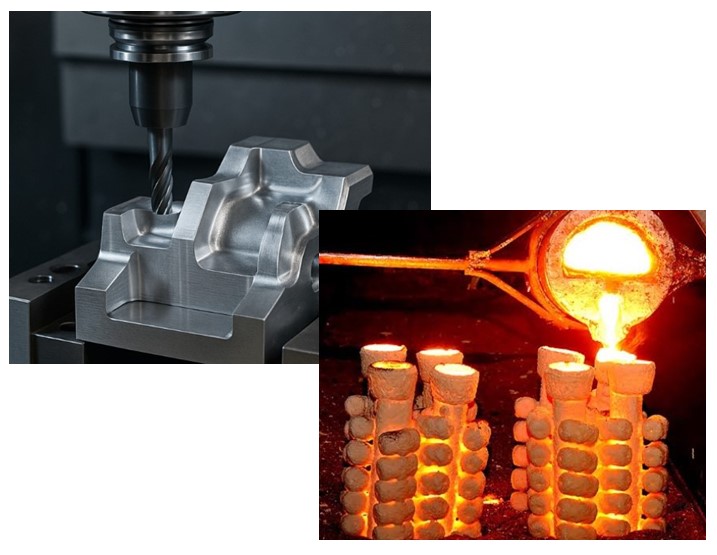
In the modern manufacturing industry, both CNC machining and investment casting are essential processes for producing high-quality metal components. While each method is capable of manufacturing precision parts, their fundamental working principles lead to significant differences in accuracy, material utilization, production costs, part complexity, and suitable application scenarios. CNC machining is a subtractive manufacturing process that uses computer-controlled machine tools to remove excess material from a solid block, ultimately achieving the part as specified by the design. In contrast, investment casting is a precision foundry process that involves creating a wax pattern, building a ceramic shell around it, and then pouring molten metal into the cavity left after the wax is removed, allowing for the near-net-shape formation of complex parts. Therefore, when selecting between CNC machining and investment casting for an actual engineering project, the decision must be based on a comprehensive evaluation of factors such as dimensional accuracy requirements, production volume, geometric complexity, material type, and overall budget.
Before undertaking an in-depth comparison of the advantages and disadvantages of CNC machining and investment casting, it is essential to clearly outline the fundamental principles and core workflows of each process. Only by understanding "how each works" can we accurately determine which method is better suited for a specific part's requirements in the subsequent comparison.
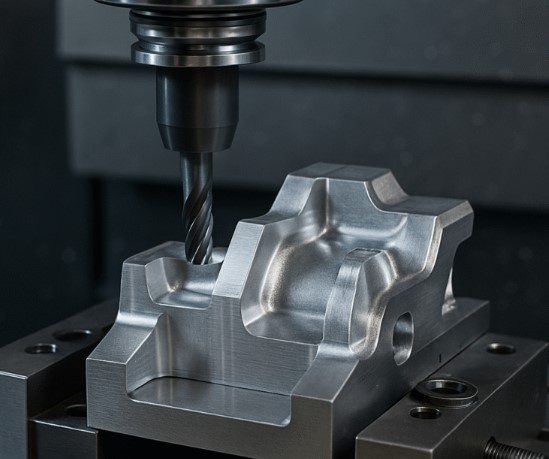
CNC machining is a method of part production that employs computer numerical control technology to operate processing equipment. During the process, engineers first create a three-dimensional model using CAD (Computer-Aided Design) software, and then generate machining programs with CAM (Computer-Aided Manufacturing) software to control milling machines, lathes, machining centers, or other numerically controlled equipment to cut metals, plastics, or composite materials.
Compared to traditional manual machining, CNC machining offers a higher degree of automation and process stability. It can execute complex tool paths and maintain high dimensional accuracy. Since the process does not require the production of dedicated molds or tooling for each new part—only program and tooling adjustments are necessary—CNC machining is exceptionally well-suited for rapid prototyping during product development phases, as well as for single-unit, low-volume, and medium-volume production runs.
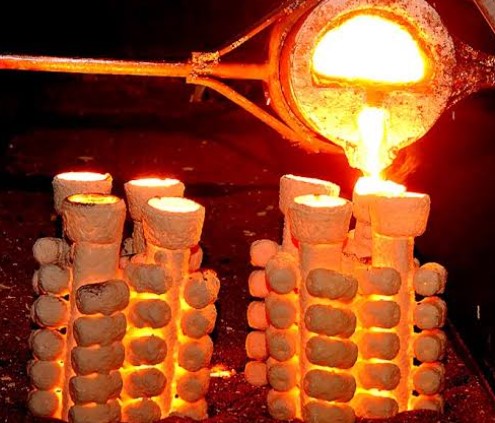
Investment casting, also known as lost-wax casting, is a precision foundry process that uses a wax pattern to manufacture metal parts. The basic procedure involves first creating a wax model according to the product design. This wax pattern is then repeatedly dipped or coated with a refractory material to build up a ceramic shell. Once this shell has hardened, the internal wax pattern is melted out through heating, leaving a cavity that replicates the exact shape of the original pattern. Molten metal is then poured into this cavity, and after it cools and solidifies, the final cast part is obtained.
Because the mold cavity can perfectly reproduce the intricate details of the wax pattern, investment casting is particularly adept at manufacturing metal components with complex geometries, fine features, and internal structures that are often difficult or impossible to produce using conventional machining methods.
Having established the basic principles of CNC machining, it is now necessary to further analyze its specific advantages and limitations in practical applications. These characteristics determine the scenarios in which CNC machining can deliver the greatest value.
One of the greatest advantages of CNC machining is its high precision. With advanced numerically controlled equipment and optimized cutting parameters, CNC machining can typically achieve very tight dimensional tolerances, often reaching ±0.001 mm. This level of accuracy makes it widely used in industries with stringent size requirements, such as aerospace, medical device manufacturing, and precision mechanics.
CNC machining is highly versatile in terms of materials, capable of processing a wide range of substances, including stainless steel, aluminum alloys, titanium alloys, copper alloys, engineering plastics, and various composite materials. This extensive material compatibility enables CNC machining to meet diverse product requirements concerning strength, weight, corrosion resistance, and wear resistance.
Rapid prototyping is another significant advantage of CNC machining. During new product development, designers often need to produce multiple iterations of prototypes for testing and improvement. Because CNC machining does not require waiting for the production of molds or tooling, new parts can be manufactured simply by modifying the CAD model and corresponding machining program. This dramatically shortens the development cycle.
The initial investment cost for CNC machining is relatively low. It does not require a substantial upfront capital outlay for the creation of molds, as is the case with casting processes. This makes it a distinctly advantageous choice for small-batch production and custom part manufacturing.
Nevertheless, CNC machining does have certain limitations. First, as a subtractive manufacturing process, it involves removing material from a solid block, which generates a significant amount of cutting waste. While this material loss may not have a major impact for common steel and aluminum, it can substantially increase production costs for high-value materials such as titanium alloys and nickel-based superalloys.
Second, CNC machining is better suited for machining features that are easily accessible to cutting tools, such as external surfaces. It faces limitations when processing complex internal cavities, closed structures, and deep narrow areas. Consequently, for parts with intricate internal geometries, relying solely on CNC machining may prove challenging or even impossible.
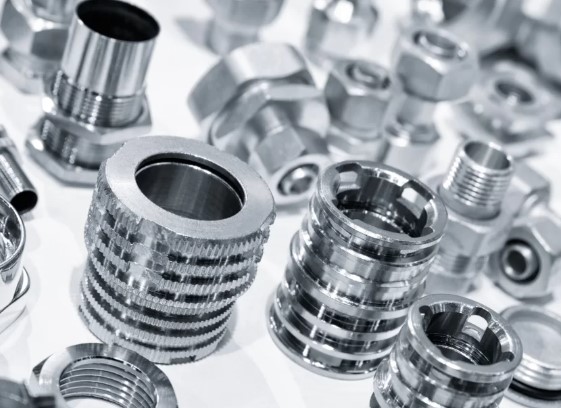
Corresponding to CNC machining, investment casting occupies an irreplaceable position in another set of applications, owing to its unique forming principle. This section will systematically analyze the core strengths of investment casting and its inherent limitations in practice.
The foremost advantage of investment casting is its ability to produce parts with intricate geometric structures. This process enables the manufacture of components with thin walls, complex curved surfaces, internal channels, and fine details—features that are often extremely difficult to achieve through conventional machining.
Investment casting offers high material utilization. Since the molten metal directly fills the mold cavity to form a near-net-shape part, it does not require the extensive removal of material as in CNC machining, thus minimizing raw material waste. Additionally, investment casting generally produces parts with good surface quality, often requiring only minimal secondary machining before they are ready for use, which positively contributes to reducing overall production costs.
Investment casting also demonstrates strong material adaptability and can be applied to a variety of metals, including stainless steel, carbon steel, aluminum alloys, titanium alloys, and nickel-based superalloys. As a result, this process finds widespread application across industries such as aerospace, automotive, energy equipment, industrial valves, and precision machinery manufacturing.
However, investment casting has notable drawbacks. The process involves multiple steps, including the production of wax patterns and ceramic shells, as well as the preparation of associated tooling. Consequently, the upfront preparation costs are relatively high. Furthermore, from mold fabrication to the final pouring and solidification, the lead time is typically longer than that of CNC machining. Additionally, the design must accommodate certain constraints imposed by the molding process, such as draft angles, uniform wall thickness, and requirements for pattern removal.
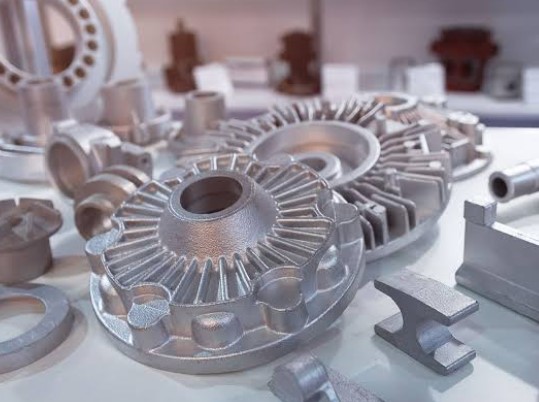
Having analyzed the individual characteristics of each process in the previous sections, this chapter will place them side-by-side for a systematic comparison. By examining various dimensions—including manufacturing principle, precision, material range, structural adaptability, lead time, and cost—the essential distinctions between the two can be more clearly visualized.
- Fundamental Difference in Manufacturing Approach: From a manufacturing standpoint, CNC machining and investment casting are fundamentally different. CNC machining removes material via cutting, making it a subtractive process. Investment casting, on the other hand, forms parts by filling a mold cavity with molten metal, which is closer to a formative or near-net-shape approach.
- Precision Comparison: In terms of precision, CNC machining generally provides higher accuracy, capable of achieving tolerances of ±0.001 mm, whereas investment casting typically offers tolerances around ±0.02 mm. For precision parts demanding extremely tight dimensional tolerances, CNC machining has a clear advantage. For parts with complex geometries, investment casting is more suitable.
- Material Applicability Comparison: With respect to material applicability, CNC machining is more flexible and can process metals, plastics, and composite materials, whereas investment casting is primarily limited to metals.
- Structural Adaptability Comparison: In terms of product geometry, CNC machining is ideal for external surfaces, flat planes, holes, and precision mating features. Investment casting is better suited for parts with complex internal structures, thin-walled designs, and features that require monolithic forming.
- Lead Time Comparison: Regarding production lead time, CNC machining typically requires only a few days for small-batch production because no mold-making is involved. Investment casting, however, necessitates upfront tooling preparation, which usually takes several weeks to complete.
- Cost Comparison: In terms of cost, the two processes are best suited for different production scales. For small-batch production, such as quantities under 500 pieces, CNC machining generally offers a cost advantage due to the absence of substantial mold costs. For high-volume production, such as 1,000 units or more, the mold costs for investment casting can be amortized over a large number of parts, thereby reducing the per-unit manufacturing cost.
Beyond theoretical comparisons, real-world case studies can more vividly demonstrate which types of parts and industry scenarios are best suited to each process. This chapter lists typical applications for both CNC machining and investment casting, serving as a reference for the selection process.
CNC machining is widely used across numerous industries. In aerospace, it is commonly used for manufacturing brackets, engine components, and high-precision structural parts. In the medical field, it is used to produce surgical instruments, implants, and precision equipment parts. In the automotive industry, it is employed for manufacturing custom parts, test samples, and small-batch components. In the electronics sector, it is frequently used to produce heat sinks, connectors, and precision housings.
Investment casting also has a broad range of applications. In the aerospace industry, it is frequently used to produce complex parts such as turbine blades and engine components. In the industrial machinery sector, it is used to manufacture valves, gears, pump bodies, and other structurally complex components. In the automotive industry, it is used for exhaust system parts and transmission components. In jewelry and artistic manufacturing, it is used to create metal products with intricate textures and fine details.
After thoroughly understanding the differences and application scenarios of both processes, the final decision must be based on the specific conditions of the given project. This chapter distills three core factors—precision requirements, production volume, and product structure—into the key criteria for selection, helping practitioners make sound judgments in their actual work.
- Precision Requirements: When choosing between CNC machining and investment casting, several key factors must be carefully considered. The first is precision requirement. If the part demands extremely high dimensional accuracy and strict tolerance control, CNC machining should be the priority. If the part prioritizes complex structures and monolithic forming capability, then investment casting is more appropriate.
- Production Volume: The second factor is production volume. If only a small number of prototypes or custom products are needed, CNC machining is more economical. If long-term, mass production is required, investment casting offers greater cost advantages.
- Product Structure: The third factor is product structure. If the part consists primarily of external features, such as holes, slots, flat surfaces, and precision mating faces, CNC machining is more suitable. If the part contains complex internal passages, thin-walled sections, or difficult-to-machine areas, investment casting holds the advantage.
In modern manufacturing, both CNC machining and investment casting are essential processes for producing metal parts. Both methods are capable of manufacturing high-quality components; however, due to their different working principles, they exhibit marked differences in precision, material utilization, production costs, product structure, and suitable application scenarios.
CNC machining is a typical subtractive manufacturing method that employs computer-controlled machine tools to cut away excess material from a solid block, ultimately producing a part to the required specifications. Investment casting, on the other hand, is a precision foundry process that uses a wax pattern to build a ceramic shell, into which molten metal is poured, allowing for the single-step formation of complex parts.
Therefore, in actual engineering projects, the choice between CNC machining and investment casting must be made by comprehensively evaluating factors such as part precision requirements, production volume, structural complexity, material type, and budget. For needs that demand high precision, small quantities, and rapid response, CNC machining is the more suitable option. For needs that involve complex structures, high-volume production, and strict cost control, investment casting offers distinct advantages. The two processes are not mutually exclusive; in many practical applications, they can be used in combination to leverage the strengths of each, ultimately achieving the optimal manufacturing outcome.
