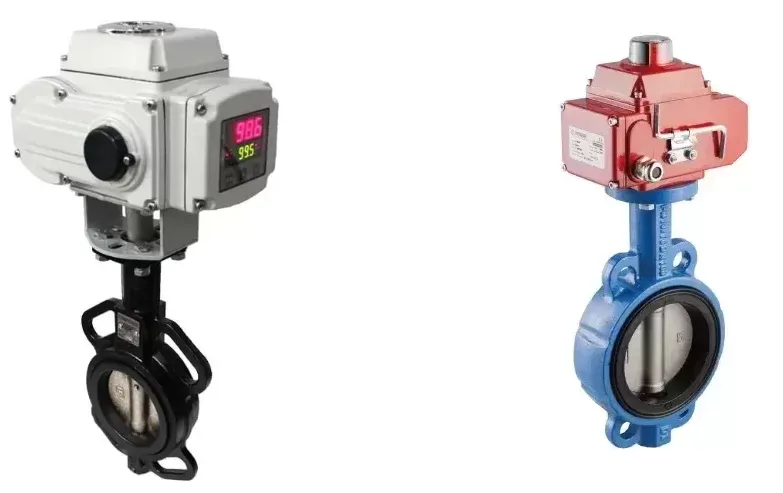
Electric butterfly control valves are essential components in a wide range of industrial applications, where their ability to regulate flow with precision and reliability plays a crucial role in maintaining efficient operations. These valves are designed to provide dependable performance under varying conditions, ensuring accurate flow control and system stability. However, like any mechanical and electrical equipment, they are not immune to faults or malfunctions. Operational issues can arise over time due to factors such as wear and tear, improper usage, or external conditions. Identifying and addressing these problems promptly is vital to maintaining uninterrupted functionality, reducing downtime, and avoiding costly disruptions to industrial processes. By understanding the most common faults and implementing effective troubleshooting and maintenance practices, operators can maximize the lifespan and efficiency of electric butterfly control valves, ensuring their systems continue to operate smoothly and reliably.
The motor cannot function without a proper power supply.
Faults in the control circuit can disrupt communication.
Malfunctions in these mechanisms prevent the motor from receiving activation signals.
Inspect the power supply for continuity and proper connections.
Test the control circuits for faults and repair or replace any damaged components.
Ensure these mechanisms are functioning correctly and repair any detected issues.
Reversed Power Supply Phase Sequence: An incorrect phase sequence can result in improper shaft rotation direction.
Swap Any Two Power Lines: This corrects the phase sequence, ensuring the shaft rotates in the desired direction.
Extended use without breaks can overheat the motor.
If one phase is disconnected, the motor may draw excessive current, causing overheating.
Pause operation and let the motor return to normal temperature.
Check for and repair any disconnected or damaged phase lines.
Obstructions or mechanical issues in the valve can halt motor operation.
Excessive torque demand triggers the control mechanism to protect the motor.
Examine for blockages, wear, or damage, and address the issue.
Increase the torque limit setting appropriately without exceeding safety parameters.
Malfunctions can prevent the motor from halting at the desired position.
Misaligned settings can disrupt motor operation and signal accuracy.
Test stroke and torque mechanisms for functionality and address any defects.
Fine-tune the settings to ensure precise stopping at designated positions.
This causes signal transmission issues.
A defective potentiometer can fail to send position signals.
Ensure the screw is securely fastened to maintain proper alignment.
Test for faults and replace the component if necessary.
Proactive Maintenance Tips
To prevent these common faults, implement a regular maintenance schedule focusing on:
Check for loose connections and phase continuity.
Inspect valve and actuator components for wear or damage.
Periodically recalibrate travel and torque mechanisms for optimal performance.
Use diagnostic tools to detect early signs of overheating, misalignment, or excessive torque.
Electric butterfly control valves play a vital role in maintaining flow control in industrial systems. Addressing faults promptly ensures the longevity and efficiency of these devices. By understanding the causes and solutions for common issues, operators can minimize downtime and maintain reliable operations. Proactive maintenance and timely interventions not only extend the lifespan of the valves but also enhance the overall productivity of the systems they serve.