Fluoropolymer-Lined Valves for Corrosive Media
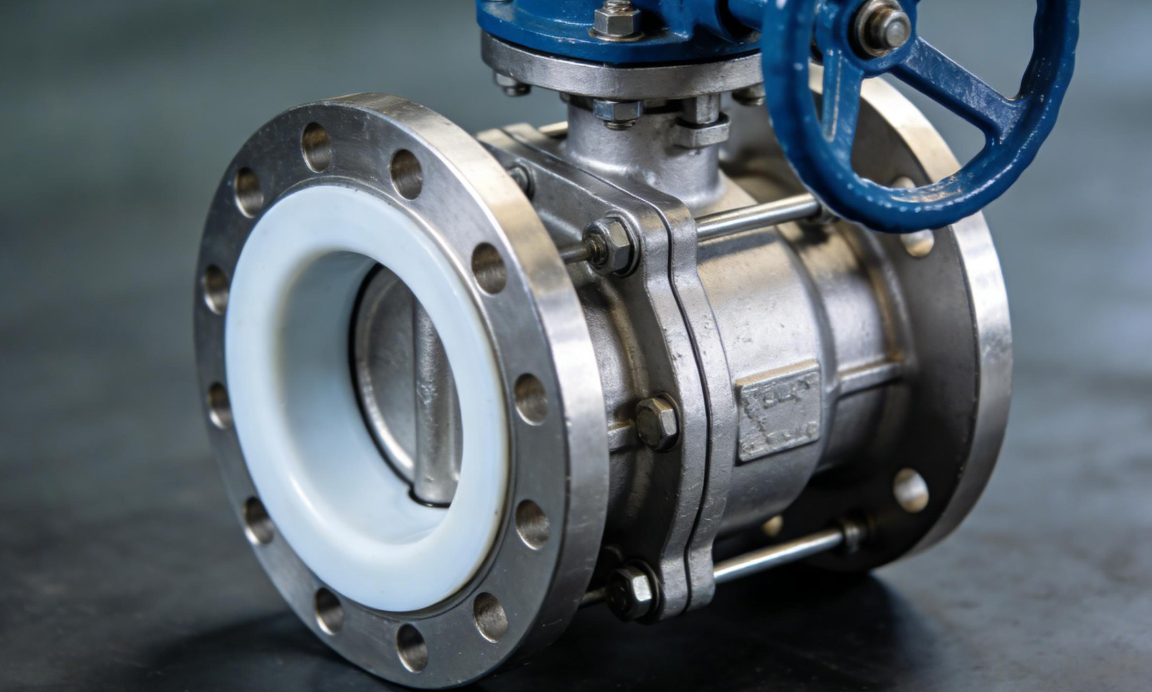
Fluoropolymer-lined valves are widely used where conventional metallic valve materials cannot provide sufficient corrosion resistance. By combining a mechanically strong metal pressure shell with a chemically resistant fluoropolymer lining, these valves are designed to handle many aggressive acids, alkalis, salts, solvents, and other corrosive process media. They are particularly important in chemical processing, chlor-alkali production, pharmaceuticals, metallurgy, electroplating, wastewater treatment, semiconductor manufacturing, and other industries where fluid compatibility directly affects equipment reliability.
However, a fluoropolymer lining should not be regarded as a universal solution for every corrosive fluid. Chemical concentration, temperature, pressure, flow velocity, permeation, mechanical stress, and the specific fluoropolymer grade can all affect long-term performance. For example, Arkema notes that PVDF's chemical resistance depends on factors including exposure time, concentration, temperature, pressure cycling, abrasive particles, and mechanical stress. Therefore, reliable valve selection requires a systematic assessment of both the process medium and the complete operating environment.
A fluoropolymer-lined valve generally consists of a metallic valve body or pressure shell with a fluoropolymer lining covering wetted internal surfaces. The metal body provides structural strength and pressure resistance, while the lining forms a barrier between the process medium and the underlying metal.
This composite construction is particularly useful when the process fluid is too corrosive for standard carbon steel, cast iron, or even some stainless steels. Instead of requiring the entire valve to be manufactured from an expensive corrosion-resistant alloy, the design places a chemically resistant polymer layer at the fluid-contacting surfaces.
Common lining materials include:
- PTFE (polytetrafluoroethylene)
- PFA (perfluoroalkoxy polymer)
- PVDF (polyvinylidene fluoride)
- ETFE (ethylene tetrafluoroethylene)
- Other specialized fluoropolymer formulations depending on the application
Each material has a different combination of chemical resistance, temperature capability, mechanical strength, permeability, abrasion resistance, and processing characteristics. Consequently, the phrase "fluorine-lined valve" describes a valve construction concept rather than a single material specification.
The metal body should not be considered merely a supporting frame. It remains an important pressure-containing component and determines much of the valve's mechanical strength, dimensional stability, connection configuration, and pressure capability.
The lining, meanwhile, protects wetted surfaces from chemical attack. In a properly designed valve, the two materials complement one another: the metal structure handles mechanical loads while the fluoropolymer barrier provides chemical protection.
This arrangement makes fluoropolymer-lined valves particularly attractive when a process requires both mechanical integrity and broad chemical resistance.
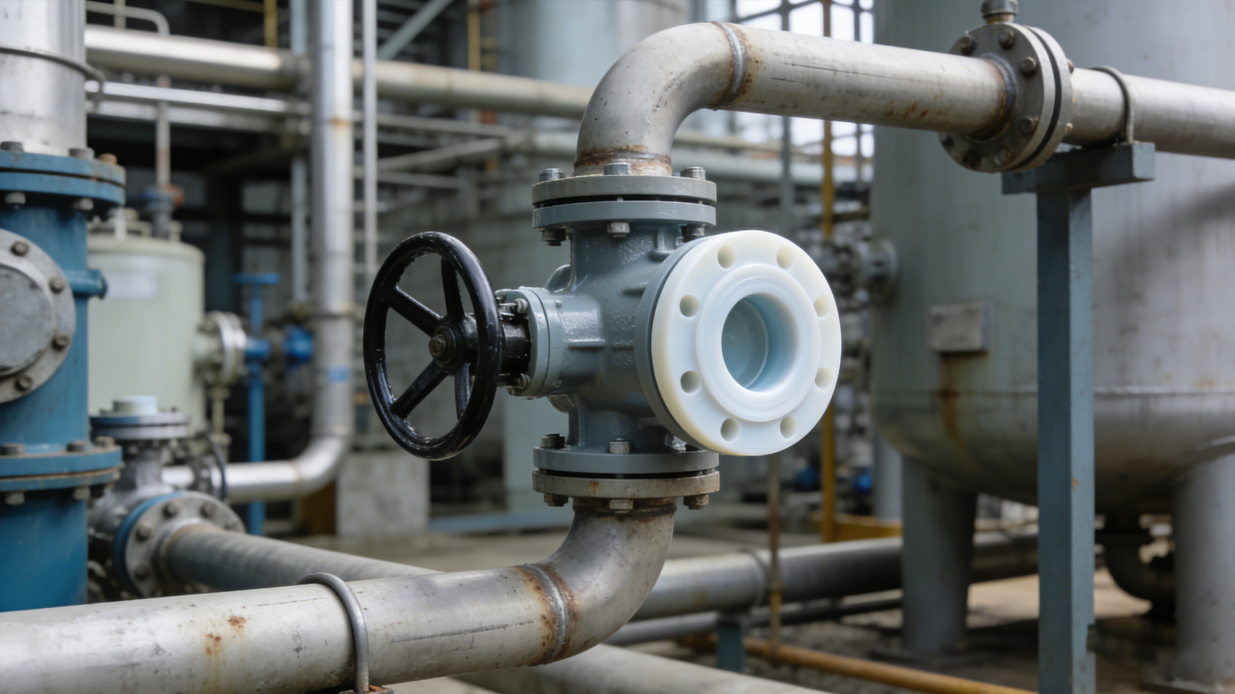
The principal reason for using fluoropolymers is their strong chemical resistance. Their highly fluorinated molecular structures generally provide excellent resistance to many aggressive chemicals that can attack conventional metals.
For example, PVDF is described by Arkema as resistant to a broad range of acids, acid mixtures, weak bases, halogens, halogenated solvents, hydrocarbons, alcohols, salts, and oxidants. However, the same source emphasizes that actual chemical resistance is influenced by temperature, concentration, exposure duration, mechanical stress, and other service conditions.
This distinction is important for industrial valve engineers. A chemical compatibility chart should be treated as a selection starting point, not as a substitute for engineering evaluation.
A lining that performs well in a dilute aqueous solution at room temperature may behave differently in a concentrated chemical at elevated temperature. Likewise, a material that has excellent chemical resistance may still be unsuitable if the application involves severe abrasion, high mechanical loading, excessive temperature, or significant permeation.
Different fluoropolymers should be selected according to the actual service conditions rather than simply choosing the material with the broadest reputation for chemical resistance.
PTFE is one of the most widely recognized fluoropolymers for corrosion-resistant equipment. Its low chemical reactivity makes it suitable for a broad range of aggressive chemical services.
PTFE-lined valves are commonly considered for acids, many alkalis, salts, and numerous organic chemicals. They are frequently found in chemical processing, pharmaceutical production, water treatment, and other industries where corrosion resistance is a primary requirement.
One important consideration is that PTFE has relatively limited mechanical stiffness compared with metals. Its behavior also changes with temperature, and prolonged exposure to elevated temperatures can affect dimensional stability and mechanical performance.
Therefore, PTFE selection should consider both chemical compatibility and temperature-dependent mechanical properties.
PFA is another important fluoropolymer used in demanding chemical applications. Like PTFE, it provides broad chemical resistance, but its melt-processable characteristics allow manufacturers to produce complex shapes and relatively uniform linings.
PFA can be particularly attractive where high chemical purity, smooth internal surfaces, and resistance to aggressive chemicals are important. This makes it relevant to high-purity chemical handling and certain pharmaceutical or semiconductor-related applications.
When selecting PFA-lined valves, engineers should still verify the actual temperature and pressure conditions, because the maximum allowable operating envelope depends on the specific valve design and lining construction.
PVDF combines chemical resistance with relatively good mechanical strength and dimensional stability. It is widely used in chemical processing, water treatment, filtration, piping, pumps, tanks, and other fluid-handling applications.
Arkema identifies PVDF applications involving acids, chlorine, bromine, salt water, and other chemical environments. Its published technical information also emphasizes that chemical compatibility varies with chemical concentration and service conditions.
PVDF can therefore be a useful alternative when the application requires chemical resistance together with mechanical properties that differ from those of PTFE.
ETFE is another fluoropolymer used where a combination of chemical resistance, mechanical strength, and abrasion resistance is required. Compared with some softer fluoropolymer materials, ETFE can provide useful mechanical performance in applications involving more demanding physical conditions.
Its suitability should nevertheless be evaluated against the specific chemical, temperature, pressure, and mechanical requirements of the valve.
Strong acids represent one of the most important application categories for fluoropolymer-lined valves. Conventional carbon steel can suffer rapid corrosion in many acidic services, while even stainless steels may experience localized corrosion or stress-related degradation depending on the acid chemistry.
Hydrochloric acid (HCl) is highly corrosive to many common metals. Concentration, temperature, dissolved oxygen, impurities, and flow conditions can all influence corrosion behavior.
Fluoropolymer-lined valves can provide an effective barrier between hydrochloric acid and the metallic pressure body, making them widely relevant to acid handling, chemical production, pickling, metal treatment, and wastewater processes.
The valve lining must nevertheless be evaluated for the actual HCl concentration and operating temperature rather than selected solely on the chemical name.
Sulfuric acid (H₂SO₄) presents a more complex material-selection problem because corrosion behavior can change substantially with concentration and temperature.
Certain concentrations may be relatively manageable for particular materials, while hot or highly concentrated sulfuric acid can create severe corrosion challenges. Fluoropolymer-lined constructions can therefore be attractive in selected sulfuric-acid services, but engineers should verify the specific concentration-temperature combination.
PVDF manufacturers, for example, publish chemical-resistance information covering sulfuric acid and other aggressive acids while emphasizing the importance of temperature limits.
Nitric acid (HNO₃) is a strong oxidizing acid, and its interaction with metallic materials can differ significantly from that of non-oxidizing acids.
Fluoropolymer-lined valves may be considered for nitric acid systems when the lining material, temperature, concentration, and valve construction are appropriate. Special attention should be paid to operating temperature and concentration because aggressive oxidizing environments can place additional demands on materials.
Hydrofluoric acid (HF) requires particularly careful materials engineering. Although it is a highly hazardous and corrosive chemical, certain fluoropolymers can be used in HF-related applications under appropriate conditions.
PVDF technical literature, for example, lists hydrofluoric acid among chemicals handled by PVDF systems.
However, this should not be interpreted as meaning that every fluoropolymer or every valve construction is suitable for every HF concentration and temperature. HF service should always be evaluated using material-specific compatibility data and the valve manufacturer's application limits.
Fluoropolymer-lined valves can also be used in many alkaline services, including solutions containing sodium hydroxide (NaOH) and potassium hydroxide (KOH).
Conventional metals may experience corrosion or other forms of degradation under certain combinations of concentration and temperature. Fluoropolymer linings can isolate the metallic pressure boundary from the process medium.
However, high-temperature concentrated alkali service deserves special attention. The fact that a fluoropolymer is chemically resistant under one set of conditions does not automatically establish suitability at elevated temperature and pressure.
The chlor-alkali industry is one of the most important sectors for corrosion-resistant fluid-handling equipment. Processes involving chlorine, caustic soda, hydrochloric acid, brine, and other aggressive chemicals create demanding requirements for piping and valve materials.
PVDF, for example, is used in process piping and fluid-handling components where resistance to acids, chlorine, and other chemicals is required.
For valve applications, material selection should consider not only the principal process chemical but also impurities, temperature excursions, gas-liquid conditions, pressure cycling, and potential permeation.
Chloride-containing fluids are particularly important because chloride ions can contribute to localized corrosion, including pitting and crevice corrosion, in susceptible metallic materials.
Applications may include:
- Brine systems
- Salt production
- Seawater treatment
- Desalination
- Chlor-alkali processes
- Industrial wastewater
- Metal finishing
- Chemical processing
Fluoropolymer linings can isolate the metal body from the chloride-containing medium and therefore reduce direct chemical attack on the pressure shell.
However, the complete system still requires attention to external corrosion, flange materials, fasteners, valve stems, actuator components, and other parts that may not be protected by the internal lining.
Organic chemicals represent another important category, but this area requires particularly careful material selection because "solvent resistance" varies significantly among fluoropolymers.
Potentially relevant media include:
- Alcohols
- Aromatic hydrocarbons
- Certain ketones
- Esters
- Hydrocarbons
- Halogenated compounds
- Specialty organic chemicals
PTFE and PFA can provide broad resistance to many organic chemicals, while PVDF also demonstrates resistance to a wide range of hydrocarbons, alcohols, and other chemical groups.
Nevertheless, temperature, exposure time, concentration, and mechanical stress can influence chemical compatibility. Arkema specifically identifies these variables as factors affecting PVDF chemical resistance.
Consequently, engineers should consult a material-specific compatibility chart rather than assuming that all fluoropolymers behave identically.
Some industrial systems handle mixed acids, acidic wastewater, process residues, or chemical solutions containing several reactive components. Such fluids can be considerably more difficult to evaluate than pure laboratory chemicals.
For example, a process stream may contain:
- Multiple acids
- Dissolved salts
- Oxidizing agents
- Chlorides
- Organic compounds
- Suspended particles
- Elevated temperature
In such circumstances, selecting a lining solely according to the most obvious chemical component can be misleading. The complete composition should be evaluated, including contaminants and reaction products.
For highly complex chemical services, the valve supplier should be provided with the actual process composition and operating conditions before recommending a lining material.
Chemical plants are among the most important users of fluoropolymer-lined valves. Acid transfer, alkali handling, solvent processing, chemical dosing, and corrosive wastewater treatment all require reliable isolation and flow control.
Fluoropolymer linings can help extend valve service life by preventing direct contact between aggressive process fluids and the metal pressure boundary.
Industrial wastewater can contain chlorides, acids, alkalis, solvents, and other contaminants. Conventional materials may experience unpredictable corrosion when the chemical composition changes.
Fluoropolymer-lined valves can therefore be useful in chemical dosing, neutralization, filtration, sludge-related processes, and aggressive wastewater streams where chemical compatibility is more important than minimizing initial equipment cost.
Electroplating operations often involve acidic or alkaline solutions used for surface preparation, cleaning, pickling, and plating. These fluids can be highly corrosive to ordinary metallic components.
Corrosion-resistant valve materials are therefore important for maintaining process reliability and reducing unplanned shutdowns.
In pharmaceutical and high-purity chemical applications, material selection involves more than corrosion resistance. Surface smoothness, contamination control, cleanability, extractables, and regulatory requirements can also become important.
PFA and other high-purity fluoropolymers may be considered for applications where chemical resistance and purity requirements overlap. The exact material grade and valve construction should be selected according to the applicable process and regulatory requirements.
One of the most important principles in corrosion-resistant valve engineering is that no lining material is universally compatible with every chemical.
The phrase "fluoropolymer" covers multiple materials with different properties. Even within one material family, performance can vary with grade, formulation, manufacturing process, temperature, and mechanical loading.
Certain highly reactive substances can attack fluoropolymers under appropriate conditions. Extreme examples can include elemental fluorine, chlorine trifluoride, and certain highly reactive fluorinating environments.
Molten or highly reactive alkali-metal conditions can also create problems for fluoropolymer materials.
These services require specialized materials engineering and should not be treated as routine fluoropolymer-lined valve applications.
Temperature is one of the most important variables in fluoropolymer selection. Chemical resistance alone does not determine whether a lining is suitable.
As temperature increases, polymer stiffness, creep behavior, dimensional stability, permeability, and mechanical strength can change. Therefore, a chemical that is compatible with PTFE or PVDF at ambient temperature may require a different assessment at elevated temperature.
A valve's maximum allowable operating temperature should always be taken from the specific valve and lining design, not from a generic fluoropolymer temperature figure.
Chemical resistance does not necessarily equal abrasion resistance. Fluids containing sand, crystals, catalyst particles, pigments, mineral solids, or other abrasive particles can gradually wear the lining.
In such applications, engineers should consider:
- Particle size
- Particle concentration
- Fluid velocity
- Flow direction
- Valve geometry
- Lining thickness
- Abrasion resistance
- Frequency of operation
A highly chemically resistant lining can still experience premature mechanical wear if the flow contains significant abrasive solids.
A systematic selection process should evaluate at least six major variables.
Identify the exact chemical composition, concentration, impurities, and potential reaction products. Do not rely only on a broad category such as "acid" or "solvent."
Determine normal, minimum, maximum, startup, shutdown, and upset temperatures. Thermal cycling should also be considered because repeated expansion and contraction can affect the lining and its interface with the metal body.
Check the valve's pressure-temperature rating and the expected operating pressure. The mechanical pressure boundary remains important even when the process medium is isolated from the metal by the lining.
ASME B16.34, for example, covers pressure-temperature ratings, dimensions, tolerances, materials, examination requirements, testing, and marking for applicable valves.
High velocity can cause erosion, vibration, noise, and accelerated lining wear. Very low velocity can also create process problems such as sediment accumulation or unstable valve operation depending on the valve type.
Lining performance can be influenced by mechanical stress, pressure cycling, thermal cycling, and external pipe loads. PVDF technical guidance specifically identifies mechanical stress and pressure/temperature cycling as factors that can affect chemical resistance.
The lining material is only one part of the overall solution. Engineers should also consider valve type, sealing arrangement, stem construction, body material, end connections, operating mechanism, maintenance requirements, and available spare parts.
Correct installation is essential for protecting the lining and maintaining sealing performance.
During installation, technicians should avoid using tools or procedures that can scratch, cut, puncture, or deform exposed lining surfaces. Flanges should be properly aligned, and excessive piping loads should not be transferred to the valve.
Bolt tightening should follow the valve manufacturer's specified procedure. Excessive or uneven bolt loads can distort components and potentially compromise the sealing interface.
The piping system should also be flushed and cleaned appropriately before commissioning. Foreign particles left inside the pipeline can damage valve seats or lining surfaces during initial operation.
Fluoropolymer-lined valves can reduce corrosion-related maintenance, but they are not maintenance-free.
Periodic inspection should consider:
- External body condition
- Flange leakage
- Valve operating torque
- Lining condition where inspection is possible
- Seat sealing performance
- Stem or actuator condition
- Signs of chemical leakage
- Pressure-drop changes
- Unusual noise or vibration
For critical services, maintenance records should include the process medium, operating temperature, pressure, operating frequency, previous failures, lining material, and replacement history.
This information can help engineers identify patterns and determine whether the existing lining material remains appropriate.
Industrial valve procurement should clearly define the applicable design, manufacturing, inspection, and testing requirements. ASME B16.34 is one important valve standard covering pressure-temperature ratings, dimensions, materials, testing, marking, and related requirements for covered valve constructions.
For petroleum and natural gas applications, API standards may also apply depending on the valve type and service. API's standards catalog, for example, identifies API 602 for compact gate, globe, and check valves and API 603 for corrosion-resistant bolted-bonnet gate valves.
The exact standard package should be established according to the project specification and valve design. A purchasing specification should ideally identify:
- Valve type
- Nominal size
- Pressure class
- Body material
- Lining material and grade
- Process medium
- Chemical concentration
- Operating and design temperature
- Operating and design pressure
- End connection
- Inspection and testing requirements
- Applicable standards
- Special service requirements
This information provides the manufacturer with a much more reliable basis for selecting the valve construction.
A fluoropolymer-lined valve should be regarded as one component of a broader corrosion-control strategy. Even the most chemically resistant lining cannot compensate for unsuitable system design.
The complete system should consider the compatibility of:
- Valve body
- Lining
- Valve seat
- Stem
- Fasteners
- Gaskets
- Flanges
- Piping
- Pumps
- Instrument connections
- Expansion joints
- Other wetted components
For example, selecting a highly corrosion-resistant valve while connecting it to an incompatible gasket or metallic fitting can simply transfer the failure point to another part of the system.
A successful corrosion-control strategy therefore requires material compatibility across the entire wetted system.
For engineers and procurement teams, the following workflow provides a useful starting point:
Obtain the actual chemical composition and concentration rather than relying on a general description.
Document pressure, temperature, flow rate, velocity, cycling frequency, and startup/shutdown conditions.
Evaluate PTFE, PFA, PVDF, ETFE, or other suitable materials according to chemical compatibility and mechanical requirements.
Confirm body material, lining construction, sealing arrangement, connection type, and pressure-temperature rating.
Request a chemical compatibility statement or technical recommendation for the actual service conditions. Where the application is unusual or highly critical, additional testing or engineering review may be appropriate.
Define inspection intervals and acceptance criteria before commissioning the equipment.
This workflow helps prevent a common procurement mistake: selecting a valve based solely on nominal diameter, pressure class, and a generic statement such as "corrosion resistant."
Fluoropolymer-lined valves provide an important solution for industrial systems handling aggressive chemical media. Their composite construction combines the mechanical strength of a metallic pressure body with the chemical resistance of fluoropolymers, making them valuable in chemical processing, chlor-alkali production, water treatment, electroplating, metallurgy, pharmaceuticals, and other demanding industries.
PTFE, PFA, PVDF, and ETFE each offer different combinations of chemical resistance and mechanical performance. Strong acids, alkaline solutions, chloride-containing fluids, selected organic chemicals, and corrosive wastewater can all represent potential applications when the specific material and valve construction are properly matched to the service.
At the same time, fluoropolymer-lined valves should not be treated as a universal corrosion solution. Chemical concentration, temperature, pressure, flow velocity, abrasive particles, mechanical stress, pressure cycling, and the exact fluoropolymer grade all influence long-term performance. Technical information from material manufacturers demonstrates why these factors must be evaluated together rather than relying on a simple chemical-name compatibility list.
The most reliable approach is therefore a lifecycle-based one: define the process medium, evaluate operating conditions, select the appropriate fluoropolymer, verify the valve construction, install it correctly, and establish a suitable inspection and maintenance program. When these elements are considered together, fluoropolymer-lined valves can provide durable corrosion protection, reduce unplanned maintenance, and help industrial piping systems operate more safely and reliably over the long term.