Can Stainless Steel Valves Rust? Causes and Prevention
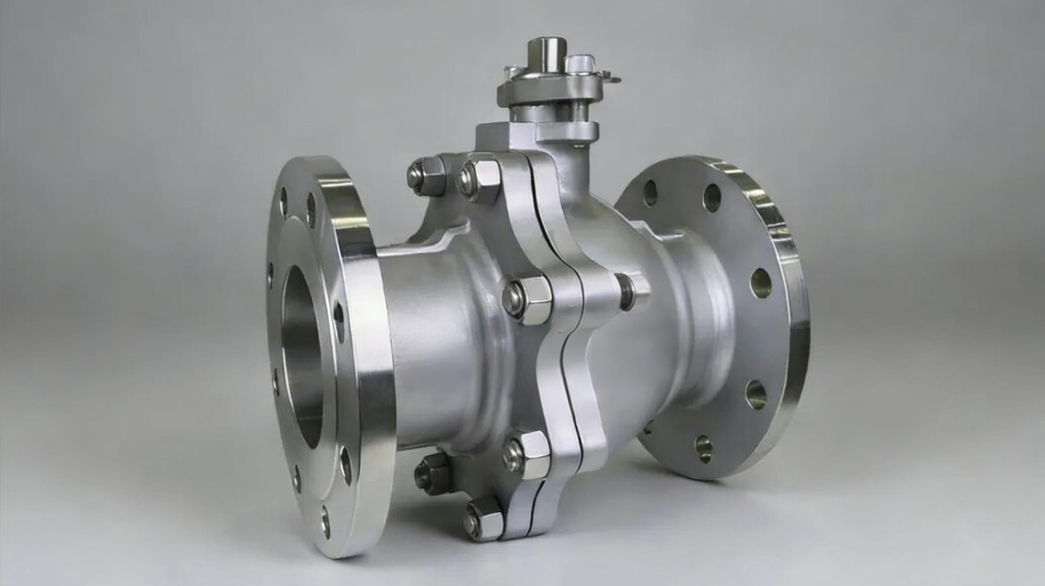
Yes, stainless steel valves can rust when their protective passive film is damaged or when operating conditions exceed the corrosion resistance of the selected material. Chloride exposure, unsuitable material grades, welding residues, surface contamination, and poor maintenance are among the most common causes. Choosing the right stainless steel grade, controlling fabrication quality, and implementing appropriate inspection and cleaning procedures can significantly reduce corrosion risks and extend valve service life.
Stainless steel is widely used in industrial valves because it combines mechanical strength, durability, and corrosion resistance. Its resistance to corrosion primarily comes from chromium, which reacts with oxygen to form an extremely thin, chromium-rich oxide film on the metal surface. According to the British Stainless Steel Association, this passive film is typically only 1–5 nanometers thick, yet it provides an effective barrier against many corrosive environments.
Unlike a conventional paint coating, this passive film can reform when the underlying surface is clean and suitable conditions are available. This process is called repassivation. It helps stainless steel maintain its corrosion resistance after minor surface damage, provided the environment does not continuously prevent the film from recovering.
However, the passive film is not invulnerable. Chloride ions, certain acids, elevated temperatures, deposits, and oxygen-depleted crevices can cause localized breakdown. Once corrosion begins, damage may develop beneath the surface without producing extensive visible rust. This is particularly important for industrial valves because even a small corroded area near a sealing surface can affect shutoff performance.
The term "stainless" describes a material family with enhanced corrosion resistance, not a guarantee that corrosion will never occur. Different stainless steel grades contain different proportions of chromium, nickel, molybdenum, nitrogen, and other alloying elements. Their performance therefore varies considerably depending on the medium, temperature, chloride concentration, surface condition, and mechanical stresses involved.
For example, Type 304 stainless steel performs well in many indoor, atmospheric, and general industrial environments. Type 316 stainless steel contains molybdenum, which improves resistance to chloride-induced pitting and crevice corrosion. Nevertheless, even 316 or 316L can suffer corrosion in seawater or other sufficiently aggressive chloride environments. More demanding applications may require duplex stainless steel, super-austenitic alloys, or other materials selected through a detailed corrosion assessment.
Consequently, the correct question is not simply whether a stainless steel valve can rust, but whether its material grade, surface condition, and design are suitable for the actual operating environment.
Surface damage is one of the most preventable causes of corrosion in stainless steel valves. Scratches, impact marks, rough machining, and contamination introduced during installation can compromise the surface condition or create locations where corrosive substances accumulate.
Welding and thermal cutting can also leave heat-tint oxides and chromium-depleted surface layers near the affected area. If these residues are not removed using an appropriate finishing procedure, the local corrosion resistance may be reduced. Welding spatter, slag, and embedded particles from carbon steel tools can create additional problems.
Cross-contamination is especially important in fabrication facilities that process both carbon steel and stainless steel. Steel wire brushes, grinding discs, work surfaces, or lifting equipment previously used on carbon steel may transfer free iron particles onto stainless steel components. These particles can subsequently oxidize and produce reddish-brown stains that appear to be rusting of the stainless steel itself.
Appropriate cleaning, removal of heat tint where required, and controlled pickling or passivation can help restore a clean, corrosion-resistant surface. ASTM A380/A380M addresses cleaning, descaling, pickling, and passivation of stainless steel parts and equipment, while ASTM A967/A967M covers chemical passivation treatments.
Chloride exposure is one of the most significant corrosion risks for stainless steel valves. Chloride ions are present in seawater, brine, some cooling-water systems, cleaning chemicals, and many industrial process streams. Under unfavorable conditions, they can destabilize the passive film and initiate localized corrosion.
Pitting corrosion develops as small cavities in the metal surface. These pits may remain difficult to detect during routine external inspection, even when penetration is becoming significant. Because the attack is concentrated in a small area, a valve body or component can experience substantial local damage without showing uniform surface deterioration.
The risk depends on more than chloride concentration alone. Temperature, pH, exposure duration, surface finish, deposits, flow conditions, and alloy composition can all influence corrosion behavior. Nickel Institute guidance identifies chromium, molybdenum, and nitrogen as important contributors to resistance against chloride-related localized corrosion.
For this reason, 304 stainless steel should not be selected automatically for every water-based application. Where chloride exposure is significant, 316L or a more resistant alloy may be appropriate, but the final choice must be verified against the actual operating conditions.
Crevice corrosion occurs in narrow gaps where liquid can enter, but circulation and oxygen replenishment are restricted. Industrial valves contain potential crevice locations around flange gaskets, bolted joints, seat interfaces, threaded connections, and deposits that adhere to the surface.
Within a crevice, the local chemical environment can become more aggressive than the surrounding fluid. Changes in oxygen availability, acidity, and chloride concentration can destabilize the passive film and allow corrosion to progress. The attack may remain hidden beneath a gasket or deposit until the component is disassembled or a leak develops.
The British Stainless Steel Association identifies gasket interfaces, flange joints, and valve-seat contact areas as examples of locations susceptible to crevice corrosion. It also notes that crevice corrosion can occur under less aggressive bulk chloride conditions than those required to initiate pitting on an exposed surface.
To reduce this risk, valve designers should minimize unnecessary crevices, select compatible gasket materials, ensure correct flange assembly, and avoid configurations that trap stagnant corrosive liquid. During maintenance, technicians should pay particular attention to deposits and concealed interfaces.
Selecting an unsuitable material grade can undermine the reliability of an otherwise well-designed valve. A stainless steel valve that performs satisfactorily in clean water may deteriorate rapidly when exposed to concentrated chlorides, acidic process fluids, or high-temperature chemical solutions.
The most common mistake is treating all stainless steel grades as interchangeable. Although 304 and 316 are both austenitic stainless steels, their alloy compositions and corrosion resistance differ. The molybdenum in 316 generally provides better resistance to pitting and crevice corrosion in chloride-containing environments, but it does not make the grade immune to all forms of chloride attack.
Duplex stainless steels, such as 2205, combine austenitic and ferritic microstructures and can offer higher strength and improved resistance to certain localized corrosion mechanisms. More highly alloyed materials may be required for severe chemical service. Nevertheless, no grade should be selected solely by reputation or price.
Engineers should evaluate the process medium, operating temperature, pressure, concentration, contaminants, cleaning chemicals, and expected service life before approving a valve material. Material compatibility charts and corrosion data provide useful starting points, but aggressive or safety-critical services may require specialist review and testing.
Stainless steel valves installed outdoors, in coastal facilities, or in industrial plants may be exposed to moisture, airborne salts, dust, chemical vapors, and condensation. These conditions can create a corrosive surface environment, particularly when contaminants accumulate and remain wet for extended periods.
Dust and process residues can retain moisture against the metal surface. Chloride-containing deposits may become concentrated as water evaporates, increasing the likelihood of localized attack. Inadequate drainage and repeated wet-dry cycles can further complicate corrosion control.
A valve body may therefore develop rust-like staining even when its nominal material grade is appropriate. In some cases, the visible discoloration originates from deposited iron particles or external contamination rather than deep corrosion of the stainless steel substrate.
Routine cleaning helps remove these contaminants before they create persistent corrosion sites. However, cleaning procedures must be compatible with the stainless steel grade, surface finish, process requirements, and any applicable hygiene or environmental regulations.
Galvanic corrosion may occur when dissimilar metals are electrically connected in the presence of an electrolyte. Depending on the materials, surface areas, and environmental conditions, one metal may corrode preferentially.
For example, an unsuitable combination of stainless steel, carbon steel, or other metallic components in a wet environment can create a galvanic corrosion risk. The actual outcome depends on the electrochemical characteristics of the metals and the configuration of the assembly, so dissimilar-metal contact does not automatically mean failure will occur.
Chemical incompatibility can also damage stainless steel. Certain acidic solutions, oxidizing chemicals, cleaning agents, or process contaminants may attack a grade that is otherwise corrosion-resistant in ordinary atmospheric conditions. Chloride-bearing cleaners and improperly applied chemical treatments deserve particular attention.
Before installation, engineers should assess the complete valve assembly rather than the valve body alone. Bolts, stems, trim, fasteners, gaskets, coatings, and adjoining piping all contribute to the performance of the system.
The following table provides a preliminary comparison of commonly considered materials. It is a general selection guide rather than a substitute for application-specific corrosion assessment.
| Material grade | General characteristics | Typical considerations |
|---|---|---|
| 304 / 304L | General-purpose austenitic stainless steel | Suitable for many atmospheric, water, food-processing, and general industrial applications when conditions are appropriate |
| 316 / 316L | Austenitic stainless steel with molybdenum | Generally offers better resistance to chloride-induced pitting and crevice corrosion than 304 |
| 2205 duplex | Austenitic-ferritic duplex stainless steel | Offers higher strength and improved resistance to several localized corrosion mechanisms compared with conventional austenitic grades |
| Super duplex 2507 | Highly alloyed duplex stainless steel | Considered for demanding chloride-containing and marine applications |
| Higher-alloy austenitic grades | Specialized corrosion-resistant stainless steels | May be required for severe chloride exposure or demanding chemical service |
The general trend toward improved chloride resistance with increasing molybdenum and nitrogen content is supported by technical guidance from the Nickel Institute and the British Stainless Steel Association. Actual performance still depends on the complete alloy composition and service environment.
304 stainless steel: This grade may be suitable for general-purpose valves used with compatible fluids and in relatively mild environments. It is often considered where cost, availability, and general corrosion resistance must be balanced. It should not be assumed suitable for concentrated chloride solutions or every chemical process.
316L stainless steel: The low-carbon version of 316 is often considered for welded valve bodies and components because its reduced carbon content helps reduce susceptibility to sensitization during welding. Its molybdenum content improves resistance to localized chloride attack compared with 304, although service limitations remain.
Duplex stainless steel: Grades such as 2205 or 2507 may be considered when a combination of strength and enhanced resistance to localized corrosion is required. Their selection requires attention to fabrication, welding procedures, heat treatment where applicable, and the limits imposed by the actual operating environment.
A useful engineering principle is to select the least costly material that meets the required corrosion resistance, mechanical performance, and service-life criteria with an appropriate safety margin. Under-specifying the material can lead to leaks, emergency maintenance, and premature replacement, while excessive alloy selection can raise capital costs without delivering meaningful operational benefits.
The Pitting Resistance Equivalent Number, or PREN, is a composition-based indicator used to compare the relative pitting resistance of stainless steel alloys. A commonly used formula is:
PREN = %Cr + 3.3 × %Mo + 16 × %N
Here, Cr represents chromium, Mo represents molybdenum, and N represents nitrogen, with each value expressed as a percentage by mass. Different conventions may use slightly different coefficients or include additional alloying elements.
PREN can help engineers compare candidate alloys, particularly when evaluating stainless steels for chloride-containing service. However, it is not a direct prediction of service life, nor does a higher value guarantee satisfactory performance in every environment. Temperature, pH, surface condition, weld quality, crevice geometry, and process chemistry must still be considered.
Material selection should begin with a clear understanding of the operating environment. Procurement specifications should identify the process medium, operating temperature, pressure, chloride concentration where relevant, cleaning chemicals, and any special requirements for marine, hygienic, or chemical service.
Valve manufacturers and end users should verify the specified grade through appropriate material documentation and traceability procedures. Where required by the project, positive material identification can help confirm alloy composition. Material certificates and inspection records should be consistent with the applicable procurement specification.
For demanding applications, material selection should consider the entire wetted assembly, including the body, bonnet, stem, ball or disc, seat-support components, fasteners, and other exposed metallic parts. A corrosion-resistant body cannot compensate for an unsuitable trim material or incompatible connection components.
Stainless steel components should be stored and handled in a way that prevents contamination from carbon steel, abrasive particles, and corrosive substances. Dedicated tools and clean work surfaces can reduce the transfer of free iron onto finished valve surfaces.
During installation, technicians should avoid dragging valves across rough surfaces or allowing tools to scratch exposed areas. Pipe alignment and support should also be managed correctly to prevent excessive loads on valve bodies and connections.
After welding, the required finishing procedure should address heat tint, scale, spatter, and other contaminants. Pickling and passivation serve different purposes: pickling removes scale and affected surface layers, while passivation helps establish or restore the corrosion-resistant passive surface on chemically clean stainless steel.
ASTM A380/A380M provides guidance on stainless steel cleaning and descaling, while ASTM A967/A967M specifies chemical passivation treatments and related verification methods. The appropriate procedure depends on the alloy, fabrication process, application, and acceptance requirements.
Chemical pickling and passivation should be performed by qualified personnel using suitable safety controls. Acid residues must be removed according to the specified process, and the finished surface should be inspected before the valve enters service.
A practical maintenance program should include the removal of dust, salt deposits, process residues, and other contaminants from accessible external surfaces. In coastal and humid environments, cleaning frequency may need to be increased because airborne salts and condensation can accumulate more rapidly.
Use cleaning products suitable for the specified stainless steel grade and surface finish. Chloride-rich cleaners, unsuitable steel wool, and carbon steel brushes should be avoided when they may contaminate or damage the surface. After cleaning, rinse as required and dry the surface to prevent persistent moisture and chemical residues.
For valves handling corrosive fluids, cleaning must also address internal deposits and trapped residues when the equipment design and maintenance procedure permit access. Any cleaning or flushing operation should be compatible with the process, seals, and applicable safety requirements.
Where practical, valve installations should minimize locations where moisture or deposits can accumulate. Correct flange assembly, suitable gasket selection, proper drainage, and accessible inspection points can reduce the risk of hidden corrosion.
Protective covers or enclosures may help reduce exposure to airborne salts, dust, and rain. However, an enclosure should not trap condensation or prevent drainage, since poorly designed protection can make corrosion worse rather than better.
For outdoor and marine installations, maintenance planning should account for local exposure conditions. The inspection interval appropriate for a clean indoor water system may be insufficient for a coastal chemical plant or an installation exposed to salt spray.
A valve's corrosion performance depends on more than the metal body. Seats, gaskets, packing, O-rings, coatings, and other nonmetallic components must withstand the operating medium, pressure, and temperature.
For example, a chemical that is compatible with 316L stainless steel may still cause swelling, hardening, degradation, or loss of sealing performance in an unsuitable elastomer. Conversely, a suitable seal material cannot prevent corrosion of an inadequately selected metal component.
Engineers should evaluate metal and nonmetallic materials together, considering both chemical compatibility and mechanical operating requirements. Appropriate seal selection helps reduce leakage, avoid fluid accumulation around joints, and maintain reliable valve operation.
Before cleaning a rusted valve, determine whether the discoloration is superficial contamination, embedded free iron, or actual corrosion of the stainless steel. Orange or brown stains alone do not establish the depth of damage.
Inspect the affected area for pits, cavities, roughness, cracks, leakage, and changes around joints or sealing surfaces. If the valve is part of a pressurized or hazardous process system, follow the site's isolation, depressurization, and maintenance procedures before attempting intrusive inspection or repair.
Where the cause is uncertain, a qualified inspector or materials specialist may need to assess the damage.
For light surface staining, a cleaning product specifically intended for stainless steel or a suitable noncontaminating polishing material may be sufficient. Follow the product manufacturer's instructions and avoid aggressive abrasion that could damage the finish or remove excessive material.
After cleaning, rinse the surface as appropriate and dry it thoroughly. If a cleaning chemical is used, confirm that it is compatible with the alloy and does not leave corrosive residues.
A stainless steel-compatible protective product may be used where suitable for the external environment, but it should not be treated as a substitute for correct material selection or a properly restored passive surface. Coatings and protective products must also be suitable for any relevant food-contact, hygienic, or process requirements.
Once the visible staining has been removed, examine the surface again. If the metal appears smooth and no meaningful material loss is evident, the problem may have been superficial contamination. The underlying cause should nevertheless be identified to prevent recurrence.
If pits, deep cavities, cracking, severe roughness, or persistent corrosion remain, further evaluation is necessary. Surface polishing alone cannot restore the original wall thickness or reverse metallurgical damage.
For valves exposed to corrosive process media, inspection should also consider internal wetted surfaces and pressure-retaining components rather than focusing exclusively on external appearance.
A valve with superficial staining may remain serviceable after appropriate cleaning and verification. A valve with deep pitting, significant wall loss, damaged sealing surfaces, or suspected cracking requires a more thorough engineering assessment.
Replacement may be necessary when the valve no longer meets its pressure-retaining, sealing, or functional requirements, or when the extent of damage cannot be established with sufficient confidence. The decision should be based on inspection findings, applicable codes, service criticality, and the manufacturer's repair limits rather than appearance alone.
A structured inspection program helps identify corrosion before it develops into leakage or functional failure. The inspection frequency should reflect the operating medium, environmental exposure, consequence of failure, manufacturer recommendations, and site maintenance requirements.
| Inspection item | What to check | Recommended response |
|---|---|---|
| External surface | Rust stains, deposits, scratches, discoloration | Clean, investigate contamination, and reassess |
| Welded areas | Heat tint, scale, surface defects | Verify fabrication and finishing, and inspect as required |
| Flange connections | Deposits, moisture, gasket-area corrosion, leakage | Check joint condition and investigate the source |
| Valve body | Pitting, cavities, cracks, or suspected wall loss | Arrange a suitable engineering inspection |
| Stem and operating parts | Corrosion, binding, unusual resistance | Investigate material condition and operating performance |
| Sealing components | Leakage, degradation, damaged contact surfaces | Evaluate seals and sealing interfaces |
| Internal surfaces | Deposits, pitting, crevice attack, erosion | Inspect during authorized maintenance or overhaul |
| Material records | Grade identification and traceability | Verify documentation against the specification |
Inspection records should include the location and appearance of corrosion, operating conditions, cleaning performed, measurements where appropriate, and any corrective actions. Comparing findings over time can help determine whether corrosion is stable, recurring, or progressing.
For critical valves, corrosion assessment may need to be integrated with broader mechanical integrity programs, including wall-thickness evaluation, pressure-boundary inspection, leak testing, and functional testing. The appropriate methods depend on valve design and service conditions.
Yes. Grade 304 resists corrosion in many ordinary environments, but it can develop pitting, crevice corrosion, or surface staining when exposed to chlorides, contamination, or other unfavorable conditions. It should not be assumed suitable for every marine or chemical application.
No. The molybdenum content of 316L improves resistance to chloride-induced localized corrosion compared with 304 in many conditions. However, sufficiently aggressive chloride concentrations, elevated temperatures, deposits, and unfavorable crevice conditions can still cause corrosion. More resistant materials may be required for severe service.
Not necessarily. Superficial rust-colored staining may result from external iron contamination and may be removable without significant damage to the base metal. Deep pitting, cracks, substantial wall loss, or damage to critical sealing surfaces requires further assessment and may justify repair or replacement.
No. Passivation helps establish a clean, corrosion-resistant surface, but it cannot make an unsuitable alloy resistant to every chemical environment. It also cannot eliminate risks caused by excessive chloride exposure, poor design, or incompatible operating conditions.
There is no universal inspection interval for all stainless steel valves. Clean indoor services may require less frequent external cleaning than marine, chemical, or high-temperature installations. Inspection intervals should be established according to corrosion risk, operating history, process criticality, and applicable maintenance requirements.
Stainless steel valves offer valuable corrosion resistance, but their reliability depends on selecting the correct grade and maintaining the protective surface throughout manufacturing, installation, and operation. Chloride exposure, crevice formation, contamination, welding residues, and unsuitable materials can all lead to corrosion, even in high-quality stainless steel components.
For valve manufacturers, procurement teams, and plant operators, the most effective strategy combines application-specific material selection, controlled fabrication and passivation, appropriate sealing and installation practices, and risk-based inspection. Superficial staining should be distinguished from genuine metal loss, while pitting, cracking, leakage, and other signs of structural or sealing damage require prompt evaluation.
By treating corrosion prevention as part of the complete valve lifecycle rather than simply a cleaning task, industrial facilities can improve equipment reliability, reduce unplanned maintenance, and make more informed decisions about repair and replacement.