How to Source a Gas Generator Set Manufacturer in China
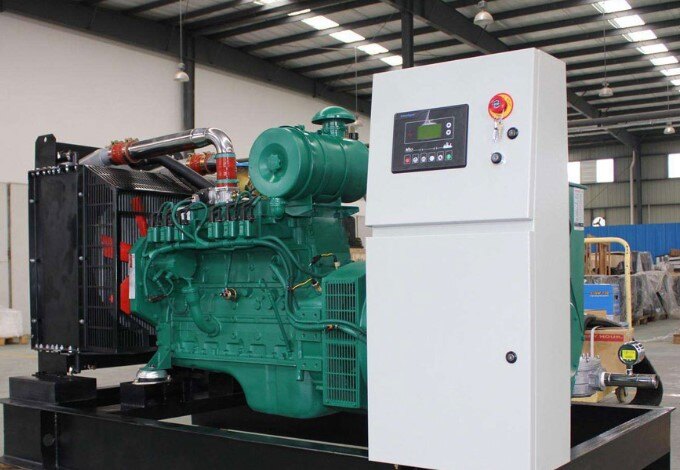
Sourcing gas generator sets from China has evolved from a niche procurement strategy into a mainstream industrial supply chain practice. China's manufacturing ecosystem provides an unmatched combination of production scale, engineering diversity, and cost efficiency for global buyers seeking reliable power generation solutions. From residential backup power systems to industrial-grade continuous operation generators, Chinese manufacturers cover a wide technological spectrum.
However, the Chinese generator market also presents significant procurement risks. The most common challenge is distinguishing between genuine manufacturers and trading intermediaries operating through online B2B platforms. While trading companies can provide convenience, they may lack technical control over product quality and after-sales service.
The key to successful sourcing is not finding the cheapest supplier but identifying a long-term manufacturing partner capable of maintaining consistent quality, technical transparency, and reliable service. This article provides a detailed, practical guide to help international buyers source gas generator set manufacturers in China safely and efficiently.
The first and most fundamental step is confirming whether the supplier is an actual factory.
Request an official copy of the company's business license and carefully examine several critical details. These include the registered company name, legal operating address, registered capital, and business scope.
The business scope is particularly important. If the scope only mentions export trading, marketing, or sales activities without including manufacturing, R&D, or generator production, it is likely that you are dealing with a trading company rather than a true manufacturer.
While trading companies are not inherently unreliable, direct factory sourcing is generally more suitable for buyers seeking long-term technical collaboration and strict quality control.
Another useful indicator is registered capital. Although not a perfect measurement, factories with higher registered capital often reflect stronger operational stability and financial commitment.
For further security, buyers can request third-party corporate verification reports that confirm the company's legal history and operational status.

Technical capability is the core differentiator among gas generator suppliers.
Modern gas generator manufacturing requires expertise in mechanical engineering, electrical control systems, combustion optimization, and digital monitoring technologies.
Buyers should clarify whether the supplier operates as an Original Equipment Manufacturer (OEM) or Original Design Manufacturer (ODM).
OEM factories produce generators according to buyer specifications, while ODM manufacturers develop their own designs and technologies that can be customized for branding or functional modification.
ODM partners are often more valuable for long-term cooperation because they possess independent engineering knowledge and innovation capability.
Practical evaluation questions can include:
- How many engineers are employed in the R&D department?
- What are the academic or professional backgrounds of the technical team?
- Does the company hold invention patents or utility model patents?
A reliable manufacturer will willingly engage in technical discussions. For example, you may propose hypothetical modifications such as integrating automatic transfer switch (ATS) compatibility or improving vibration isolation design. Genuine engineering factories usually respond with technical analysis rather than vague promises.
International quality certification is a baseline requirement when sourcing industrial power equipment.
The most common standard is ISO 9001 quality management certification, which demonstrates that the factory operates standardized production, inspection, and documentation procedures.
However, buyers should not rely solely on certificate photos. Authenticity must be verified through issuing organizations such as TÜV Rheinland, SGS S.A., or Intertek Group plc.
Certificates should show:
- Company name matching the supplier's legal identity
- Validity period
- Authorized testing scope
- Accreditation laboratory information
Expired or suspiciously generic certificates are red flags.
The reliability of a gas generator set is determined largely by its core components.
The engine is the heart of the generator system. Buyers should request detailed disclosure of engine brand, model, and origin.
Reputable Chinese generator manufacturers often cooperate with established engine suppliers. Some domestic brands have developed mature combustion technology and durability performance suitable for industrial applications.
Avoid suppliers who refuse to specify engine source or offer only vague descriptions such as “high-quality engine.”
The alternator directly converts mechanical energy into electrical output. One of the most important quality parameters is winding material.
High-quality generators should use 100% copper windings.
Copper provides excellent electrical conductivity and heat dissipation performance. In contrast, aluminum or copper-clad aluminum conductors are sometimes used in low-cost products but may lead to overheating, efficiency loss, and shortened service life.
The Automatic Voltage Regulator (AVR) plays a critical role in maintaining stable output voltage.
Modern gas generators, especially inverter-type models, require clean and stable electrical signals to protect sensitive electronic devices.
Buyers should inquire about AVR supplier sources, control board design, and protection functions such as overload shutdown and thermal monitoring.
Professional factories implement multi-layer quality inspection systems.
Every generator unit should undergo individual functional testing before packaging.
Typical test procedures include:
- Multi-stage load testing at 25%, 50%, 75%, 100%, and 110% rated load
- Voltage and frequency stability measurement
- Exhaust emission and safety system verification
- Noise performance testing
- Full operational simulation under continuous running conditions
Request a Factory Quality Control report for each batch shipment.
Advanced factories invest in specialized testing equipment such as load banks, oscilloscopes, and endurance testing chambers.
Market compliance is essential if the generator will be exported.
For European markets, generators must comply with CE safety and environmental directives.
For the United States, engine emission compliance is critical. Gas generator engines must meet United States Environmental Protection Agency emission regulations. Products without EPA-certified engines are typically unsuitable for the U.S. market.
If selling in California, additional compliance with CARB standards may be required.
Canadian markets may require CSA certification, while modern electronic generator systems must also consider EMC electromagnetic compatibility requirements.
Always request original laboratory test reports from accredited institutions.
Supplier scale influences delivery reliability.
Ask about:
- Workshop area size
- Number of production workers
- Dedicated assembly lines
- Monthly output capacity
Realistic production lead time for containerized orders is typically 30–45 days after deposit confirmation.
Suppliers promising extremely short production cycles should be evaluated carefully.
Seasonal production fluctuations may occur before major Chinese holidays, and professional suppliers usually provide advance inventory planning guidance.
Long-term cooperation requires efficient communication.
Technical and sales teams should demonstrate professional English communication capability.
Response time is an important indicator. A reliable manufacturer should respond within 24 hours, accounting for international time differences.
During the pre-order stage, if responses are vague or inconsistent, it is likely that after-sales support will also be weak.
A trustworthy manufacturer should provide clearly defined warranty conditions.
Important questions include:
- Warranty period duration
- Spare parts replacement responsibility
- Remote technical support capability
- Video diagnostic assistance
Some professional suppliers maintain technical service teams that can assist customers in troubleshooting equipment issues remotely.
Factory auditing is the most reliable verification method.
Buyers can choose one of three approaches:
- Personal factory visit
- Third-party inspection agency audit
- Live video factory walkthrough
During the audit process, verify:
- Raw material storage areas
- Engine inventory management
- Alternator winding workshops
- Assembly production lines
- Final testing stations
This step is essential to confirm whether the supplier is truly a manufacturing entity rather than a disguised trading company.
Procurement decisions should focus on total cost of ownership rather than unit price alone.
A low-cost generator may initially appear attractive but can generate higher long-term expenses due to maintenance failures, customer complaints, and replacement costs.
Generators using branded engines and high-quality alternators may have higher purchase prices but usually provide better durability and lower failure rates.
From a business perspective, minimizing failure cost is more important than minimizing purchase price.
Never place a large container order without first testing a sample unit.
Sample evaluation should include:
- Continuous full-load operation testing
- Voltage and frequency monitoring using precision instruments
- Mechanical inspection of structural components
- Verification of rated power output performance
For example, confirm that a generator advertised as 3000 watts can truly sustain continuous operation at that load level.
Sourcing gas generator sets from China can be highly profitable when executed with a disciplined procurement strategy. The key is establishing partnerships with technically competent manufacturers rather than focusing solely on price competition.
By applying systematic verification steps covering legal identity, engineering capability, certification compliance, component quality, and factory auditing, buyers can significantly reduce procurement risks. A professional manufacturer will demonstrate transparency, technical strength, and commitment to long-term cooperation.
Successful sourcing is ultimately about building a reliable industrial partnership that delivers consistent quality, stable performance, and sustainable business value.
- Genset Generator Set Manufacturer Co., Ltd.: China Topper Generator Sets Manufacturer Co., Ltd. operates the official platform Genset Generator Set Manufacturer in China, serving as a professional power equipment producer specializing in natural gas generator sets, diesel generators, silent canopy units, containerized systems, portable generators, light tower power solutions, and inverter generator technologies. The company focuses on high-performance genset manufacturing using internationally recognized engine and alternator systems, targeting industrial, commercial, and residential backup power applications. With strong quality control standards including ISO 9001 and CE certifications, the company emphasizes precision engineering, product durability, and customizable OEM solutions to meet diverse global energy requirements while maintaining long-term technical support and customer partnership.
- China Topper Generator Set Manufacturer Co., Ltd.: Located in Xiamen, Fujian, China, China Topper Generator Set Manufacturer Co., Ltd. is a professional OEM/ODM generator set manufacturer providing comprehensive power generation solutions. The company offers natural gas generator sets, diesel gensets, and inverter power systems with output ranges from approximately 3 kW to 3000 kW suitable for both 50 Hz and 60 Hz electrical markets. It integrates high-quality global component brands such as Cummins, Perkins, Yuchai, and Weichai engines with Stamford and Leroy Somer alternators, along with control technologies from Deepsea, ComAp, and Smartgen systems. The product portfolio includes open-type, silent, and containerized gas generator configurations. Supported by standardized manufacturing processes, rigorous performance testing, fast production delivery cycles, and dedicated after-sales services, the company aims to provide reliable industrial and commercial energy equipment for international clients.
- Fuzhou Wedoplus Energy Co., Ltd.: Fuzhou Wedoplus Energy Co., Ltd., operating under the Hiwedo Plus brand, is a China-based mobile energy equipment manufacturer with more than 20,000 m² of production facilities. The company specializes in industrial and portable diesel generator sets powered by reputable engine brands such as Cummins, Perkins, Deutz, and selected Chinese engine suppliers. Beyond traditional genset manufacturing, Hiwedo Plus expands into broader energy equipment fields, including solar photovoltaic systems, wind power solutions, water pumping equipment, and maintenance tools. The company focuses on long-term product reliability, enterprise operational stability, and international technical cooperation, supporting global distribution networks and project-level power supply applications.
